
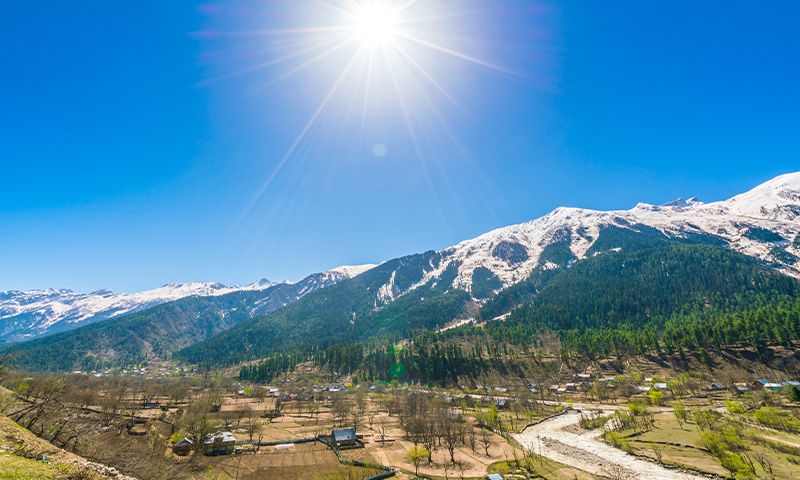
Most travellers planning a Uttarakhand trip shortlist the same handful of names. Nainital, Mussoorie, Auli, sometimes Chopta. Munsiyari rarely makes the first draft. That is a small tragedy, because this Kumaoni town sits inside one of the most striking Himalayan amphitheatres in India, with the five Panchachuli peaks watching over it like a permanent audience. Long-time trekkers and Kumaon regulars call it the Little Kashmir of Uttarakhand for a reason. The valleys look softer, the villages feel older, and the weather shifts with a kind of drama that keeps you glued to your window. If your travel wishlist is starting to feel repetitive, Munsiyari is the quiet reset you may not know you need.
Where is Munsiyari and why the Little Kashmir tag has stuck
Munsiyari sits in the Pithoragarh district of Uttarakhand, at roughly 2,200 metres above sea level. It faces the Panchachuli range, a cluster of five snow-capped peaks that catch fire at sunrise and settle into a soft pink at dusk. The valley below is stitched together by pine forests, terraced fields, apricot orchards, and small hamlets built with local stone and slate.
The Little Kashmir tag comes from the sheer visual density of the place. Meadows, glaciers, rivers, alpine flowers, and a horizon that never sits still. Old-timers say the light here changes character every few hours, and once you spend a day watching the peaks from your balcony, you begin to see what they mean. It is a landscape that rewards slow travel, unhurried mornings, and long walks that go nowhere in particular.
Getting to Munsiyari without losing a day to the road
Munsiyari is not on the standard tourist grid, and that is part of its charm. It also means the journey needs planning.
- By air: The nearest airport is Pantnagar, roughly 275 kilometres away. From there, most travellers hire a cab through Almora or Bageshwar.
- By train: Kathgodam is the closest railhead, well connected to Delhi and other major cities. The drive from Kathgodam to Munsiyari takes eleven to thirteen hours depending on halts.
- By road: A common two-day route runs Delhi to Kathgodam to Chaukori or Kausani for the first night, then Chaukori to Munsiyari via Birthi Falls the next day. Splitting the journey protects you from the fatigue of a single long haul and lets you enjoy the smaller Kumaoni towns along the way.
For travellers who want the route managed end to end, curated Uttarakhand tour packages built by Kumaon specialists usually work better than piecing together local taxis on the fly.
Best time to visit Munsiyari
Munsiyari is a year-round destination, but each season has its own personality.
- March to June: Clear Panchachuli views, blooming rhododendrons, and pleasant daytime temperatures. Ideal for first-time visitors and families.
- July to mid September: The monsoon softens the valley and greens up the forests, but landslides can slow travel. Recommended only for experienced hill travellers.
- Mid September to November: Arguably the best window. Crisp air, sharp mountain views, and quieter trails after the monsoon crowds thin out.
- December to February: Heavy snow, minimal crowds, and a proper high Himalayan winter. Some routes may close, so plan with care.
Things to do in Munsiyari
Munsiyari packs a lot into a small radius. You can slow down for a week or cover the highlights in three days.
Watch the Panchachuli peaks from Khaliya Top
Khaliya Top is a gentle high altitude meadow at around 3,500 metres, reached by a short drive followed by a manageable walk. The reward is a near 360 degree view of the Panchachuli range and, on clear days, distant glimpses of Nanda Devi. It suits both beginners and seasoned trekkers, which is why the Khaliya Top trek shows up on almost every Munsiyari itinerary.
Trek towards Milam Glacier
For serious trekkers, Munsiyari is the traditional base for the Milam Glacier route. The trail follows the Gori Ganga river through remote Bhotiya villages that once served the Indo Tibetan trade. It is a multi day trek and needs proper permits, guides, and acclimatisation.
Stop at Birthi Falls
On the drive in from Chaukori, Birthi Falls tumbles down roughly 125 metres of rock face. A short walk from the road brings you to the base, and it makes for a natural coffee and camera break.
Visit the Tribal Heritage Museum
Set up by a local schoolteacher, this small museum documents the Bhotiya community’s tools, textiles, and trading history. It takes less than an hour and adds real context to the region.
Explore Darkot and Maheshwari Kund
Darkot village is known for handwoven woollen shawls and pankhis, while Maheshwari Kund is a small lake with a local legend attached. Both make for easy half day outings.
Where to stay and what to eat
Munsiyari has moved from a handful of KMVN rest houses to a healthier mix of homestays, mid range hotels, and a few boutique properties with valley facing balconies. Homestays tend to give you the best food, honest local company, and a genuine feel for Kumaoni life. Expect thick rotis, madua (finger millet) dishes, bhatt ki churkani, and freshly pressed juices when apricots and plums are in season.
If your idea of a Himalayan holiday leans towards remote and rooted rather than manicured and predictable, a slower Kumaon circuit that pairs Munsiyari with places like Chaukori, Kausani, and Binsar is worth exploring. Travellers who enjoy this style often also like Chopta and Tungnath, which offer a similar offbeat feel in Garhwal.
Travel responsibly, especially here
Munsiyari’s ecosystem is fragile. Glacial streams, alpine meadows, and small villages can only absorb so much footfall before the character starts to change.
- Carry a reusable bottle and refill from your homestay
- Say no to single use plastic snack packs on treks
- Hire local guides and porters wherever possible
- Keep noise low near villages, monasteries, and forest patches
- Stick to marked trails and respect livestock zones
Small choices add up, and they help keep the Little Kashmir tag honest for the next generation of travellers.
Planning your Munsiyari trip with Traveloi
Traveloi builds Kumaon itineraries that treat Munsiyari as a destination in its own right rather than a bolt on stop. Route planning here factors in altitude gain, driving hours, and rest days, which matters more than in busier hill stations. If you are considering a longer Himalayan arc, the Adi Kailash and Om Parvat Yatra package covers a nearby Pithoragarh circuit that pairs well with Munsiyari for extended trips.
For research stage travellers, browsing curated Uttarakhand destinations is a good starting point before locking in dates.
FAQs about Munsiyari
1. Is Munsiyari really called the Little Kashmir of Uttarakhand?
Yes. The nickname has been in local circulation for decades because of Munsiyari’s alpine meadows, snow-capped Panchachuli range, and Kashmir-like valley aesthetic.
2. How many days are enough for a Munsiyari trip?
A minimum of three nights in Munsiyari works well, with two extra travel days on either side. Trekkers heading to Milam Glacier should plan seven to ten days end to end.
3. Is Munsiyari safe for solo travellers and women?
Munsiyari is considered one of the safer Kumaoni towns. Homestays are family run, and locals are used to travellers arriving alone. Sensible precautions still apply, especially on remote trails.
4. Do I need permits for treks near Munsiyari?
Short treks like Khaliya Top usually do not need permits. Longer inner line routes such as Milam Glacier require permissions and are best organised through a registered tour operator.
5. Is Munsiyari suitable for senior travellers?
Yes, provided the itinerary avoids long single day drives and factors in acclimatisation. Comfortable homestays with valley views and short day walks make it senior friendly.
6. What is the best month for photography in Munsiyari?
October and November offer the sharpest post monsoon light, clear Panchachuli views, and manageable weather for early morning shoots.
7. Can Munsiyari be combined with other Uttarakhand destinations?
Yes. Common pairings include Chaukori, Kausani, Binsar, and Jageshwar for a Kumaon loop, or Pithoragarh and the Adi Kailash region for a deeper Himalayan trip.