
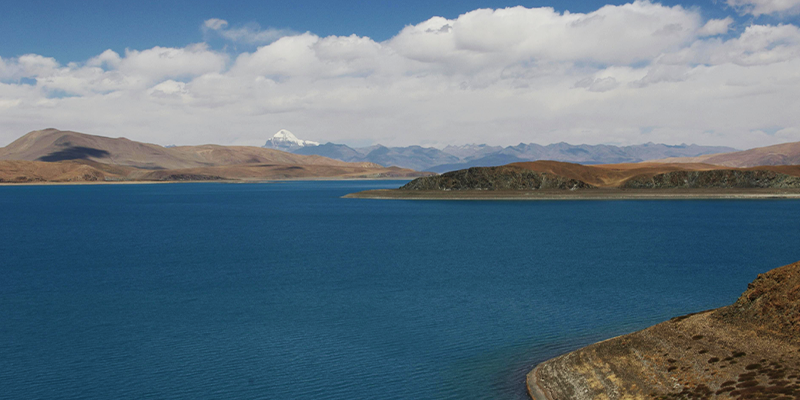
There are lakes that most of the travellers visit for photography, and then there are some lakes that stay with them even after they leave. Lake Mansarovar belongs firmly in the second category.
Situated at an altitude of approximately 4,590 metres in the Tibet Autonomous Region of China, Lake Mansarovar is among the highest freshwater lakes in the world. It sits in the shadow of Mount Kailash, the 6,638-metre peak that holds sacred status across Hinduism, Buddhism, Jainism, and the Bon religion. Together, the lake and the mountain form one of the most spiritually charged landscapes on Earth.
But here is what often gets lost in spiritual discussions about this place: Lake Mansarovar is also a staggering natural wonder. Its turquoise waters stretch across roughly 320 square kilometres, surrounded by snow-dusted peaks, vast Tibetan plains, and air so clean it almost stings. The combination of altitude, isolation, and untouched beauty makes it unlike any other lake you will find on the planet.
If you have been thinking about a Kailash Mansarovar trip, understanding what makes Lake Mansarovar so extraordinary will help you see why this yatra goes far beyond a standard pilgrimage.
The Geography That Makes Lake Mansarovar Exceptional
Lake Mansarovar is not just spiritually important. It is geographically remarkable in ways that most travellers do not fully appreciate until they arrive.
The lake sits on the Tibetan Plateau, often called the “Roof of the World,” at a height where most people start noticing thinner air and sharper sunlight. Despite the extreme altitude, the lake holds freshwater, which is unusual for high-altitude water bodies in this region. Its neighbour, Rakshas Tal (also called Ravan Tal), is a saltwater lake just a few kilometres to the west. The contrast between the two has fuelled centuries of mythology and spiritual interpretation.
The water clarity of Lake Mansarovar is extraordinary. On still mornings, the surface reflects Mount Kailash so precisely that it looks like the mountain exists twice. The lake freezes during the winter months and remains inaccessible, which is why the yatra season runs only from May to September.
What makes the geography even more interesting is the lake’s role as a source region. Four of Asia’s major rivers, the Indus, Sutlej, Brahmaputra, and Karnali, originate in the vicinity of Mount Kailash and Lake Mansarovar. Standing by the lake, you are quite literally at the hydrological heart of the continent.
Why Lake Mansarovar Holds Deep Spiritual Significance Across Religions
The spiritual weight of Lake Mansarovar is not confined to one faith. It carries meaning across multiple traditions, which is part of what makes it so universally revered.
In Hindu scripture, the lake is believed to have first been created in the mind of Lord Brahma before manifesting on Earth. The name “Mansarovar” itself comes from the Sanskrit words “manas” (mind) and “sarovar” (lake). Taking a holy dip in Lake Mansarovar is believed to cleanse accumulated karma and purify the soul. Pilgrims often collect the sacred water in small containers to carry back home as a blessing for family and loved ones.
For Buddhists, the lake is associated with Queen Maya, the mother of Gautama Buddha. It is believed she was carried to the lake in her dreams before giving birth to the Buddha. Buddhist pilgrims visit to meditate by its shores and seek spiritual clarity.
Jain tradition connects the area to Rishabhadeva, the first Tirthankara, who is said to have attained enlightenment near Mount Kailash. And for followers of the Bon religion, Tibet’s pre-Buddhist spiritual tradition, both the lake and the mountain are the seat of cosmic spiritual power.
Regardless of which tradition draws you, the experience of standing by this lake at dawn, with Mount Kailash glowing in the early light and prayer flags fluttering in the wind, is difficult to describe in words. It is the kind of stillness that rearranges something inside you.
What to Expect When You Visit Lake Mansarovar
If you are planning your first Kailash Mansarovar tour package, it helps to know what the experience at the lake looks like, beyond the spiritual narratives and the photographs.
The Arrival
Most travellers reach Lake Mansarovar after several days of travel, regardless of which route they take. By the time you arrive, your body has already been adjusting to altitude. The first view of the lake typically comes as a wide panoramic reveal, a sheet of deep blue water against brown and white mountains. It is a quiet, overwhelming moment.
Camps are set up near the lake’s shore, and this is where pilgrims spend one to two nights. The atmosphere at the camp is deeply communal. Strangers share meals, swap stories about the journey so far, and prepare together for the Parikrama of Mount Kailash that usually follows.
The Holy Dip
A holy dip in Lake Mansarovar is one of the most anticipated rituals of the entire yatra. The water is cold, genuinely cold. At 4,590 metres, even in summer months, the temperature of the lake stays low. Pilgrims usually enter the water at the shoreline, some waist-deep, some just ankle-deep.
The experience is brief but intense. Many pilgrims describe it as simultaneously shocking and calming. The cold water jolts your body, but the setting, the silence, the mountains watching over you, creates a strange sense of peace that balances the physical discomfort. It is one of those moments you will replay in your mind for years.
Sunrise and Sunset at the Lake
If there is one thing every returning pilgrim mentions, it is the light. Sunrise over Lake Mansarovar, with Mount Kailash catching the first golden rays, is one of the most visually powerful experiences in the Himalayas. The colours shift quickly, from deep blue to orange to white, and the water mirrors every change.
Sunsets are equally striking, though quieter in mood. The temperature drops fast once the sun goes down, so most pilgrims watch the sunset wrapped in layers, sitting in small groups near the camp. These are the unscripted moments that often feel more sacred than any formal ritual.
The Parikrama Connection
Lake Mansarovar is typically visited before the Parikrama (circumambulation) of Mount Kailash. The lake serves as both a spiritual preparation and a physical acclimatization point. Spending a night or two at the lake’s altitude helps your body adjust before tackling the higher elevations of the 52-kilometre Kora around Mount Kailash, which peaks at Dolma La Pass (5,636 metres).
This is one reason why the order of events in your Kailash Mansarovar yatra package matters. A well-planned itinerary places the lake visit strategically, giving your body time to adapt while also offering the spiritual grounding that many pilgrims seek before the physically demanding Parikrama.
How to Reach Lake Mansarovar and Which Route Works Best
Lake Mansarovar is not easy to reach. That remoteness is part of its appeal, but it also means your route choice has a direct impact on your experience, your comfort, and your safety.
Simikot to Hilsa Route (via Nepal): This is the most commonly chosen route today. Travellers fly to Nepalgunj and then to Simikot, before taking a helicopter to Hilsa on the Nepal-Tibet border. From Hilsa, it is a road journey into Tibet and onward to Lake Mansarovar. This route balances adventure with practicality. It reduces the trekking load significantly while still offering incredible Himalayan scenery. If this route interests you, Traveloi offers a comprehensive Kailash Mansarovar Yatra by road from Kathmandu that covers the full journey over 13 days.
Helicopter-assisted Route (from Lucknow): For travellers who want to minimize physical strain, particularly senior pilgrims or those with joint issues, the helicopter route is a strong option. It cuts travel time dramatically and preserves energy for the most important parts of the yatra, the lake visit and the Parikrama. Traveloi’s Kailash Mansarovar Yatra by helicopter from Lucknow covers the journey in 9 days with dedicated support.
Lipulekh Pass Route (via Uttarakhand): The traditional overland trek through Indian territory. This is the most physically demanding option and suits experienced trekkers who enjoy raw Himalayan trails. Travellers taking this route often combine it with visits to other parts of Uttarakhand.
Lhasa Route (via Tibet): A culturally rich option that starts with a flight into Lhasa, followed by a scenic road journey across the Tibetan Plateau. It allows gradual acclimatization and includes visits to Tibetan monasteries and towns. Ideal for travellers who want a slower, more immersive build-up to the lake.
Best Time to Visit Lake Mansarovar
The best time to visit Lake Mansarovar is between May and September. During these months, the mountain passes connecting India, Nepal, and Tibet to the lake region remain open, and the weather conditions are manageable throughout the journey.
May to June is considered the ideal window. Skies are mostly clear, temperatures during the day are relatively comfortable for walking, and the lake is at its most visually stunning, calm and deeply blue against snow-covered peaks.
July and August bring monsoon weather, which means occasional rain and cloudy skies. However, the rain also transforms the surrounding landscape into dramatic shades of green. If you do not mind slightly unpredictable weather, this period offers its own rugged beauty.
September is the tail-end of the season. The weather begins to cool, and some passes may start closing toward the month’s end, so timing becomes more critical.
If you are planning a Kailash Mansarovar trip, discussing your preferred travel window with your tour operator early is important. Permits, especially the Tibet Travel Permit and Chinese group visa, take time to process. Starting the planning process at least three to four months ahead gives you the flexibility to secure the best dates. Traveloi’s team helps with the entire documentation process as part of their Kailash Mansarovar Yatra packages.
Planning Your Visit With the Right Support
A Mount Kailash pilgrimage that includes Lake Mansarovar requires careful logistics. Permits across multiple government agencies, high-altitude medical preparedness, reliable ground transport in remote terrain, and experienced guides who know the trails and the culture. Trying to handle all of this independently adds unnecessary stress to what should be a deeply personal and meaningful journey.
Traveloi brings years of pilgrimage tour experience to this yatra. From securing permits and arranging acclimatization schedules to providing Sherpa support and oxygen backup, the team handles the operational side so you can focus on the experience itself. You can explore their full range of pilgrimage options, including Chardham Yatra packages and Adi Kailash Om Parvat Yatra packages, if you are considering a broader spiritual journey.
For a complete view of all spiritual tour options, the Pilgrimage Tours page on Traveloi’s website is a useful starting point.
Frequently Asked Questions
Q1: Why is Lake Mansarovar considered one of the highest freshwater lakes in the world?
Lake Mansarovar sits at approximately 4,590 metres above sea level on the Tibetan Plateau. Despite the extreme altitude, it holds freshwater, which is geographically unusual for lakes in this region. Its neighbour, Rakshas Tal, is a saltwater lake, which makes the contrast even more distinctive. The combination of elevation, water clarity, and sheer scale makes it a remarkable natural formation.
Q2: Is it safe to take a holy dip in Lake Mansarovar?
Yes, pilgrims regularly take a holy dip in Lake Mansarovar during the yatra season (May to September). The water is cold even in summer, so most people enter briefly near the shoreline. It is advisable to check with your guide and assess your own physical condition before entering, especially if you are still acclimatizing to the altitude. Tour operators like Traveloi keep medical support on hand during the visit.
Q3: How many days should I spend at Lake Mansarovar during the yatra?
Most Kailash Mansarovar yatra packages include one to two nights near the lake. This allows time for the holy dip, prayers, sunrise and sunset viewing, and physical acclimatization before the Mount Kailash Parikrama. If you are customizing your itinerary, you can request an additional night for a more relaxed experience.
Q4: Can I visit Lake Mansarovar without doing the Mount Kailash Parikrama?
In most organized tours, the lake visit and the Parikrama are combined as part of the same itinerary. However, customized packages can be structured to focus primarily on the lake visit if the Parikrama is too physically demanding for you. Discuss your preferences with your tour operator during the planning stage.
Q5: What documents do I need to visit Lake Mansarovar?
Since the lake is located in Tibet (China), you need a valid passport, a Tibet Travel Permit, an Alien Travel Permit, a Military Permit, and a Chinese group visa. If travelling via India’s Lipulekh route, approvals from the Ministry of External Affairs are also required. Traveloi handles all permit processing and visa documentation as part of their Kailash Mansarovar tour package, which removes the administrative burden from travellers.
Q6: What makes the Kailash Mansarovar yatra from Kathmandu a popular route to reach the lake?
The Kathmandu route via Simikot and Hilsa combines short flights, helicopter transfers, and road travel. It significantly reduces trekking effort while still delivering the full spiritual experience. It is especially popular with senior travellers and families. The route also allows a brief stay in Kathmandu for acclimatization and cultural exploration, making it a well-rounded journey.