
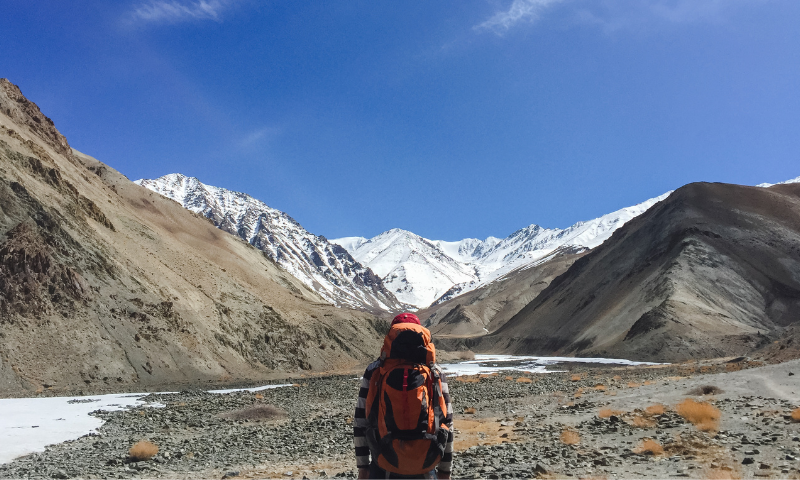
Mount Kailash and Lake Mansarovar are usually described through the lens of mythology, spirituality, and faith. That narrative is valid, deeply so. But there is a parallel story about this region that rarely gets airtime: the scientific one.
For decades, geologists, climatologists, biologists, and even cosmologists have studied the Mount Kailash and Lake Mansarovar region for reasons that have nothing to do with religion. The formations here are genuinely unusual. Some features align so precisely with cardinal directions that researchers have questioned whether natural geology alone explains them. Others behave in ways that continue to puzzle experts.
This blog takes a careful, evidence-respecting look at what science actually says, and does not say, about Kailash and Mansarovar. The goal is not to validate or dismiss belief. It is to share what researchers have genuinely observed, why those observations matter, and why this adds an entirely new dimension to your Kailash Mansarovar trip.
The Geological Structure of Mount Kailash
Mount Kailash stands at an elevation of 6,638 metres in the Kailash Range of Tibet. That is tall, but not extraordinarily so by Himalayan standards. Plenty of nearby peaks rise higher. What makes Kailash geologically unusual is its shape and composition, not its height.
The mountain has a near-pyramidal structure with four distinct faces that align roughly with the four cardinal directions: north, south, east, and west. That symmetry is rare in naturally formed mountains. Most peaks in the Himalayas are irregular, with sharp ridges and uneven faces shaped by erosion, glacial movement, and tectonic stress. Kailash presents something closer to a geometric regularity that researchers have examined repeatedly.
Studies suggest the rock composition is primarily conglomerate and sandstone, which is itself unusual for a peak at this altitude. The surrounding Himalayan peaks are largely granite and metamorphic rock. The geological isolation of Kailash’s composition from its surroundings has prompted research into how this specific peak formed.
Another observation that has intrigued researchers is the vertical symmetry of the mountain’s faces. The south face in particular reflects an almost perfectly symmetrical cleft that runs from the summit down toward the base. Whether this is a result of tectonic processes, differential erosion, or something else entirely is still being examined. No definitive single-cause explanation has been accepted across the research community.
Unsolved Mysteries of Mount Kailash That Science Is Still Working On
Several observations around Mount Kailash continue to sit in the “not fully explained” category. These are worth knowing about before you undertake the pilgrimage, because they add depth to what you are actually witnessing on the ground.
No One Has Successfully Climbed Mount Kailash
Mount Kailash has never been summited. While this is partly because climbing is prohibited out of respect for its sacred status across multiple religions, serious climbers in the past have reported unusual difficulties even on the lower slopes. The weather shifts rapidly. Visibility drops without warning. Several accounts describe disorientation near the higher reaches. Modern expeditions have since been formally prohibited, which means the mountain remains unclimbed, a rarity for peaks of this accessibility.
Rapid Aging and Disorientation Reports Near the Peak
There are anecdotal accounts from climbers, researchers, and pilgrims who have attempted to spend extended time near the higher slopes of Kailash. Some have reported unusual fatigue, accelerated hair and nail growth, and significant disorientation. While many of these accounts can be partly explained by altitude-related physiological stress and cognitive effects of hypoxia, some observations have not been fully accounted for by standard high-altitude medicine. These reports remain under examination rather than confirmed or dismissed.
The Alignment With Other Global Landmarks
Some researchers have examined whether Mount Kailash sits on any meaningful global axis or alignment with other significant landmarks. The results are mixed. Certain geographical proposals have been made, including possible alignments with ancient sites in other parts of the world, but none of these have been conclusively established in peer-reviewed scientific literature. This remains a topic of ongoing discussion rather than a settled fact, and travellers should approach such claims with measured curiosity rather than accepting them as confirmed science.
The Scientific Significance of Lake Mansarovar
Lake Mansarovar is scientifically important in ways that go beyond its spiritual status. Situated at approximately 4,590 metres, it is among the highest freshwater lakes in the world. That altitude alone makes it a valuable site for high-elevation ecology research.
What makes the lake particularly interesting to researchers is its clarity and chemistry. The water has low mineral content and remains unusually transparent even during active seasons. Sediment deposits in and around the lake offer a long paleoclimate record, which helps scientists understand how weather patterns and glacial activity have shifted across the Tibetan Plateau over thousands of years.
The neighbouring Rakshas Tal, just kilometres to the west, is a saltwater lake. The two lakes sit close to each other geographically, yet have fundamentally different water chemistry. This contrast has puzzled geographers for a long time. Various theories involve underground water movement, differences in drainage basins, and tectonic structures that separate the two lakes. No single theory has settled the matter entirely.
Lake Mansarovar is also hydrologically critical. Four major Asian rivers, the Indus, Sutlej, Brahmaputra, and Karnali, originate in the broader Mount Kailash and Mansarovar region. This makes the area one of the most significant water sources on the continent. Climate researchers monitor glacial retreat and water flow patterns here because changes in this region directly affect water availability for a significant portion of South and Central Asia.
Biological and Ecological Observations
The region around Mount Kailash and Lake Mansarovar supports life in conditions that most organisms cannot survive in. Cold-tolerant bacterial species, high-altitude algae, and specially adapted fish have been documented in and around the lake. Some of these microbial species are of interest to scientists studying extremophiles, organisms that thrive in extreme environmental conditions.
The surrounding terrain also supports wildlife uniquely adapted to the Tibetan Plateau. Wild yaks, Tibetan antelopes, and various raptor species have been observed in the broader region. For biologists, the area offers a natural laboratory for studying adaptation to low oxygen, extreme cold, and intense ultraviolet radiation.
This ecological uniqueness is one of the reasons why access to the region is carefully regulated and why tour operators running the Kailash Mansarovar yatra package must adhere to environmental protocols. Traveloi’s approach to this yatra includes responsible travel practices that respect the sensitivity of the region, which aligns with the broader philosophy of sustainable tourism that travellers increasingly look for. You can explore their full range of pilgrimage tours to see how environmentally conscious planning is built into their packages.
Atmospheric and Climatic Observations
The atmospheric conditions around Mount Kailash have been studied for their unusual behaviours. Weather shifts in the region are notoriously rapid. Clear skies can turn into snowstorms within minutes. This is partly explained by the lake-mountain system creating localized microclimates, but the speed and intensity of these shifts continue to be studied.
Sound propagation near the mountain has also been examined. Pilgrims and researchers have reported unusual acoustic phenomena, echoes that seem to travel further than expected, sounds that appear to originate from specific points on the mountain face. Some of this is explained by the geometry of the surrounding terrain and the way rock faces reflect sound. Not all of it has been fully accounted for.
Magnetic field variations in the region have been a topic of informal research. Some compass readings reportedly fluctuate in specific zones. While localized magnetic anomalies do exist in mountainous regions due to mineral composition in the rock, the Kailash area has generated more attention than most. Formal, peer-reviewed research on this specific phenomenon remains limited, so travellers should treat such claims with appropriate scepticism.
Why Science and Spirituality Do Not Actually Contradict
Here is something worth sitting for. The more scientists study Mount Kailash and Lake Mansarovar, the more they acknowledge how many observations remain incompletely explained. This does not mean the spiritual claims are “proven.” It means the region genuinely has characteristics that make it scientifically interesting in its own right.
For most pilgrims, knowing the scientific context adds to the experience rather than diminishing it. Standing by Lake Mansarovar with the knowledge that four major Asian rivers originate in this region makes the moment heavier, not lighter. Looking up at Mount Kailash’s near-pyramidal structure while knowing that geologists still debate its formation gives the sight additional weight, not less.
This is why a well-planned Kailash Mansarovar trip can serve both audiences equally. The devout pilgrim completing the Parikrama and the curious traveller interested in the geology both find something substantial here.
Experiencing the Research-Worthy Wonder of Kailash Mansarovar
If the scientific dimension of this region has caught your interest, planning the actual trip is the next logical step. The Kailash Mansarovar Yatra takes travellers through some of the most geologically and biologically unique terrain on the planet, and doing this journey with the right operator makes a significant difference.
Traveloi offers comprehensive Kailash Mansarovar Yatra packages that include the full experience, such as Lake Mansarovar visit, the Parikrama around Mount Kailash, and access to key viewpoints that showcase the region’s geography.
For travellers who prefer minimal physical strain, the Kailash Mansarovar Yatra by helicopter from Lucknow offers a 9-day itinerary with dedicated Sherpa support and oxygen backup.
For those who want a longer immersive experience through the scenic Nepal route, the Kailash Mansarovar Yatra by road from Kathmandu spans 13 days and allows more time at key sites, including Lake Mansarovar.
If you are also curious about related sacred sites that carry their own geological significance, the Adi Kailash Om Parvat Yatra in Uttarakhand features Om Parvat, which has a natural snow formation resembling the sacred Om symbol. It is a fascinating site for anyone interested in unusual natural formations.
Frequently Asked Questions
Q1: What is the most scientifically unusual thing about Mount Kailash?
The near-pyramidal structure of Mount Kailash, with its four faces aligning roughly with cardinal directions, is one of the most geologically distinctive features. Additionally, the rock composition (primarily conglomerate and sandstone) differs from the granite and metamorphic rock that dominate surrounding Himalayan peaks, which makes it a point of interest for geologists studying the region.
Q2: Why has no one climbed Mount Kailash?
Mount Kailash has never been formally summited. Climbing is prohibited out of respect for its sacred status across Hinduism, Buddhism, Jainism, and the Bon religion. Earlier expeditions also reported unusual weather shifts and difficulties at higher elevations. Today, the mountain remains officially off-limits to climbers, which makes it a rarity among accessible peaks of this altitude.
Q3: Is there real scientific research on Lake Mansarovar?
Yes. Lake Mansarovar has been studied for its unusual water chemistry, paleoclimate records preserved in its sediments, and its role as one of the highest freshwater lakes in the world. Its proximity to the saltwater Rakshas Tal, with both lakes having fundamentally different water characteristics, is an ongoing topic of scientific interest.
Q4: Are the stories about rapid aging and disorientation near Mount Kailash scientifically verified?
These reports are primarily anecdotal and not formally verified through peer-reviewed research. Many of the physiological effects described, including fatigue and disorientation, can be partly explained by altitude-related hypoxia. However, some observations remain fully unexplained, and this is an area where further research would be useful.
Q5: Does visiting Mount Kailash as a curious researcher make sense without any religious motivation?
Yes. The region offers genuine scientific and natural wonder for travellers interested in geology, high-altitude ecology, climatology, and unique terrain. Many travellers who approach the yatra from a research or curiosity angle find the experience deeply meaningful, even without a religious framework. Tour operators accommodate travellers across the spiritual and secular spectrum.
Q6: How can I plan a Kailash Mansarovar yatra from Kathmandu that also covers the key natural features?
The Kathmandu route via Simikot and Hilsa is well-suited for this yatra. It allows time at Lake Mansarovar, full access to the Parikrama around Mount Kailash, and viewpoints across the Tibetan Plateau. Discussing your interests with us, including any research or ecological focus, helps in tailoring the itinerary. Traveloi offers dedicated packages on this route that can be customized based on your priorities.
