
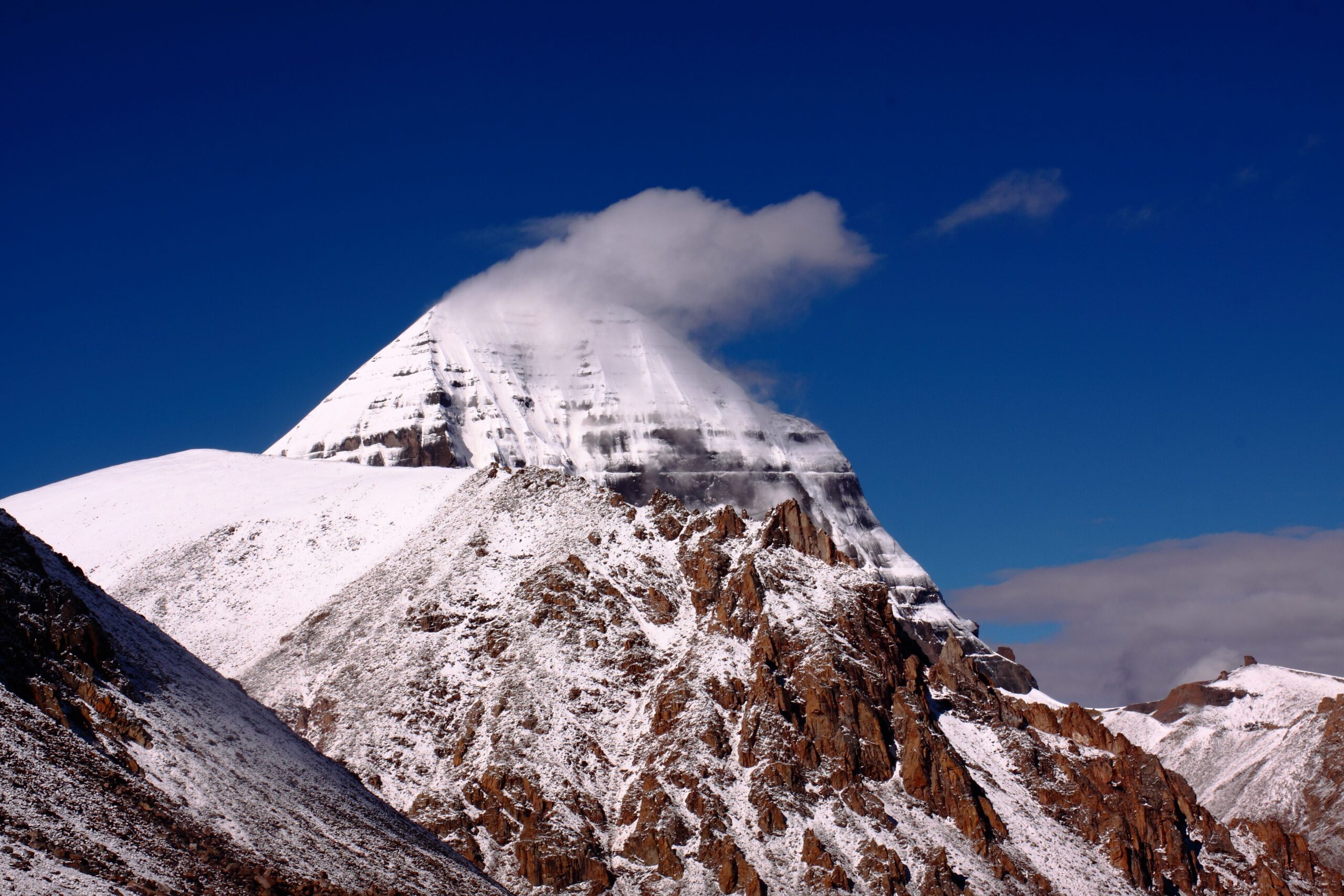
Two peaks tucked into the far edge of Uttarakhand’s Kumaon region have quietly become one of India’s most talked about pilgrimages. Adi Kailash, often called Chota Kailash, and Om Parvat with its naturally formed Om symbol sit close to the Indo-Tibetan border in Pithoragarh district. Pilgrims who once considered only the Kailash Mansarovar route in Tibet are now looking closer to home. If you have wondered what makes this Himalayan circuit worth the long drive and the paperwork, here are fifteen grounded reasons that answer the question.
1. It is India’s own sacred Kailash
Adi Kailash stands at 6,310 metres and is widely revered as the earthly counterpart of Mount Kailash in Tibet. The prefix Adi means primordial, and devotees consider this peak an abode of Lord Shiva and Goddess Parvati. Learn more about Adi Kailash as India’s own sacred Kailash mountain before you plan your journey.
2. Om Parvat carries a natural Om symbol
On a mountain face near Nabhidhang, snow settles in a pattern that forms the sacred ॐ symbol. No human hand has shaped it. The formation is visible for most of the yatra season, and many pilgrims describe the first sighting as the emotional peak of the entire trip.
3. Parvati Sarovar and Gauri Kund are within reach
Both sacred water bodies sit close to Adi Kailash, mirroring the snow peaks in still, glassy water. Pilgrims perform quiet rituals here and often say the silence around these lakes is louder than any temple bell they have known.
4. A meaningful alternative to Kailash Mansarovar
For pilgrims held back by visa timelines, age, or the cost of the Tibet route, this yatra offers a spiritually complete option within India. Traveloi also curates the full Kailash Mansarovar Yatra for those set on the traditional pilgrimage, so you can compare both before deciding.
5. Landscapes shaped by the Kumaon Himalayas
The route unfolds through alpine meadows, gorges cut by roaring rivers, and passes that open into wide mountain amphitheatres. This is not a manicured tourist trail. The Kumaon interiors still feel raw, and the scale of what you see stays with you long after the trip ends.
6. Villages that live differently
Communities along the Kali River valley, especially the Rung people around Gunji and Kuti, follow rhythms tied to the seasons, the border, and old trade memories. Meeting them adds a human layer to a journey that could otherwise feel purely scenic.
7. The Kali River valley drive is a journey in itself
The road follows the Kali River, which also marks the Indo-Nepal border. On one side sits India, on the other Nepal, and both look almost identical from the car window. The drive from Dharchula upward is one of the most quietly beautiful in the Indian Himalayas.
8. Nabhidhang, a vantage point unlike any other
Nabhidhang is where pilgrims stop to view Om Parvat. There is little infrastructure here, and that is the point. You stand in cold, thin air, look up, and read the symbol on the mountain face. Very few sights feel this uncluttered.
9. Jolingkong and the high altitude plateau
Jolingkong is the wide, quiet plain near Adi Kailash where pilgrims go for darshan and reach the sacred lakes. The altitude asks for respect, but the openness of the plateau is rare in the Himalayas and worth every careful step.
10. Legends the mountains still hold
Local traditions link this region to the Pandavas on their final journey and to sages who withdrew here for tapasya. You do not have to accept every story to feel that the land carries meaning older than the road you drove in on.
11. Road access has genuinely improved
Border Roads Organisation work over recent years has made the route usable for regular vehicles up to Jolingkong. What was once a multi day trek is now largely a road journey with short walks. For a season by season view, see the Adi Kailash Yatra 2026 opening and closing dates guide before locking in your travel window.
12. Shorter and less punishing than the Tibet route
The Adi Kailash and Om Parvat circuit is usually completed in eight to eleven days, depending on the starting point. There is no Dolma La Pass at 5,636 metres to cross. Fitness still matters, but the physical demand sits well below the classic Mansarovar Parikrama.
13. Cultural life around Dharchula
Dharchula sits on the banks of the Kali River and serves as the gateway town. Its markets, food, and the everyday exchange across the Nepal footbridge give the yatra a cultural texture you rarely find on standard pilgrimage circuits.
14. Photography that does not feel curated
Because tourist volumes here remain low, you photograph places that still look like themselves. No wide angle billboard is competing with your frame. Snow patterns, prayer flags, wooden homes, and river bends behave the way they always have.
15. A journey that quietly rearranges you
Pilgrims often go looking for a specific answer and come back with a different one. High altitude, long drives, simple food, and mostly silence do their own slow work. Many describe returning home lighter, without being able to explain why in one line.
Best time to plan your Adi Kailash Om Parvat Yatra
The yatra season generally runs from mid May to mid October. May and June carry clear skies and lighter crowds. September and October are prized for sharp mountain views and pleasant walking weather. The monsoon months of July and August bring landslide risk on parts of the route, so most operators avoid them.
For guided departures with permits, homestays, and experienced local drivers already handled, explore the Adi Kailash and Om Parvat Yatra tour packages by Traveloi, curated for both first time pilgrims and repeat travellers.
Plan Your Yatra
If you are still researching, keep reading and comparing routes at your own pace.
If you are shortlisting a trip for next season, browse curated departures on the Adi Kailash and Om Parvat Yatra page.
If you are ready to travel, speak with a Traveloi pilgrimage specialist to confirm dates, permits, and homestay arrangements before the season fills up.
Frequently Asked Questions
Q1. Where exactly are Adi Kailash and Om Parvat located?
Both peaks lie in the Dharchula region of Pithoragarh district in Uttarakhand, close to the Indo-Tibetan and Indo-Nepal borders. Adi Kailash is near Jolingkong, and Om Parvat is best viewed from Nabhidhang.
Q2. How many days does the Adi Kailash Om Parvat Yatra usually take?
Most itineraries run between eight and eleven days, depending on the starting point. Kathgodam, Haldwani, and Delhi are the common bases, with Dharchula as the operational gateway inside the region.
Q3. Is Adi Kailash Yatra harder than Kailash Mansarovar Yatra?
No. Adi Kailash is more accessible. The route is largely motorable now, and there is no pass at 5,636 metres to cross. Altitude is still real, so acclimatisation and moderate fitness are important, but the physical load is lower.
Q4. Do I need any special permits for this yatra?
Yes. An Inner Line Permit is required because the route runs near the Indo-Tibetan border. Permits are issued by the SDM office in Dharchula and Pithoragarh. Reputed operators arrange this on your behalf as part of the tour.
Q5. What is the best month to visit Adi Kailash and Om Parvat?
May, June, September, and October are considered the best windows. July and August are avoided due to heavy rain and landslide risk in the Kumaon interiors.
Q6. Can senior citizens undertake the Adi Kailash Om Parvat Yatra?
Yes, with reasonable fitness and medical clearance. Since most of the route is now by road, seniors regularly complete the journey. Slow acclimatisation days, warm layers, and a well-planned itinerary make a significant difference.
Q7. Is Om Parvat’s Om symbol visible all year?
The formation is visible during most of the yatra season, though clarity depends on snowfall and weather on the day of your visit. Early morning tends to offer the cleanest sightings.