
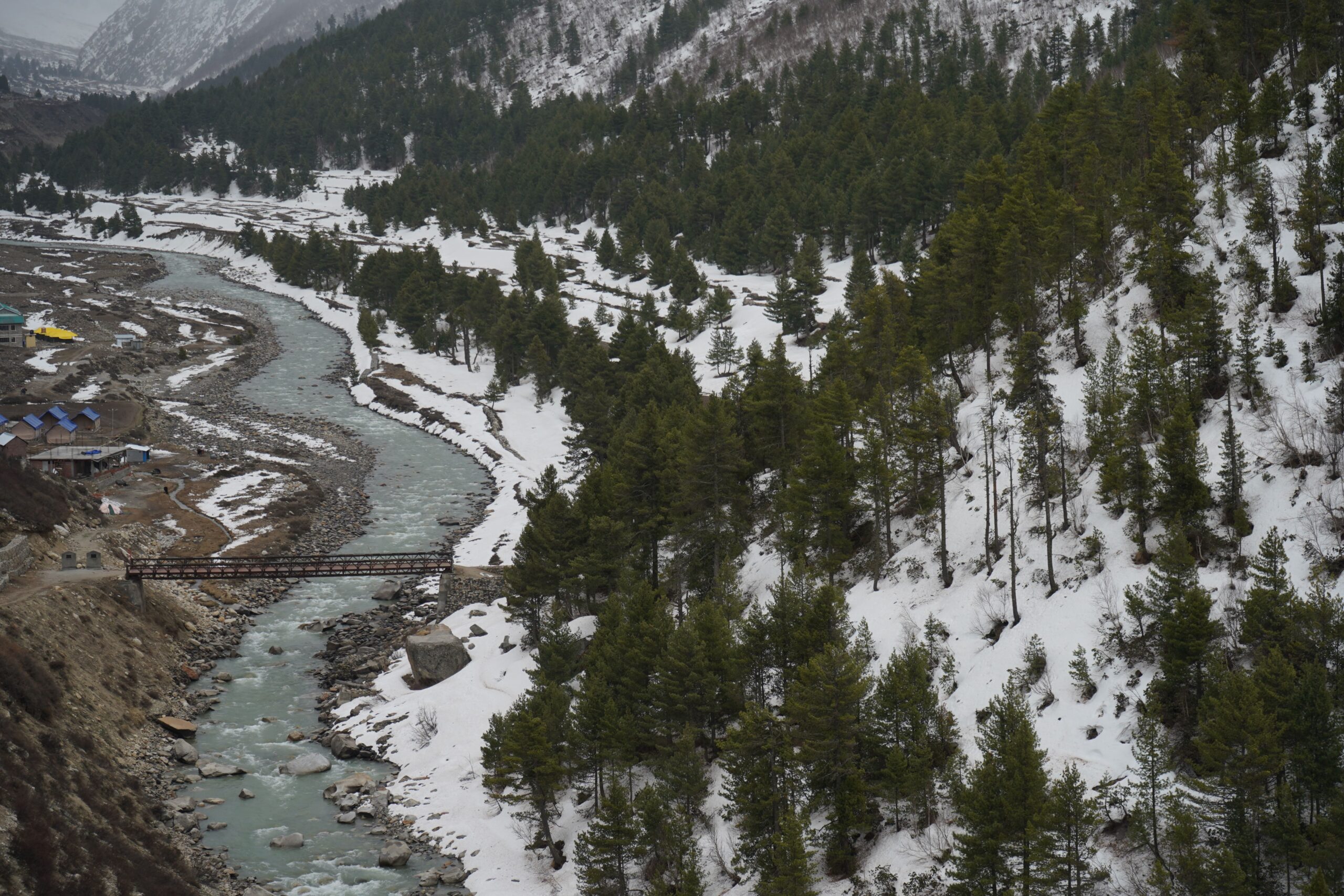
There is a stretch of road above Uttarkashi where the traffic thins, the pine forest closes in, and the Bhagirathi runs a shade of pale green that seems almost unreal. This is the approach to Harsil, a small Himalayan village that sits at roughly 2,620 metres in the Uttarkashi district of Uttarakhand. For years it stayed off the mainstream tourist map, tucked between deodar slopes and apple orchards, quietly living its own rhythm as pilgrims rushed past on the way to Gangotri.
That is changing, slowly. Travellers who want a quieter alternative to Manali or Shimla are finding their way here, and for good reason. Harsil rewards the people who slow down. If a snow lined meadow, orchard walks and one of the prettiest drives in the Garhwal Himalayas sound like your kind of holiday, this guide is for you.
Where Harsil Sits on the Map
Harsil lies about 73 kilometres beyond Uttarkashi town on the road to Gangotri Dham. It is a cluster of hamlets rather than a single town, with Bagori, Dharali and Mukhba scattered along the Bhagirathi river. The village is roughly 25 kilometres short of the Gangotri temple, which makes it a natural halt for Char Dham travellers who want to break the long drive.
The valley is ringed by the Sri Kanth, Bandarpunch and Gangotri ranges. Because it sits in a broad river basin rather than on a steep ridge, the light here is different. You get open, high altitude sunshine in the mornings and long golden hours by late afternoon.
Why Harsil Stands Out
A few things set this Himalayan village apart from the more famous hill towns of Uttarakhand.
- The apples. Harsil apples, brought to the valley in the 19th century by an eccentric British settler named Frederick Wilson, are still grown across Dharali and Bagori. The orchards are private property but the surrounding paths and roadside stalls give you a fair taste of the local produce.
- The military heritage. Harsil is a border area and has a permanent army presence. This has kept the valley clean, disciplined and refreshingly free of the concrete overbuild that has crept into other Himalayan towns.
- The old Bhagirathi. This is where the river is still narrow, cold and clear, long before it becomes the Ganga of the plains. Riverside walks here are among the quietest anywhere in the state.
- Spiritual weight without the crowds. The Mukhba temple, winter home of the Gangotri deity, sits just across the river. From late autumn until Akshaya Tritiya, this is where devotees come for the goddess’s darshan.
If you are already planning a broader trip through the region, our detailed Uttarakhand tour packages show how Harsil can slot naturally into a longer itinerary.
Things To Do in Harsil
You will not find water parks or cable cars here, and that is precisely the point. What Harsil offers is a set of slow, honest experiences.
- Walk the Sattal trail. A short forest walk from Dharali takes you to a series of small pools and streams. It is easy enough for families and quiet enough for solo travellers.
- Visit Bagori village. The Jadh Bhotiya community lives here, with distinctive wooden homes and prayer flags. Ask before photographing people, and buy a small woollen from the local weavers if you can. It supports the village economy directly.
- Drive up to Gangotri. The 25 kilometre stretch from Harsil to the temple runs past the striking Gangnani hot springs and the Lanka bridge, one of the highest suspension bridges in India. If Gangotri is on your list, our complete Char Dham Yatra guide walks you through the full circuit and the rituals at each shrine.
- Cross to Mukhba. A short drive and a walk across the river bring you to the winter seat of Goddess Ganga. The temple complex is small, simple and often almost empty on weekdays.
- Trek to Dayara Bugyal. From Harsil you can arrange short guided treks with local operators. Dayara Bugyal is a high altitude meadow that opens up above the treeline and is one of the softest treks in Garhwal.
- Sit with a cup of chai. This is not a joke. Pick a bench near the river, order a glass of masala chai from a roadside dhaba, and let the mountains do their work.
How To Reach Harsil
Harsil is reachable by road only. There is no direct rail or air link, which is one of the reasons it stays quiet.
- By air. The nearest airport is Jolly Grant in Dehradun, about 220 kilometres away. From there a taxi or shared cab to Uttarkashi is straightforward, followed by a further drive to Harsil.
- By train. Rishikesh and Haridwar are the closest railheads. Both are well connected to Delhi and other major cities.
- By road. From Rishikesh the drive is roughly 220 kilometres via Uttarkashi. State buses run to Uttarkashi, from where local shared jeeps head up to Harsil. Private taxis are the most comfortable option for families.
If you would rather skip the long drive, some pilgrims combine a helicopter route to Gangotri that lands at the Harsil helipad. Our Char Dham Yatra by helicopter package includes this leg and is worth a look if time is tight.
Best Time To Visit Harsil
Harsil has a clear seasonal rhythm. Choose your window based on what you want to see and do.
- April to June. Warm days, cool nights and clear mountain views. The road to Gangotri opens around late April, so this is peak season for pilgrims and photographers.
- July to mid September. Monsoon. Landslides on the route are common. Only travel this stretch if you have time buffers built in.
- Mid September to early November. A short, gorgeous window. Apples ripen, skies clear and crowds thin out.
- December to February. Snow. The village is accessible in most years but roads can shut without warning. Pack heavy woollens and check road conditions before you leave.
Where To Stay and What To Eat
Accommodation in Harsil is modest and largely family run. You will find GMVN guest houses, a small selection of mid range hotels in Dharali, and homestays in Bagori and Mukhba. The homestays are your best bet if you want to eat truly local food. Rajma with rice, buckwheat rotis, and thick apple jam on fresh bread are the local classics. Standalone restaurants are limited, so plan meals at your stay wherever possible and let your host know in advance if you have dietary preferences.
Practical Tips Before You Go
- Carry cash. ATM access is limited in the valley itself.
- Load offline maps and download music or podcasts. Mobile coverage is patchy though BSNL, Jio and Airtel now work across most of Harsil.
- Dress in layers. Even in June the nights ask for a fleece.
- Respect the border zone. Do not fly drones without checking with the local army post.
- Travel light on plastic. The village works hard to stay clean, and single use plastic feels out of place here.
Where Harsil Fits in a Bigger Trip
Most travellers reach Harsil as part of a longer Garhwal itinerary. It pairs beautifully with Gangotri for pilgrimage travellers, with Dayara Bugyal for trekkers, and with a broader loop through Uttarkashi and Mussoorie for families. If you are still shaping your plan, browsing a few sample Chardham packages from Delhi is a quick way to see how the region connects. The Traveloi team can then rework any of these into something that fits your dates and comfort level.
Frequently Asked Questions
Q1. Is Harsil worth visiting for a two day trip?
Yes, if you can arrive by early afternoon on day one. Two nights and one full day give you enough time for an orchard walk, a visit to Mukhba and a drive up to Gangotri or Gangnani.
Q2. Is Harsil safe for solo and women travellers?
It is one of the safer parts of Uttarakhand. The army presence, small population and family run stays make it a comfortable choice for solo travellers, though basic precautions after dark still apply.
Q3. Do I need a permit to visit Harsil?
Indian nationals do not need a permit for Harsil itself. Foreign nationals may need an Inner Line Permit for areas beyond Gangotri, and the rules do change, so confirm the latest requirement before you travel.
Q4. Can I visit Harsil in winter?
You can, and the snow is beautiful. Plan for shorter days, be prepared for road closures, and travel with a driver who knows the route in cold conditions.
Q5. How far is Harsil from Gangotri temple?
About 25 kilometres by road, usually an hour of driving depending on traffic and roadwork.
Q6. What is Harsil famous for?
Its apple orchards, the Bhagirathi river, the winter home of Goddess Ganga at Mukhba, and its reputation as one of the quieter alternatives to the popular Himalayan hill stations.