
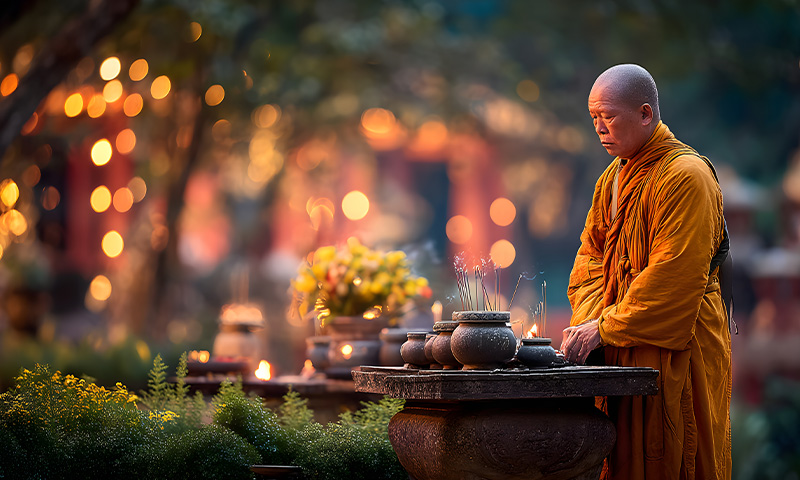
Bhutan has a quiet confidence about it. The country measures progress through Gross National Happiness, protects more than seventy percent of its land under forest cover, and treats Buddhism as a living daily practice rather than a tourist backdrop. For travelers looking for stillness, prayer flags fluttering above pine valleys, and conversations with monks who have spent decades in retreat, a Bhutan spiritual tour offers something few destinations still can: unhurried time with sacred places.
This guide walks through the monasteries worth visiting, the dzongs that still function as centers of civic and religious life, and the meditation retreats that invite deeper practice. It is written for travelers who want more than a photo stop at Tiger’s Nest. Think of it as a planning companion for a slower, more intentional journey through the Himalayas.
Why Bhutan Draws Spiritual Seekers
Bhutan is one of the last Vajrayana Buddhist kingdoms in the world. The tradition shapes the architecture, the calendar, the food served at festivals, and even the way homes are built. Unlike destinations where temples sit as monuments, Bhutanese monasteries hum with daily rituals, young monks reciting texts, and butter lamps being refilled at dawn.
A few reasons travelers pick Bhutan for a spiritual journey:
- Low tourist density thanks to the Sustainable Development Fee, which keeps crowds thin and interactions meaningful.
- Access to lamas, teachers, and retreat masters who still accept visitors with genuine interest.
- A landscape that supports contemplation, with valleys like Bumthang often called the spiritual heartland of the country.
- Festivals (tshechus) that offer rare glimpses into mask dances rooted in centuries old teachings.
For a wider view of how Bhutan fits within the region’s sacred circuits, browse our curated Bhutan destination page, which lays out the country’s spiritual geography for first time visitors.
The Monasteries Worth Your Time
A spiritual itinerary works best when it balances iconic sites with quieter ones. Rushing between landmarks defeats the purpose. Here is a shortlist that most travelers find rewarding.
Paro Taktsang (Tiger’s Nest Monastery)
The hike to Paro Taktsang remains the signature spiritual experience in Bhutan. Perched on a cliff at around 3,120 meters, the monastery marks the cave where Guru Rinpoche is believed to have meditated for three years, three months, three weeks, three days, and three hours. The climb takes roughly four to six hours round trip. Start early, carry water, and build in time to sit quietly at the viewpoint before entering the complex.
Kyichu Lhakhang
One of the oldest temples in Bhutan, dating to the seventh century, Kyichu Lhakhang sits in the Paro valley and is known for its calm courtyard and the sacred orange tree that fruits year round. A short visit here is often more moving than longer stops elsewhere.
Jambay Lhakhang in Bumthang
Built in 659 CE by the Tibetan king Songtsen Gampo, Jambay Lhakhang is part of a chain of 108 temples said to pin down a demoness obstructing the spread of Buddhism in the Himalayas. The annual Jambay Lhakhang Drup festival, with its sacred fire ceremony, draws practitioners from across the region.
Kurje Lhakhang
Also in Bumthang, Kurje holds the body imprint of Guru Rinpoche in a rock inside the oldest of its three temples. The site feels deeply devotional and is often paired with a walk along the Chamkhar Chhu river.
Gangtey Monastery in Phobjikha Valley
Gangtey overlooks the glacial valley where black necked cranes winter from late October through February. The monastery belongs to the Nyingma school and offers a peaceful setting for travelers who want to combine wildlife, landscape, and contemplative time.
Dzongs: Where Faith Meets Governance
Dzongs are the architectural signatures of Bhutan. Each one serves as both a monastery and the administrative seat of its district. They are built without blueprints or nails, which is itself a testament to the craftsmanship still protected in the country.
Punakha Dzong
Set at the confluence of the Pho Chhu and Mo Chhu rivers, Punakha Dzong is widely considered the most beautiful dzong in Bhutan. It served as the capital until the 1950s and still hosts the Punakha Tshechu and Drubchen festivals each spring.
Trongsa Dzong
The largest dzong in the country, Trongsa commands a strategic ridge in central Bhutan. It is the ancestral home of the royal family and its vantage point alone makes the stop worthwhile.
Rinpung Dzong in Paro
Rinpung means fortress on a heap of jewels. The dzong hosts the Paro Tshechu, one of the most attended festivals in the country, usually held in spring. The covered wooden bridge at its base is a photograph most travelers remember.
Tashichho Dzong in Thimphu
This is the seat of the current government and the summer residence of the Je Khenpo, the chief abbot of Bhutan. Evening visits, when the dzong is lit against the hills, are especially memorable. Travelers covering the main dzong circuit in one trip often follow our Incredible Bhutan 5 Days package, which threads Paro, Thimphu and Punakha into a single unhurried route.
Meditation Retreats in Bhutan
For travelers who want more than a sightseeing circuit, Bhutan offers structured and informal retreat options. These range from a few guided sessions during a regular tour to multi day silent retreats at monastery guesthouses.
What to expect
- Early mornings, usually starting between 5:00 and 6:00 am.
- Sessions on shamatha (calm abiding) and vipassana (insight) practices.
- Simple vegetarian meals, with tea breaks built into the schedule.
- Teachings in English through a translator, where available.
Popular retreat settings
- Bumthang valley monasteries, often considered the most conducive to practice.
- Chagri Dorjeden Monastery near Thimphu, founded in 1620, which still functions as a major retreat center for the Drukpa Kagyu lineage.
- Private guesthouses attached to smaller gompas in Haa and Phobjikha, suited to travelers who want solitude without full monastic enrollment.
A thoughtfully designed retreat is not about collecting hours of sitting. It is about pacing the day so that walking, journaling, and conversations with teachers all become part of the practice. For travelers who want a dedicated spiritual arc rather than a general sightseeing trip, our pilgrimage and spiritual tours collection brings together guided journeys across the Himalayas, including Bhutan.
Suggested 8 to 10 Day Spiritual Itinerary
- Days 1 to 2: Arrive in Paro, acclimatize, visit Kyichu Lhakhang and Rinpung Dzong.
- Day 3: Hike to Paro Taktsang, rest in the afternoon.
- Days 4 to 5: Drive to Thimphu, visit Tashichho Dzong and Chagri Monastery, meet a resident teacher if arranged in advance.
- Day 6: Cross Dochula Pass to Punakha, visit Punakha Dzong and Chimi Lhakhang.
- Days 7 to 8: Travel to Bumthang, spend two nights visiting Jambay Lhakhang, Kurje Lhakhang, and Tamshing Monastery.
- Day 9: Optional retreat day with guided meditation.
- Day 10: Return to Paro for departure.
This pace keeps driving hours manageable and leaves room for the kind of unplanned moments that make spiritual travel memorable. For travelers combining Bhutan with other Himalayan destinations, our team often builds twin country itineraries pairing Bhutan with Sikkim and Darjeeling or Nepal.
Best Time to Go
Spring (March to May) and autumn (September to November) remain the preferred windows. Autumn offers clear skies and major tshechus. Spring brings rhododendron blooms and the Paro Tshechu. Winter is quieter and well suited for retreats, though some high passes may close briefly.
Practical Planning Notes
- Visas are arranged through a licensed tour operator; independent tourist visas are not issued.
- The Sustainable Development Fee applies per person per night and funds free healthcare, education, and conservation for Bhutanese citizens.
- Photography inside most temple interiors is restricted. Always ask before photographing monks or rituals.
- Dress modestly at religious sites. Shoulders and knees should be covered, and hats removed inside temples.
- Carry a refillable water bottle. Bhutan has banned many single use plastics and travelers are expected to follow suit.
For travelers who want help structuring the trip around personal intent rather than a generic circuit, speak with our planners through the Traveloi contact page.
How Traveloi Approaches Spiritual Journeys
Traveloi designs Bhutan journeys around three ideas: unhurried pacing, access to practitioners who are willing to share their time, and respect for the places visited. Our planners work with local lamas, licensed Bhutanese guides, and family run guesthouses rather than large chain properties. This keeps the economic benefit close to the communities hosting travelers and makes the experience more honest.
We also build in flexibility. If a traveler decides on day four that they want to extend a retreat by two days, we rework the back half of the itinerary rather than hold them to a fixed schedule. That kind of responsiveness tends to matter more on a spiritual trip than on a standard holiday.
Frequently Asked Questions
Q1. What is the best duration for a Bhutan spiritual tour?
Eight to twelve days works well for most travelers. It allows time for Paro, Thimphu, Punakha, and Bumthang without rushing. If you plan to join a meditation retreat, add three to five days to that base.
Q2. Can beginners join meditation retreats in Bhutan?
Yes. Many monasteries and retreat centers welcome beginners, with teachings adapted for first time practitioners. Traveloi arranges introductory retreats for travelers who have never meditated before, as well as deeper silent retreats for experienced practitioners.
Q3. Do I need to be Buddhist to visit monasteries and dzongs?
No. Bhutanese sites welcome visitors of all faiths. The expectation is respect, modest dress, and quiet behavior inside active prayer halls.
Q4. Is the Tiger’s Nest hike suitable for seniors?
The hike is strenuous but manageable with pacing. Horses can carry travelers up to the halfway cafeteria. From there, the final section is on foot. Seniors who walk regularly and are comfortable at altitude usually complete it with time to spare.
Q5. How do I combine a spiritual tour with cultural festivals?
Align your travel dates with a tshechu such as Paro, Thimphu, or Jambay Lhakhang Drup. Festivals are usually three to five days long and can be built into a wider itinerary without changing the overall structure.
Q6. What makes Bhutan different from other Buddhist destinations?
Bhutan has preserved the daily rhythm of Vajrayana practice in a way few other countries have. Monasteries are not museums here. They are workplaces, schools, and homes to monks and nuns who follow traditions handed down for centuries.