
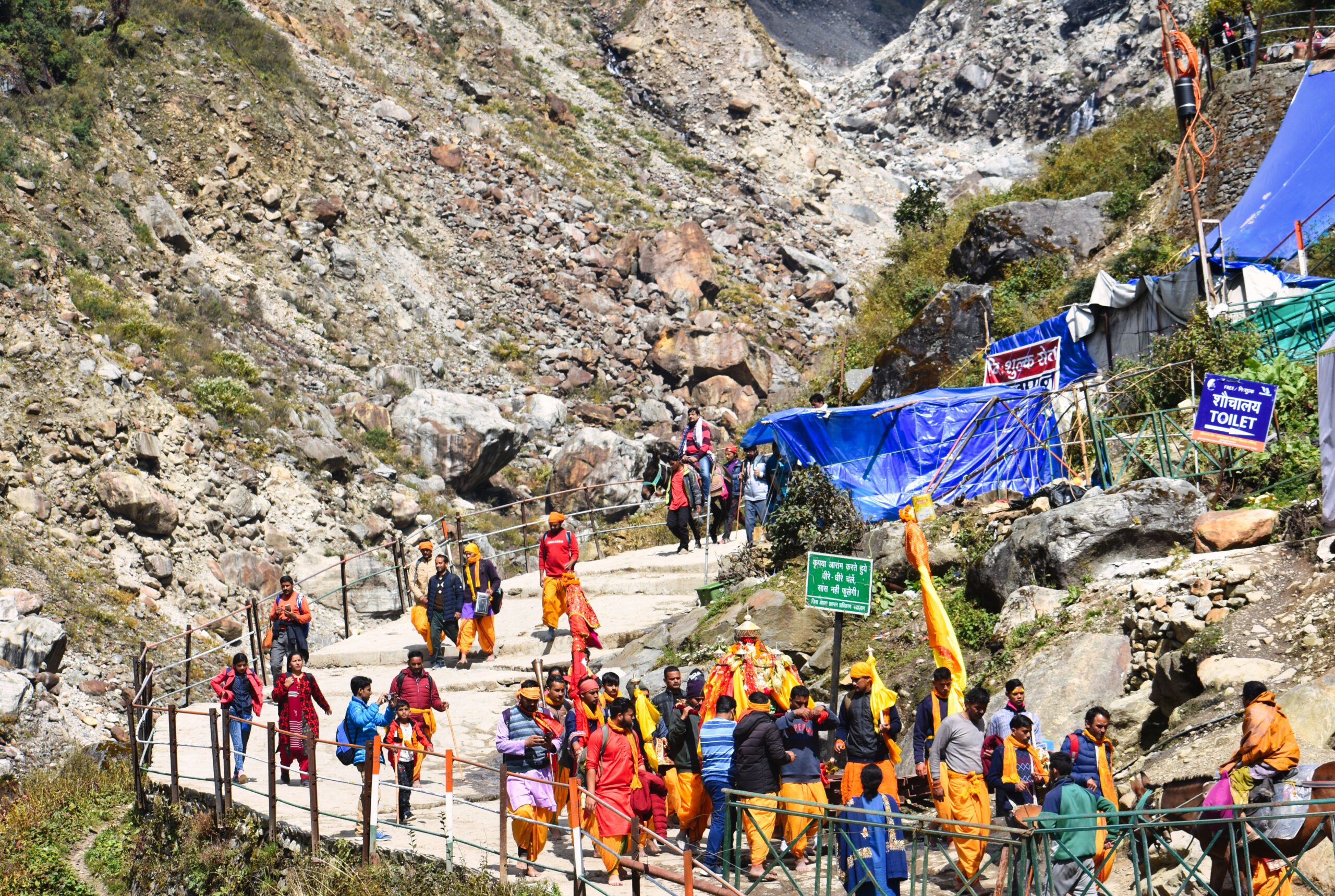
Uttarakhand carries a spiritual weight that few Indian states can match. Locals call it Devbhoomi, the land of the gods, and the reason becomes clear the moment you step onto its temple trails. Ancient stone shrines sit beside glacier fed rivers, sadhus walk quietly through pine forests, and mantras echo down valleys that have held the same rhythm for centuries. If a pilgrimage is on your mind this season, here are fifteen religious places in Uttarakhand that deserve a serious spot on your itinerary, along with practical notes to help you plan.
Before we begin, a quick word on planning. Most high altitude shrines open between April or May and close by October or November, so timing matters. If you are new to the region, our Uttarakhand tour packages page is a useful starting point for shortlisting circuits by duration and interest.
1. Kedarnath
Set at over 3,500 metres in the Rudra Himalaya, Kedarnath is one of the twelve Jyotirlingas and part of the Chota Char Dham circuit. The temple is believed to have been rebuilt by Adi Shankaracharya, and the trek from Gaurikund still draws lakhs of devotees each season. The setting is austere and unforgettable, with the Mandakini river below and snow ridges rising on all sides.
2. Badrinath
Dedicated to Lord Vishnu, Badrinath sits between the Nar and Narayan peaks and is one of the four Char Dham sites in India. Pilgrims traditionally bathe in the hot spring at Tapt Kund before entering the temple. The town is compact, walkable, and has a calm evening arti that many travellers say is the highlight of their entire trip.
3. Gangotri
Gangotri marks the spiritual source of the Ganga, though the actual glacier lies further upstream at Gaumukh. The temple, built in white granite, opens on Akshaya Tritiya and closes around Diwali. Trekkers often extend their visit with a walk to Bhojbasa or Gaumukh, which needs a forest permit but rewards you with some of the cleanest Himalayan air in the country.
4. Yamunotri
The source of the Yamuna river, Yamunotri is the westernmost of the Char Dham shrines. Reaching the main temple involves a steep six kilometre trek from Janki Chatti, and many pilgrims cook rice in the Surya Kund hot spring as prasad. It is quieter than Kedarnath and Badrinath, which is part of the charm.
5. Haridwar
Haridwar is where the Ganga leaves the mountains and enters the plains, and Har ki Pauri is the ghat you have probably seen in photographs. The evening Ganga arti here is one of the most attended religious ceremonies in India. Haridwar also serves as the natural base for anyone starting a Char Dham journey by road or rail.
6. Rishikesh
A short drive upstream from Haridwar, Rishikesh blends serious spiritual practice with backpacker energy. Triveni Ghat, Parmarth Niketan, and the Neelkanth temple road are the anchors for most pilgrims, while the Lakshman Jhula and Ram Jhula bridges are worth crossing on foot at least once. It is also the gateway for many Himalayan yatras.
7. Hemkund Sahib
The world’s highest gurudwara sits beside a glacial lake at more than 4,600 metres, associated with Guru Gobind Singh Ji. The trek starts from Govindghat and passes through Ghangaria, and most travellers pair it with a day walk to the Valley of Flowers. Weather changes quickly here, so early morning departures are the safer choice.
8. Tungnath
Tungnath is the highest Shiva temple in the world and one of the five Panch Kedar shrines. The trail begins at Chopta and is manageable for reasonably fit walkers, with Chandrashila summit sitting a little above the temple. If you are short on time and want a taste of high altitude pilgrimage without a multi day trek, this is the pick.
9. Jageshwar Dham
Tucked into a deodar forest near Almora in Kumaon, Jageshwar Dham is a cluster of more than a hundred stone temples dating back to roughly the 7th to 12th century. It is considered one of the twelve Jyotirlingas by many traditions. The atmosphere is unusually quiet, thanks to the towering cedars, and the site rewards slow, unhurried visits.
10. Adi Kailash and Om Parvat
Deep in the Kumaon side of the Indo Tibet border, Adi Kailash is regarded as a spiritual equivalent to Mount Kailash in Tibet. Om Parvat, with its natural snow pattern resembling the sacred syllable, lies on the same circuit. This is a high altitude, permit heavy journey, and our Adi Kailash Yatra itineraries handle the logistics end to end.
11. Neelkanth Mahadev
A thirty kilometre drive from Rishikesh through thick sal forest brings you to Neelkanth Mahadev, where Lord Shiva is believed to have consumed the poison from the Samudra Manthan. The temple is busy on Mondays and during Shravan, so weekday mornings are the calmer window. Combine it with Rishikesh for a well paced two day plan.
12. Baijnath Temple, Kumaon
On the banks of the Gomti river between Kausani and Bageshwar, the Baijnath group of temples dates from the Katyuri period. The main shrine is dedicated to Lord Shiva as Vaidyanath, the divine physician. The site is often overlooked by mainstream itineraries, which is exactly why it is worth adding if you like temples with atmosphere and few crowds.
13. Kartik Swami Temple
Kartik Swami is one of the very few temples in North India dedicated to Lord Kartikeya, elder son of Shiva and Parvati. It sits on a narrow ridge above Kanak Chauri village in Rudraprayag district, with a three kilometre uphill walk to reach the shrine. Sunrise views of the Chaukhamba, Trishul, and Nanda Devi ranges are the reward.
14. Nanda Devi Temple, Almora
At the heart of old Almora bazaar, the Nanda Devi temple is the cultural anchor of Kumaon. The annual Nanda Devi fair in late summer brings folk performers, artisans, and pilgrims from across the region. The stone carving on the shikhara is worth a slow look, and the surrounding lanes are a good place to buy traditional copperware.
15. Piran Kaliyar Sharif, Roorkee
A short drive from Haridwar, the dargah of Sabir Piya at Piran Kaliyar is one of the most respected Sufi shrines in northern India. Visitors from every faith come here for the annual Urs and for quieter weekday visits. Including it in your Uttarakhand trip is a small but meaningful reminder that Devbhoomi has always been spiritually plural.
Practical Planning Notes
A few things save time and stress once you commit to an Uttarakhand pilgrimage.
- Register in advance for the Char Dham Yatra through the official Uttarakhand government portal. Registration is mandatory each season.
- Carry government photo ID, a printed itinerary, and any medical prescriptions. High altitude shrines like Kedarnath and Hemkund Sahib need reasonable fitness.
- Pack layered warm clothing even in summer. Weather at altitude turns quickly.
- Respect local customs. Photography is restricted inside most sanctums, and leather items are not allowed at several temples.
If you would rather cover only Kedarnath and Badrinath in a single trip, our Do Dham Yatra package is a shorter, well paced alternative. For travellers who want to complete the full circuit in comfort, the Char Dham Yatra theme page lists options by duration, budget, and mode of travel.
Why Travel with Traveloi
Traveloi has built its reputation on well planned Himalayan and pilgrimage journeys, with a focus on responsible travel, verified local partners, and value for money. Our teams handle registrations, permits, transfers, and stay so you can focus on the reason you came, the darshan itself.
Frequently Asked Questions
What are the most famous religious places in Uttarakhand?
The four Char Dham shrines of Kedarnath, Badrinath, Gangotri, and Yamunotri are the most famous, along with Haridwar, Rishikesh, Hemkund Sahib, Jageshwar Dham, and the Panch Kedar temples like Tungnath.
When is the best time to visit religious places in Uttarakhand?
For the high altitude Char Dham and Panch Kedar shrines, May to June and September to mid October are the best windows. Haridwar, Rishikesh, and Jageshwar Dham stay accessible all year.
Is registration compulsory for Char Dham Yatra?
Yes. The Uttarakhand government has made biometric or online registration mandatory for all Char Dham pilgrims. It is free and can be completed on the official state tourism portal before you travel.
Which religious sites in Uttarakhand are suitable for senior citizens?
Badrinath, Haridwar, Rishikesh, Jageshwar Dham, and Neelkanth Mahadev are the most senior friendly since they involve limited walking. Kedarnath is also accessible for seniors via helicopter services.
How many days are needed to cover the main religious places in Uttarakhand?
A standard Char Dham circuit takes ten to twelve days by road. If you add Hemkund Sahib, Adi Kailash, or Kumaon temples like Jageshwar, plan for two to three weeks in total.
Are non Hindu visitors welcome at these temples?
Yes. Most temples in Uttarakhand welcome visitors of all faiths, subject to standard dress code and behaviour rules. Sites like Hemkund Sahib and Piran Kaliyar are already interfaith in spirit.