
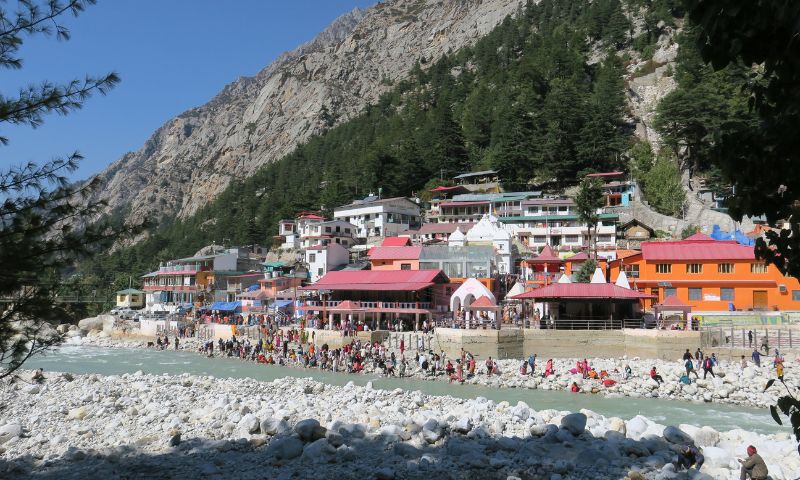
Gangotri holds a rare kind of weight in the Hindu pilgrimage map. It is one of the four Char Dham sites in Uttarakhand, and it marks the spiritual origin of the Ganga, India’s most sacred river. For millions of devotees, a visit to Gangotri is not just about temple darshan. It is about standing at the point where mythology, geology, and faith converge.
Situated at an elevation of 3,100 metres in the Garhwal Himalayas, the Gangotri Temple sits on the banks of the Bhagirathi River. The temple remains open for roughly six months each year, making timing essential. This guide covers everything you need to know: darshan timings, registration requirements, the best months for travel, and places to visit nearby.
Why Gangotri Matters: Religious and Mythological Significance
According to Hindu mythology, Gangotri is the place where Goddess Ganga descended from heaven to earth. King Bhagirath performed intense penance here to bring the celestial river down to wash away the sins of his ancestors. Lord Shiva, moved by his devotion, released the mighty Ganga from his matted locks (jataa) to prevent the force of her descent from destroying the earth.
This story makes Gangotri far more than a geographical location. It is the site of divine intervention, ancestral redemption, and spiritual cleansing. A holy dip in the Bhagirathi at Gangotri is believed to wash away sins accumulated over lifetimes.
Gangotri is also one of the four pillars of the Char Dham Yatra, alongside Yamunotri, Kedarnath, and Badrinath. Pilgrims who complete the full circuit traditionally begin at Yamunotri, proceed to Gangotri, and then head toward Kedarnath and Badrinath. If you are planning the complete circuit, our Char Dham Yatra complete guide covers the full route history, logistics, and travel season in detail.
Gangotri Temple: History and Architecture
The Gangotri Temple was built in the early 18th century by Amar Singh Thapa, a Gorkha commander. The temple was later restored in the 19th century and has since been maintained as one of the most important shrines in the Garhwal region. Its white facade, set against the snow and the Bhagirathi river valley, is one of the most recognizable images in Indian pilgrimage.
The sanctum houses an idol of Goddess Ganga, adorned with silver ornaments. During winter, when the temple closes, the idol is ceremonially shifted to Mukhba village in Dharali, Uttarkashi district, where worship continues through the cold months.
Gangotri Temple Opening and Closing Dates 2026
The temple opens and closes based on the Hindu calendar. The Chardham Temple Committee, in consultation with the head priest, announces the exact dates each year.
| Detail | Information |
| Opening Date | 19 April 2026 (Akshaya Tritiya) |
| Expected Closing Date | Around 10 November 2026 (Diwali/Bhai Dooj) |
| Duration Open | Approximately 6 months |
| Winter Idol Location | Mukhba Village, Dharali, Uttarkashi |
Editorial Note: Exact closing dates are confirmed roughly one month before closure. Always verify with the Uttarakhand government’s official Char Dham portal before finalizing your travel dates.
Gangotri Temple Darshan Timings
The temple follows a fixed daily schedule during the pilgrimage season. Knowing these timings helps you plan your day efficiently and avoid unnecessary waiting.
| Session | Timing |
| Morning Darshan | 6:15 AM to 2:00 PM |
| Afternoon Break | 2:00 PM to 3:00 PM (temple closed) |
| Evening Darshan | 3:00 PM to 9:30 PM |
| Mangala Aarti | 6:00 AM (behind closed doors) |
| Evening Ganga Aarti | 7:45 PM |
| Maha Bhog Break | 9:00 AM to 9:10 AM (brief pause) |
The evening Ganga Aarti on the banks of the Bhagirathi is a highlight of the Gangotri Yatra. Arrive at the ghat by 7:15 PM to get a good spot. The aarti, with oil lamps reflecting on the river surface, is one of those moments that stays with you.
Best Time to Visit Gangotri
May to June is the most popular window. The weather is relatively mild (daytime temperatures range between 10 and 20 degrees Celsius), the roads are in good condition post-winter clearance, and the temple is freshly opened. This period sees the highest footfall, so book accommodation and transport well in advance.
September to early October is the second-best window. Post-monsoon greenery makes the drive exceptionally scenic, crowds thin out significantly, and the weather remains comfortable. This is often the preferred window for travelers who want a quieter, more reflective yatra.
Avoid July and August. The monsoon brings landslides, road closures, and unpredictable weather across the Garhwal region. Travel during these months is risky and not recommended.
How to Reach Gangotri
Gangotri is accessible only by road. There is no railway station or airport at Gangotri itself. Here is how to plan your approach:
• By Air: The nearest airport is Jolly Grant Airport in Dehradun, approximately 290 km from Gangotri. From Dehradun, hire a taxi or take a shared cab to Uttarkashi and then onward to Gangotri.
• By Train: Rishikesh and Haridwar are the nearest major railway stations. Rishikesh is roughly 270 km from Gangotri, and Haridwar is about 288 km away.
• By Road: The road journey from Rishikesh to Gangotri typically takes 9 to 10 hours. The route passes through Uttarkashi, Harsil Valley, and Lanka Bridge. State-run buses, shared cabs, and private vehicles are all options. Leave early to account for mountain driving conditions.
Travelers starting from Delhi often combine Gangotri with the remaining three Dhams in a single trip. The Chardham Yatra from Delhi package covers the entire Yamunotri, Gangotri, Kedarnath, and Badrinath circuit with transport, stays, and temple scheduling handled end to end.
Gangotri Yatra Registration: What You Need to Know
Registration is mandatory for all Char Dham pilgrims, including those visiting Gangotri. The Uttarakhand government requires every pilgrim to register online before beginning the yatra. Without a valid registration slip, you will not be allowed past the checkpoints.
Key points to keep in mind:
• Registration is free of charge.
• You will need a valid government photo ID (Aadhaar, passport, or voter ID).
• A medical fitness certificate may be required for pilgrims above a certain age or those with pre-existing health conditions.
• Register early. During peak months, registration slots can fill up.
Places to Visit Near Gangotri
Gangotri’s surroundings offer much beyond the main temple. If your schedule allows, set aside an extra day to explore:
Gaumukh Glacier
Located 19 km from Gangotri, Gaumukh is the actual source of the Bhagirathi River, which later becomes the Ganga. The trek to Gaumukh is moderately challenging and takes about 6 to 8 hours one way. A permit from the Uttarkashi Forest Department is required. This is one of the most rewarding treks in the Indian Himalayas for both pilgrims and adventure seekers.
Harsil Valley
Often referred to as a hidden gem along the Gangotri route, Harsil Valley is surrounded by apple orchards and cedar forests. The valley sits along the Bhagirathi and offers stunning views without the crowds of more popular hill stations.
Submerged Shivling
A naturally formed rock in the shape of a Shivling is visible in the Bhagirathi riverbed during winter when water levels drop. During the pilgrimage season, it remains submerged but holds significant spiritual importance.
Pandava Gufa (Pandava Cave)
About 1.5 km from the Gangotri Temple, this cave is believed to be the spot where the Pandavas meditated during their journey to the Himalayas. It is a short walk and adds a mythological dimension to your visit.
If Gangotri sparks your interest in more of Uttarakhand’s spiritual and scenic landscape, take a look at the full range of Uttarakhand tour packages that cover hill stations, pilgrimage circuits, and adventure itineraries across Devbhoomi.
What to Pack for Gangotri Yatra
The altitude and mountain weather demand preparation. Here is a practical packing list:
• Warm layers: temperatures can drop sharply after sunset, even in May and June
• Waterproof jacket and sturdy trekking shoes (essential if you plan the Gaumukh trek)
• Sunscreen and sunglasses (UV exposure is higher at altitude)
• Basic medications: pain relievers, antacids, and any prescription drugs
• A water bottle and energy snacks for the drive and any treks
• Government photo ID and printed registration slip
Planning Your Gangotri Trip? Here is Where to Start
If you are still comparing itineraries and dates, start with the route breakdown and season guide in the Char Dham blog linked above. It answers most of the logistical questions first-time pilgrims have about the full circuit.
For those planning to pair Gangotri with Kedarnath and Badrinath, the Kedarnath Badrinath Do Dham Yatra package is a strong option. It covers the two most popular Dhams with verified stays, private transport, and on-ground coordination by Traveloi’s team.
Ready to book? Traveloi handles the complete logistics for Gangotri and Char Dham tours, from Dehradun or Delhi pickup to temple-timed itineraries, verified hotels, and 24/7 on-ground support. Get in touch directly to lock in your preferred travel dates.
Frequently Asked Questions (FAQs)
What is the significance of Gangotri in Hindu mythology?
Gangotri is regarded as the place where Goddess Ganga descended to earth from Lord Shiva’s matted locks, answering King Bhagirath’s penance to purify his ancestors. It marks the spiritual origin of the Ganga and is one of the four Char Dham pilgrimage sites in Uttarakhand.
What are the darshan timings at Gangotri Temple?
Gangotri Temple opens for morning darshan at 6:15 AM and remains open until 2:00 PM. After a one-hour afternoon break, it reopens from 3:00 PM to 9:30 PM. The evening Ganga Aarti takes place at 7:45 PM and is a must-attend for visitors.
When does Gangotri Temple open and close in 2026?
In 2026, Gangotri Temple is expected to open on 19 April (Akshaya Tritiya) and close around 10 November (near Diwali/Bhai Dooj). The exact closing date is confirmed by the Chardham Temple Committee roughly one month before closure.
Is registration required for Gangotri Yatra?
Yes. Registration is mandatory for all pilgrims visiting Gangotri as part of the Char Dham Yatra. The process is free and done online through the Uttarakhand government’s official portal. A valid photo ID is required.
What is the best time to visit Gangotri?
May to June and September to early October are the best windows. May and June offer mild weather and good road conditions. September and October are quieter with post-monsoon greenery. Avoid the monsoon months of July and August due to landslide risks.
Do I need to trek to reach Gangotri Temple?
No. Gangotri Temple is directly accessible by road. No trekking is required to reach the temple. However, if you wish to visit Gaumukh Glacier (the actual source of the Bhagirathi/Ganga), it requires a 19 km trek from Gangotri.