
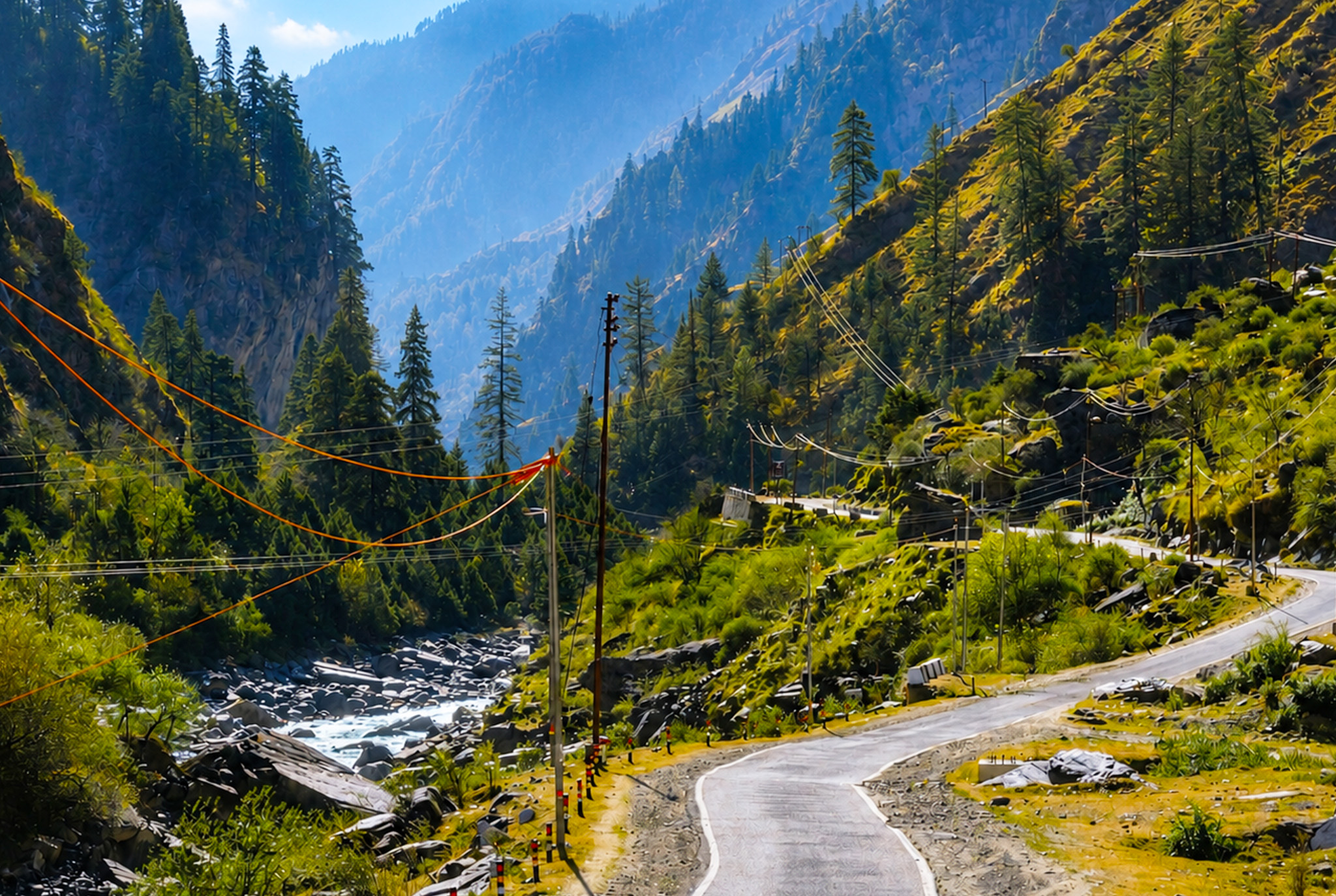
Tucked into the Bhagirathi valley at around 2,620 metres, Harsil is a small Garhwali village that most travellers used to pass through on their way to Gangotri. That changed in 2024, when the Ministry of Tourism, Government of India named it one of the country’s Best Tourism Villages under the Vibrant Villages category. The award was announced on World Tourism Day and recognised Harsil’s community-led tourism, apple farming heritage, and quiet approach to hosting visitors. If you have been looking for a Himalayan destination that still feels lived-in rather than built for social media, this guide covers what makes Harsil special, what to see, when to go, and how to fold it into a wider Uttarakhand trip.
Where Harsil Sits on the Map
Harsil lies in the Uttarkashi district of Uttarakhand, about 73 kilometres uphill from Uttarkashi town and 25 kilometres short of Gangotri Dham. The Bhagirathi river runs alongside it, and deodar forests, apple orchards and snow-lined peaks form the backdrop. The village sits on National Highway 34, the same road pilgrims use for the Gangotri leg of the Char Dham Yatra.
Because of that road access, Harsil doubles as a staging base for pilgrims heading to the source of the Ganga, trekkers moving toward Gangotri National Park, and defence personnel serving in the border region. The helipad used for Gangotri sector movements is also here.
Why It Was Named India’s Best Tourism Village
The Best Tourism Village competition is run every year by the Ministry of Tourism to reward rural destinations that combine sustainability, cultural preservation and community participation. In 2024, 36 villages across eight categories were recognised nationally, and Harsil won in the Vibrant Village slot alongside three other Uttarakhand villages.
What set the village apart:
- A shift from hotel-first tourism to a homestay network run by local families
- Community involvement in guiding, cooking and craft
- Conservation-linked activities such as birdwatching, forest walks and river-side treks that replace louder commercial tourism
- A rich apple orchard tradition, traceable to the 1850s
- Proximity to a Snow Leopard Conservation Centre, one of the first of its kind in India
- Living Garhwali cultural traditions, including the winter home of Goddess Ganga at Mukhba
The recognition is less about a single monument and more about the village’s model of low-impact, locally owned tourism.
Things to Do in Harsil
Plan around slow days rather than packed sightseeing.
- Walk the apple orchards. The Harsil apple, planted by Frederick Wilson in the 1850s, is still a mainstay of the local economy. Autumn is harvest season.
- Cross the Lanka bridge. Locally described as one of Asia’s highest suspension bridges, it spans the Jadh Ganga gorge and is a common photo stop for pilgrims.
- Visit Bagori village. A short walk from Harsil, this settlement of the semi-nomadic Jadh Bhotiya community offers a look at Himalayan wool craft and traditional Garhwali homes.
- See Mukhba, the winter home of Goddess Ganga. When Gangotri temple closes for the season, the deity is brought here for six months, and the village hosts daily rituals through that period.
- Trek to Sattal, a group of small lakes near Dharali, or take the longer walk to Kyarkoti and Lamkhaga.
- Stop by the Snow Leopard Conservation Centre near Bhairon Ghati.
- Photograph the sunrise from Sattal viewpoint or the deodar groves at dawn.
For a wider spiritual add-on, Harsil pairs well with a visit to Gangotri Dham, and many travellers combine both as part of a Chardham Yatra from Delhi itinerary that includes a night in the valley.
Nearby Places Worth a Day Trip
- Gangotri Dham, 25 km, the source shrine of the Ganga and one of the Chota Char Dham sites
- Dharali, 3 km, a small village with orchards and the ancient Kalp Kedar temple
- Gartang Gali, around 40 km, a restored 17th century wooden staircase carved into a cliff face on the old Indo-Tibet trade route
- Nelong Valley, further inside the Gangotri National Park zone, open with prior permits
- Bhaironghati, the confluence point of the Jadh Ganga and Bhagirathi
- Uttarkashi town, useful for base logistics, medical needs and travel connections
Any of these can be added to a broader Uttarakhand tour package depending on how many days you have.
Best Time to Visit Harsil
The village has three usable seasons for leisure travel and one for snow lovers.
- Summer, from April to June, is the busiest window. Days are warm, orchards are green, and Gangotri Dham is open for pilgrims. Rooms fill quickly, so book early.
- Monsoon, from July to mid-September, brings landslides and unreliable roads. Not the ideal window for first-time visitors, though the valley is at its greenest.
- Autumn, from mid-September to October, is arguably the best window. Apples are ripe, skies are clear, and crowds thin out.
- Winter, from November to March, brings heavy snow. The road often closes past Harsil, and temperatures drop well below zero. It is the right season if you want to see snowfall, but plan for limited services.
Pilgrims typically combine Harsil with the summer Gangotri leg. Leisure travellers get the best photographs in autumn.
How to Reach Harsil
Harsil is around 275 km from Dehradun and can be reached in one long day of driving or two comfortable ones.
- By air: Jolly Grant airport in Dehradun is the nearest, followed by a road journey via Uttarkashi.
- By train: The closest usable railhead is Dehradun, with onward taxis or shared jeeps.
- By road: Regular buses and shared taxis run between Dehradun, Uttarkashi and Harsil. Drivers usually break the trip in Uttarkashi.
- By helicopter: A helipad at Harsil is used for Gangotri sector movements, and pilgrims booking a Char Dham Yatra by helicopter from Dehradun can access this leg with prior arrangement.
Roads to Harsil are mountain roads with steep gradients and blind curves. Motion sickness medication is a sensible pack-in.
Where to Stay in Harsil
Homestays are the recommended option. The village has been recognised specifically for its community-run stay network, and staying with a local family gives you home-cooked Garhwali meals and firsthand cultural exposure.
- Homestays in Harsil and Dharali, mostly family-run
- Government-run guest houses, useful for larger groups
- Small hotels and eco-huts closer to the main road
- Army rest houses, subject to eligibility
For heritage character, look for restored wooden houses. Traveloi can help match you to a stay that fits your budget and travel style.
Quick Travel Tips
- Carry cash. ATMs are limited and network coverage is patchy.
- Acclimatise for a night at Uttarkashi if you are prone to altitude sickness.
- Pack layers even in summer; evenings drop sharply.
- Respect the working village. Ask before photographing homes, temples or families.
- Do not litter in the orchards or riverbanks; the Vibrant Village recognition exists because locals actively protect the place.
- Register for the Char Dham Yatra online in advance if you plan to continue to Gangotri.
Plan Your Harsil Trip with Traveloi
If you are still researching, use this guide to shortlist dates and add-on stops. If you are comparing itineraries, look at how Harsil fits into a wider Gangotri or Char Dham circuit. And if you are ready to book, our Uttarakhand travel specialists can build a Harsil-focused package that includes homestays, orchard visits and onward Gangotri darshan. Reach out through the Traveloi website and share your travel dates to get a personalised plan.
Frequently Asked Questions
Why is Harsil called the best tourism village in Uttarakhand?
Harsil received the Best Tourism Village award for 2024 from the Ministry of Tourism, Government of India, under the Vibrant Villages category. The recognition was for its community-based tourism model, apple farming heritage and low-impact hosting practices.
Is Harsil worth visiting for non-pilgrims?
Yes. Harsil works well as a standalone Himalayan getaway thanks to its orchards, forest walks, homestays and low tourist density, even without continuing to Gangotri.
How many days should I plan for Harsil?
Two to three nights is a comfortable window. It gives time for Harsil itself, a Gangotri day trip and a walk to Bagori or Mukhba.
Is Harsil safe for families and senior travellers?
Yes, with reasonable precautions. Roads are mountainous, altitude is moderate, and homestays are family friendly. Seniors should carry prescriptions and consult a doctor before the trip.
Do I need any permit for Harsil?
No permit is needed for Harsil village itself. Inner areas such as Nelong Valley require Inner Line Permits issued from Uttarkashi.
Can Harsil be combined with the Char Dham Yatra?
Yes. It sits naturally on the Gangotri leg of the yatra and is an easy overnight stop. Our complete Char Dham Yatra guide explains how to sequence Harsil with the other three dhams.
Is mobile network available in Harsil?
Coverage is limited. BSNL works better than most private networks; carry a physical map or offline route for backup.