
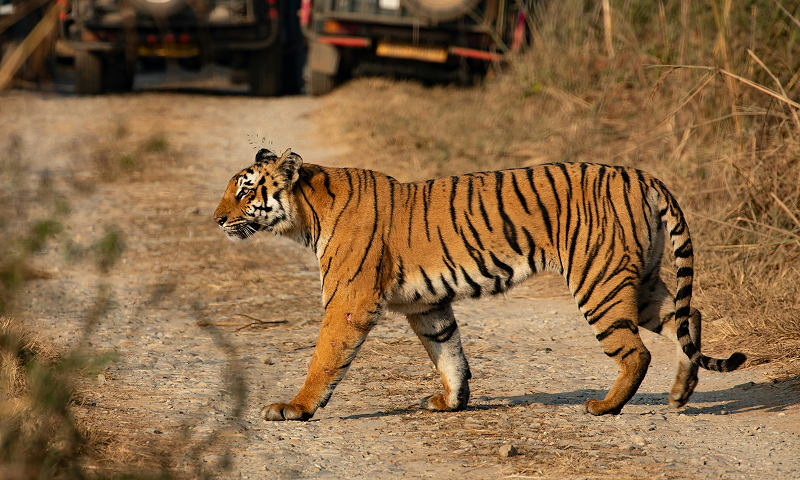
Jim Corbett National Park is the ultimate haven for tigers. A large population of tigers and other wildlife species inhabits this stunning landscape, which teems with a diverse array of flora and fauna. This wildlife sanctuary, India’s first tiger reserve, was established to protect the wildlife and preserve the natural habitat of the region. Jim Corbett National Park is situated in the hills of Uttarakhand, offering breathtaking scenic views of diverse landscapes, dense forests, and a rich biodiversity.
This wildlife reserve includes different species, from Bengal Tigers, Asiatic Elephants, Asiatic Black Bear, Gharial (fish-eating crocodile), deer species Sambhar and Chital, and over 600 bird species. A jungle safari in this paradise offers an incredible experience for adventure enthusiasts and nature lovers. The best safari zones in Jim Corbett to explore the thrilling adventures are Dhikala, Bijrani, Jhirna, Dhela, and Sitabani. Each of these zones has its own unique features to enhance your journey. Jungle safaris are not just an experience but also a way to connect with wildlife and nature. Whether you’re seeking a natural sightseeing destination or an adventurous spot to enjoy with your family or friends, this place is a must-visit. To explore, you can choose Jeep Safari, Canter safari, or Elephant Safari; it’s totally up to you. In this blog, we have provided all the information about this adventurous destination. Read on to know more:
About Jim Corbett National Park
History of Jim Corbett National Park
This National reserve was known as Hailey National Park in earlier times, and later it was renamed as Jim Corbett National Park after the name of the famous tiger hunter turned naturalist Edward James Corbett. Learning about the balance of the ecosystem, he realised that tiger hunting was not something he should continue, so he started an awareness program to protect endangered species that were vanishing rapidly, largely due to increasing human development. This initiative, which he led to protect nature and wildlife, turned out to be a successful measure. In 1973, he launched the project “Save the Tigers” to maintain ecological balance. With great effort, this initiative led to the formation of other sanctuaries. This is one of the oldest and largest sanctuaries, and it includes not only endangered animals but also bird species, flora, and fauna. Collectively, over 110 species of trees, 580 species of birds, 50 species of mammals, and 25 species of reptiles are being taken care of in this wildlife reserve. Most notable species found in Jim Corbett National Park are the Royal Bengal Tiger, the Asiatic Elephant, the Asiatic Black Bear, the Crested Serpent Eagle, the Indian Pitta, the Ghariyal, and the Mugger Crocodile. This park also offers some thrilling activities like rock climbing, paramotoring, rocket ejector, slithering, archery, and rifle shooting. After exploring the dense forest of Jim Corbett National Park, you can explore many key attractions in its surroundings, such as the Garjiya Devi Temple, the Hanuman Dham temple, Corbett Museum, Corbett Falls, and Sitbani Forest Reserve.
Understanding the Best Safari Zones in Jim Corbett
The Jim Corbett National Park offers some of the distinct safari areas within the park to enjoy Sightseeing, jungle safari, and other thrilling activities. The names of these are as follows:
1. Dhikala Zone
This place is known for its vast grasslands, diverse scenery, and beautiful landscapes. It supports a wide variety of wildlife, including frequent sightings of herds of Asiatic elephants and Royal Bengal tigers. You can enjoy birdwatching and a jungle safari at this place. This is the only zone that is accessible by a Canter, which is a 16-seater small bus. If you don’t want to lose your chance to explore this beauty, try to book a night’s stay at the lodge inside the Dhikal zone.
Why Visit?
- Offers a spectacular view of the lush greenery and rich biodiversity
- Different views of the surroundings for sightseeing
- Day and Evening jungle safari for travellers
Things to Do: Canter Safari, Wildlife Viewing, Bird Watching, and Jeep Safari
Safari Price:
- (Indian) INR 2600/person for Cartner Safari
- (Foreigner) INR 5000/ person for Cartner Safari
- (Indian) INR 8000/ gypsy for Jeep Safari
- (Foreigner) INR 16000/ gypsy for Jeep Safari
Timings:
Canter Safari
- Morning 6:00 AM to 11:30 AM
- Evening 12:00 PM to 5:30 PM
Jeep Safari
- Morning 6:00 AM to 9:00 AM
- Evening: 2:30 PM to 6:30 PM
2. Bijrani Zone
This zone in Jim Corbett National Park is known for offering excellent sightseeing views of tigers. It’s a prime destination for adventure seekers and day tourists looking for a jeep safari and thrilling activities. The vast grasslands of this zone cover a significant part of the park, offering a higher chance of spotting the White Bengal tiger compared to other zones. This place is the most visited after the Dhikala zone, as the number of visitors who prefer day tourism is higher here. You can enjoy an Elephant Safari and a Jeep Safari to explore the lush greenery of Sal Forest and various water courses to get an amazing experience.
Why Visit?
- Jeep safari here offers a mix of forest and meadow environments
- Perfect for photography, sightseeing, and Bird watching
- Only Gypsy Safari is available in this zone
Things to Do: Nature Photography, Bird Watching, and Wildlife Spotting
Safari Price:
- ( Indian) 8000/ gypsy for Jeep Safari
- ( Foreigner) 16000/ gypsy for Jeep safari
Timings:
Jeep Safari:
- Morning 6:00 AM to 9:00 AM
- Evening 2:30 PM to 6:30 PM
3. Jhirna Zone
This zone is located in the southern part of the Jim Corbett, and was included long after in the tiger reserve zone. In the year 1994, this zone gained popularity among wildlife lovers. Counted as the best safari zones in Jim Corbett, this place serves the best scenic views of the surroundings and the wildlife. This zone of the national park has high chances of tiger sighting, and is also home to sloth bears and elephants. The Jhirna zone of Jim Corbett National Park remains open throughout the year without any seasonal closures.
Why Visit?
- No seasonal restriction for the jungle safari and sightseeing
- Diverse topography is offered in this landscape
- The varied habitat of Birds present here is excellent for bird watching
Safari Price:
- ( Indian) 8000/ gypsy for Jeep safari
- ( Foreigner)1600/ gypsy for Jeep safari
Timings:
Jeep Safari:
- Morning 6:00 AM to 9:00 AM
- Evening 2:30 PM to 6:30 PM
4. Dhela Zone
This zone is the latest counted zone in the tourism of Jim Corbett, which was opened in 2014 for safari tourism. This destination is very popular for leopard sightseeing in Jim Corbett National Park. The lush forest, with rich wildlife, is a must-visit for nature seekers and adventure enthusiasts. This zone is also open throughout the year, allowing visitors to enjoy jungle safaris and bird watching, as there is a wide variety of species here.
Why Visit?
- High tiger and leopard density is visible here
- Diverse flora and Fauna are spread in its surroundings
- This zone offers Jungle Trail, a thrilling adventure activity
Safari Price:
- (Indian) 800/ gypsy for Jeep Safari
- ( Foreigner) 1600/ gypsy for Jeep Safari
Timings:
Jeep Safari:
- Morning 6:00 AM to 9:00 AM
- Evening 2:30 PM to 6:30 PM
5. Durga Devi Zone
Durga Devi Zone is known for its hilly terrain and thrilling experiences. The picturesque view of its surroundings serves breathtaking views, and to explore this place, a permit is necessary, which is available at Durga Devi Gate. There is a variety of bird species visible in this area, from white-crested laughing thrush, chestnut-bellied nuthatch,white-capped redstar, great slaty woodpecker, white-rumped shama, and plumbeous water redstart, which is like a treat for bird enthusiasts and nature lovers. This place is especially known for its rich wildlife you can enjoy photography and hill safari with the rivers like Ranganga and Mandal here.
Why Visit?
- This zone is an ideal location for bird watching and sightseeing
- It isn’t open yearly, and most probably it is closed during the monsoon
- This location is located in a hilly area, so the chance of viewing rare and endangered species is quite high
Safari Price:
- (Indian) 800/ gypsy for Jeep Safari
- ( Foreigner) 1600/ gypsy for Jeep Safari
Timings:
Jeep Safari:
- Morning 6:00 AM to 9:00 AM
- Evening 2:30 PM to 6:30 PM
Types of Safari at Jim Corbett National Park
1. Jeep Safari
This safari ride accommodates up to six people at a time and is more expensive compared to other options. It is available in almost every zone of Jim Corbett, except the Dhikala zone.
2. Canter Safari
This safari includes 8 people at a time while exploring the wildlife sanctuary, and compared to other options, if you’re looking for a budget-friendly safari, this is the best to choose. This wildlife safari is only available in Dhikala, and proper booking should be scheduled before the peak season, as availability of seats is very rare.
3. Elephant Safari
This safari is a thrilling adventure where tourists ride majestic elephants through the lush green forest. The majestic views of the surroundings while riding create a memorable experience. This ride is not available in every zone and is usually conducted only in the mornings.
Tips For Wildlife Photographers
Permits and booking: This is very important to keep your journey smooth without any hassle. Book your tickets in advance to avoid last-minute hassles. Pre-booking is mandatory for jungle safaris as seat availability is limited. If you’re waiting for a budget tour, then book your tickets two or three months before you visit.
Timings: Timings for the jungle safari take place in the morning and late afternoon. To capture the picturesque views of the destination park maintains strict rules for entry and exit. So, try to manage your schedule and arrive early, and there will be no delay in exploring this destination.
Good Backpack: A good backpack will always be your savior. Try to pack all essentials like binoculars, good cameras, a water bottle, medicines, and some snacks. Carrying binoculars or zoom cameras will help you to enhance your vision because the animals are at a distance. On the other hand, taking health precautions and staying hydrated will make the journey easier, especially in summer.
Accommodation: For a better experience, try for added convenience either from the park or a nearby location. There are diverse options available here, from luxury resorts to budget-friendly lodges.
Authentic Cuisine: To fully experience the region, try their authentic Kumaoni cuisine. Seek recommendations from the locals or the staff for a better experience of the food haven of this place.
What is the best time to explore Jim Corbett National Park?
If you want to spot wildlife like the Royal Tiger, Asiatic Elephant, birds, and other species, the best time to visit is during the summer season, between mid-March and mid-June. During this time, the chances of sightseeing and photography are very high as the grassland gets dry because of the weather, which leads to more visibility. In the monsoon season, the visibility of wildlife is quite less because the grasslands grow bigger and decrease the chances of a tiger being seen. The only way possible in that weather to enjoy tiger sightseeing is when he goes out on the road. In the winter, in November and December, the chance of tigers sightseeing is very less, but you can enjoy birdwatching during that time. It is the perfect time for the migratory birds, like the shelduck, ibis, and storks.
Conclusion
Exploring Jim Corbett National Park is an unforgettable experience in your travel journey from the rocky terrains of hills to the lush greenery of the Sal forest; everything here is a haven for nature and adventure seekers. One pro tip to explore this scenic beauty is planning. It is the key to a successful journey. Choosing the right safari zone, within the timings, can enhance your travel experience. The chances of seeing the Royal Tiger and the Asiatic elephant are also high if you travel with a plan. Respect the rules of this wildlife sanctuary so that there are no issues arise in your journey. Also, try to maintain silence and distance from the wildlife to ensure a safe and memorable journey while capturing the moments that you will cherish forever.
