
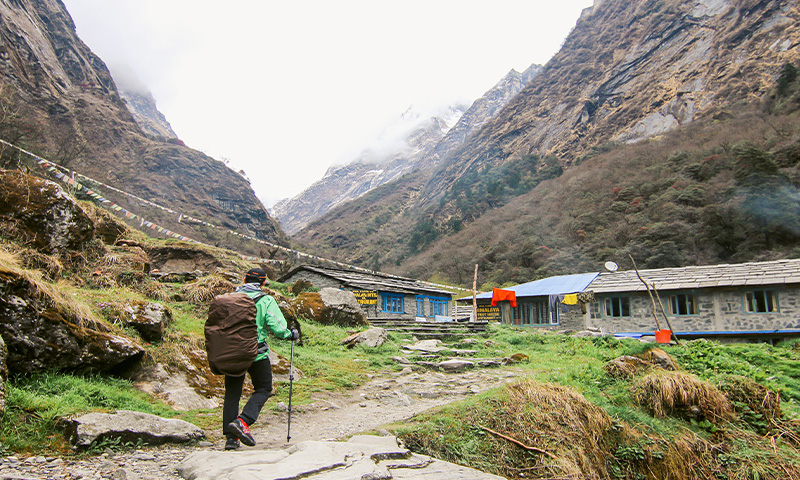
Five temples, one legend, and some of the most rewarding trails in the Garhwal Himalayas. That is the Panch Kedar Yatra in short. The circuit links Kedarnath, Tungnath, Rudranath, Madhyamaheshwar, and Kalpeshwar, five shrines where different parts of Lord Shiva are believed to have surfaced after he took the form of a bull. The Char Dham is largely road accessible. The Panch Kedar is not. Each temple here sits at the end of its own trail, which is exactly why serious pilgrims and trekkers rate this circuit so highly. This guide lays out the complete Panch Kedar route, temple by temple, with practical notes on timing, difficulty, and planning.
The Legend Behind the Panch Kedar Temples
The story belongs to the Mahabharata era. After the war at Kurukshetra, the Pandavas went looking for Lord Shiva to atone for the bloodshed. Shiva chose to avoid them, took the form of a bull, and moved into the Garhwal hills. Bhima recognised him near Guptkashi, and when he tried to hold the bull, it sank into the earth. Parts of the divine form later appeared at five places. The hump surfaced at Kedarnath, the arms at Tungnath, the face at Rudranath, the navel at Madhyamaheshwar, and the matted hair at Kalpeshwar. The Pandavas raised shrines at each spot, and these became the five Kedar temples of Lord Shiva. This shared origin is why pilgrims treat the circuit as one connected yatra rather than five separate trips.
The Five Kedar Temples at a Glance
- Kedarnath: The principal shrine and one of the twelve Jyotirlingas, reached by a long trek from Gaurikund in Rudraprayag district.
- Tungnath: Widely regarded as the highest Shiva temple in the world, a short and steep climb of roughly four kilometres from Chopta.
- Rudranath: The remotest of the five, set in high meadows of Chamoli, with the toughest trek in the circuit.
- Madhyamaheshwar: A quiet valley temple reached by a day long trek from Ransi or Uniana near Ukhimath.
- Kalpeshwar: A small cave shrine in the Urgam Valley and the only Kedar that stays open through the year.
All distances and altitudes in this guide are approximate and worth reconfirming locally, since trail routes get realigned after heavy monsoons.
Complete Panch Kedar Yatra Route, Temple by Temple
The traditional worship order runs Kedarnath, Tungnath, Rudranath, Madhyamaheshwar, and Kalpeshwar. On the ground, most itineraries follow geography instead and move from Kedarnath to Madhyamaheshwar, then Tungnath, Rudranath, and finally Kalpeshwar. Haridwar, Rishikesh, or Dehradun all work as starting points, with Guptkashi or Ukhimath serving as the usual base.
Stop 1: Kedarnath, the Jyotirlinga
Kedarnath anchors the circuit. The temple stands in Rudraprayag district near the Mandakini river, and it is the only Panch Kedar shrine that is also part of the Char Dham. Drive from Guptkashi to Sonprayag, take the local shuttle to Gaurikund, then trek around sixteen kilometres to the temple. Ponies and palkis operate on this route, and helicopter services to Kedarnath are a practical option for seniors or anyone short on time. Stay the night for the early morning darshan. Many pilgrims club this leg with Char Dham Yatra packages since the road network overlaps almost entirely.
Stop 2: Madhyamaheshwar, the Navel of Shiva
From Guptkashi, drive to Ransi or Uniana via Ukhimath. The trail to Madhyamaheshwar runs close to sixteen kilometres through Gaundar village, river crossings, and dense forest. It is long but steady rather than punishing. The temple sits in a bowl of meadows below the Chaukhamba peaks, and small lodges near the shrine make an overnight stay simple. A short climb above the temple leads to Budha Madhyamaheshwar, a viewpoint many trekkers call the finest sunrise spot on the circuit.
Stop 3: Tungnath, the Highest Shiva Temple
Tungnath is the gentle day of the yatra. Drive to Chopta, often called the mini Switzerland of Uttarakhand, and walk a paved trail of about four kilometres to the temple. The climb is steep but short, and fit walkers finish it in two to three hours. Add roughly a kilometre and a half more to reach Chandrashila peak for sweeping views of Nanda Devi, Trishul, and Chaukhamba. Families and first time trekkers often do the Chopta Tungnath trek as a standalone weekend trip before attempting the full circuit.
Stop 4: Rudranath, the Face of Shiva
Rudranath asks the most of you. The common approach starts from Sagar village near Gopeshwar in Chamoli and runs close to twenty kilometres one way, through steep forest and the open meadows of Panar Bugyal. No road comes anywhere near the shrine, which keeps crowds thin and the setting raw. Carry warm layers, rain protection, and hire a local guide. Pilgrims usually spend a night in basic huts near the temple before descending. The natural rock face worshipped here makes every step of the effort feel justified.
Stop 5: Kalpeshwar, the Year Round Kedar
The circuit ends softly. Drive from Helang on the Badrinath road into the Urgam Valley, then walk a short stretch to the cave shrine of Kalpeshwar, where the jata, or matted hair, of Shiva is worshipped. Kalpeshwar stays open through the year, so winter travellers who cannot attempt the higher temples can still complete this leg. The Urgam Valley itself, with terraced fields and apple orchards, is a quiet reward after days of hard walking.
How Many Days Does the Panch Kedar Yatra Take?
Plan ten to twelve days for the full circuit from Haridwar or Dehradun. A workable split looks like this:
- Days 1 to 3: Arrival, Guptkashi, Kedarnath trek and return
- Days 4 to 6: Madhyamaheshwar trek via Ransi
- Day 7: Chopta, Tungnath, and Chandrashila
- Days 8 to 10: Rudranath trek via Sagar village
- Days 11 to 12: Kalpeshwar, Urgam Valley, and return
Travellers with limited leave often split the Panch Kedar Yatra itinerary across two seasons, covering Kedarnath, Tungnath, and Kalpeshwar first and returning later for the two harder treks.
Best Time for the Panch Kedar Yatra
May to June and September to October are the reliable windows. The four higher temples open around late April or May and close around October or November, with exact dates announced each year as per the Hindu Panchang. July and August bring landslides and slippery, leech heavy trails, so the monsoon is best avoided. Kalpeshwar remains accessible even in winter. Always confirm the opening dates for the current season before you book.
Panch Kedar Trek Difficulty and How to Prepare
The Panch Kedar trek difficulty ranges from easy to genuinely demanding:
- Easy: Kalpeshwar, a short valley walk suitable for all ages
- Moderate: Tungnath and Kedarnath, steep but well supported trails with food stalls and rest points
- Demanding: Madhyamaheshwar and Rudranath, long days with basic facilities and no motorable backup
Start brisk walks or stair sessions four to six weeks before departure, break in your trekking shoes early, and keep a buffer day for weather. If you want a sense of what supported hikes on such trails involve, browse Himalayan trekking tours to compare guided logistics. Acclimatise sensibly and stay hydrated, since all five shrines sit at serious altitude.
Planning the Circuit Without the Guesswork
Permits are not the hurdle here. Logistics are. Rooms are scarce around Ransi and Sagar, shared jeeps fill fast in season, and trail conditions change weekly. This is where a specialist earns its keep. Traveloi runs pilgrimage and trekking departures across Devbhoomi and handles stays, transport, guides, and route sequencing end to end, which matters on a circuit this spread out. You can also compare wider Uttarakhand tour packages if you plan to extend the trip toward Badrinath, Auli, or the valley towns.
Where to Go From Here
- Just researching: Shortlist the temples that match your fitness and leave window, starting with Tungnath and Kalpeshwar.
- Actively planning: Share your dates and group size with a Traveloi trip expert and get a day by day route plan built around your pace.
- Ready to travel: Call +91 7060106084 or send an enquiry to lock your preferred departure window before peak season slots fill up.
FAQs on the Panch Kedar Yatra
Q. How many temples are there in the Panch Kedar Yatra?
A. There are five: Kedarnath, Tungnath, Rudranath, Madhyamaheshwar, and Kalpeshwar. All are dedicated to Lord Shiva and lie in the Garhwal region of Uttarakhand.
Q. How many days are needed to complete the Panch Kedar Yatra?
A. Ten to twelve days from Haridwar or Dehradun covers all five temples comfortably, including trek days, rest halts, and road transfers between base villages.
Q. What is the best time for the Panch Kedar Yatra?
A. May to June and September to October. The monsoon months are risky for trekking, and the four higher temples stay closed through winter. Kalpeshwar is open all year.
Q. Which Panch Kedar trek is the most difficult?
A. Rudranath. The trail from Sagar village runs close to twenty kilometres one way with steep climbs, limited facilities, and no road access near the shrine.
Q. Can beginners attempt the Panch Kedar Yatra?
A. Beginners can comfortably do Tungnath and Kalpeshwar. The full circuit, especially Rudranath and Madhyamaheshwar, needs prior fitness preparation and a guided setup.
Q. Where does the Panch Kedar Yatra start?
A. Most itineraries start from Haridwar, Rishikesh, or Dehradun and use Guptkashi or Ukhimath as the base for the first treks of the circuit.
Q. Is Kedarnath part of both the Char Dham and the Panch Kedar?
A. Yes. Kedarnath is one of the four Char Dham shrines of Uttarakhand and also the principal temple of the Panch Kedar circuit.