
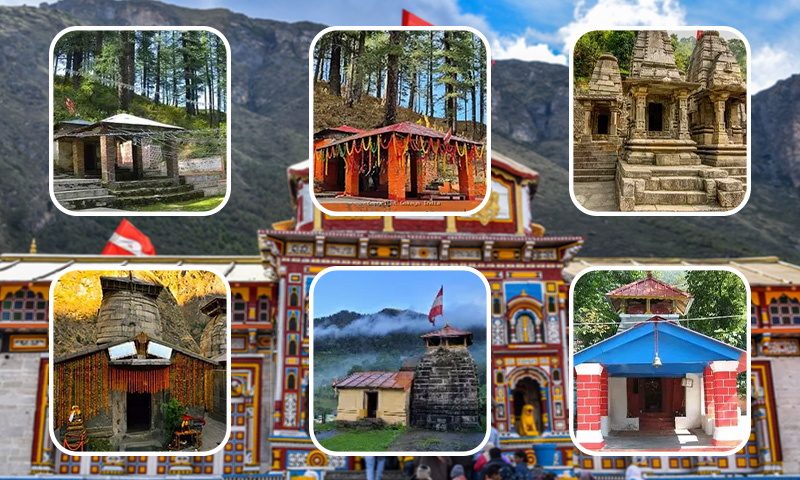
Most pilgrims who reach Badrinath have no idea that the shrine they stand before is one of seven. The Garhwal Himalayas hold an entire chain of Vishnu temples called the Sapt Badri, scattered along the Alaknanda river valley in the Chamoli district of Uttarakhand. Badrinath draws the crowds. The other six shrines sit in quiet villages and forested valleys, visited mostly by locals and serious pilgrims. This guide covers what the Sapt Badri circuit is, where each temple stands, how to plan the route, and the best time to go.
What Is the Sapt Badri Circuit?
Sapt Badri means seven Badris. The circuit links seven sacred shrines of Lord Vishnu spread between the high reaches above Badrinath and the countryside around Karnaprayag. The word Badri refers to the wild berries that once grew thickly across this belt, which is why the stretch is also known as Badri Van, the forest of berries.
Tradition credits Adi Shankaracharya with consecrating these shrines in the eighth century as part of his effort to revive temple worship across India. Badrinath, also called Badri Vishal, is the principal temple of the group. The other six are Adi Badri, Vriddha Badri, Bhavishya Badri, Yogdhyan Badri, Dhyan Badri, and Ardha Badri.
You may also come across the term Panch Badri. It refers to a shorter version of the same pilgrimage with five temples, which typically leaves out Ardha Badri and Dhyan Badri.
The Seven Badri Temples, One by One
1. Badrinath (Badri Vishal)
Badrinath anchors the circuit. Set on the banks of the Alaknanda at roughly 3,100 metres, it is dedicated to Lord Vishnu as Badrinarayan and forms part of both the Char Dham of India and the Chota Char Dham of Uttarakhand. The temple stays open for about six months, usually from late April or early May until November, with exact dates announced each year. Pilgrims bathe in the Tapt Kund hot spring before darshan and often walk up to Mana, the last Indian village before the Tibet border. During winter, the deity is worshipped at Joshimath. Many travellers cover this shrine through well planned Char Dham Yatra packages and then extend their trip to the remaining Badris.
2. Adi Badri
Adi Badri sits a short distance from Karnaprayag, on the road that climbs toward Gairsain. It is not a single shrine but a cluster of sixteen small stone temples, with historians placing their construction in the late Gupta period. The name means the first or original Badri. In earlier times, pilgrims worshipped Vishnu here whenever heavy snow closed the route to Badrinath. The complex remains open through most of the year, which makes it an easy starting point for the circuit.
3. Vriddha Badri
Vriddha Badri stands in Animath village, a short drive from Joshimath. Vriddha means aged, and the shrine honours Vishnu in the form of an old sage. Local belief holds that the Lord appeared here in that form before the sage Narada. The temple is open year round and sees few visitors, so expect an unhurried darshan.
4. Bhavishya Badri
Bhavishya Badri, the Badri of the future, lies near Subhain village beyond Tapovan in the Dhauliganga valley. According to belief, a time will come when the route to Badrinath becomes impassable, and the Lord will then be worshipped at this spot. Reaching the shrine involves a short uphill walk through deodar forest.
5. Yogdhyan Badri
Yogdhyan Badri is the easiest of the lesser known shrines to reach. It stands at Pandukeshwar, right on the Joshimath to Badrinath road. The idol here shows Vishnu seated in a meditative posture. The site is linked to King Pandu of the Mahabharata, who is said to have spent his final years in prayer at this spot. The festival idols of Badrinath also rest here through the winter months.
6. Dhyan Badri
Dhyan Badri sits in the Urgam Valley, reached via Helang on the main highway. Tradition connects the shrine to Urvarishi, a descendant of the Pandavas. The sanctum holds a four armed image of Vishnu in meditation. The same valley houses Kalpeshwar, one of the Panch Kedar shrines, so a single detour lets you cover two important temples in one day.
7. Ardha Badri
Ardha Badri is the most remote of the seven. Tucked into a small hamlet near Joshimath, it takes a steep village trail to reach. The idol here is noticeably smaller than those at the other shrines, which is how the temple earned its name, the half Badri. Few outsiders make it this far.
Sapt Badri Yatra Route: How to Plan the Circuit
A sensible route follows the road, the river, and your body’s need to acclimatise. Here is the sequence most planners at Traveloi recommend:
- Start from Rishikesh or Haridwar and drive to Karnaprayag for Adi Badri.
- Move up to Joshimath, your base for Vriddha Badri, Bhavishya Badri, and Ardha Badri.
- Take the Helang detour into the Urgam Valley for Dhyan Badri.
- Stop at Pandukeshwar for Yogdhyan Badri on the way up the highway.
- Finish at Badrinath, the highest and holiest point of the circuit.
This order keeps you gaining altitude gradually, which lowers the risk of mountain sickness. Plan seven to nine days for the full loop, including travel from Delhi or Dehradun. Travellers short on time or unable to handle long road journeys can look at helicopter tours for the Badrinath leg and cover the lower shrines by road.
Best Time to Visit the Sapt Badri Temples
The best time to visit the Sapt Badri temples is May to June and September to October. The weather stays clear, the roads remain stable, and Badrinath is open. July and August bring heavy monsoon rain, and landslides on the Rishikesh to Badrinath highway are common, so avoid that window unless you have buffer days. Between November and April, Badrinath, Yogdhyan Badri, and the higher shrines close or become hard to access, though Adi Badri and Vriddha Badri can still be visited for a shorter winter pilgrimage. Temple opening dates shift every year, so confirm the schedule before you book.
Travel Tips Before You Go
- Carry cash. ATMs are scarce beyond Joshimath, and most dharamshalas and dhabas do not accept cards.
- Pack in layers. Mornings at Badrinath stay cold even in June.
- Keep one spare day in your plan for weather holds or road blocks.
- Carry a basic medical kit with altitude sickness tablets after consulting your doctor.
- Hire local priests at the smaller shrines for context. The stories make each temple memorable.
- Dress modestly and ask before photographing inside sanctums.
- Start drives early. Hill roads close to traffic after dark in several stretches.
Planning the Circuit the Easy Way
The hard part of this circuit is not the walking. It is the logistics. Six of the seven shrines have no commercial infrastructure around them, so hotel bookings, cab permits, and route timing all need local knowledge. A structured pilgrimage tour solves this, with drivers who know the village roads and itineraries paced for families and senior citizens. If you want to explore the wider region before or after the circuit, the full range of Uttarakhand tour packages covers everything from Auli to the Valley of Flowers.
Sapt Badri FAQs
How many temples are there in the Sapt Badri circuit?
There are seven temples: Badrinath, Adi Badri, Vriddha Badri, Bhavishya Badri, Yogdhyan Badri, Dhyan Badri, and Ardha Badri. All of them are dedicated to Lord Vishnu and lie in the Chamoli district of Uttarakhand.
What is the difference between Panch Badri and Sapt Badri?
Panch Badri is a shorter version of the pilgrimage covering five shrines. Sapt Badri covers all seven, adding Ardha Badri and Dhyan Badri to the list.
How many days do I need for the Sapt Badri yatra?
Plan seven to nine days from Delhi or Dehradun. This allows time for acclimatisation, village treks to the remote shrines, and a comfortable darshan at Badrinath.
Which Sapt Badri temples stay open all year?
Adi Badri and Vriddha Badri remain accessible through most of the year. Badrinath and Yogdhyan Badri follow seasonal schedules and close during winter.
Is the Sapt Badri yatra suitable for senior citizens?
Yes, with the right pacing. Five of the seven shrines are reachable by road or short walks. Bhavishya Badri and Ardha Badri involve uphill trails, which seniors can skip or attempt with support.
How do I reach the Sapt Badri temples from Delhi?
Travel to Rishikesh or Dehradun by road, rail, or air, then drive along the Badrinath highway through Devprayag, Karnaprayag, and Joshimath. The nearest airport is Jolly Grant in Dehradun.
Can I combine Sapt Badri with the Char Dham yatra?
Yes. Since Badrinath is the final stop of the Char Dham, many pilgrims complete the four Dhams first and then add the remaining six Badri shrines as a three to four day extension.