
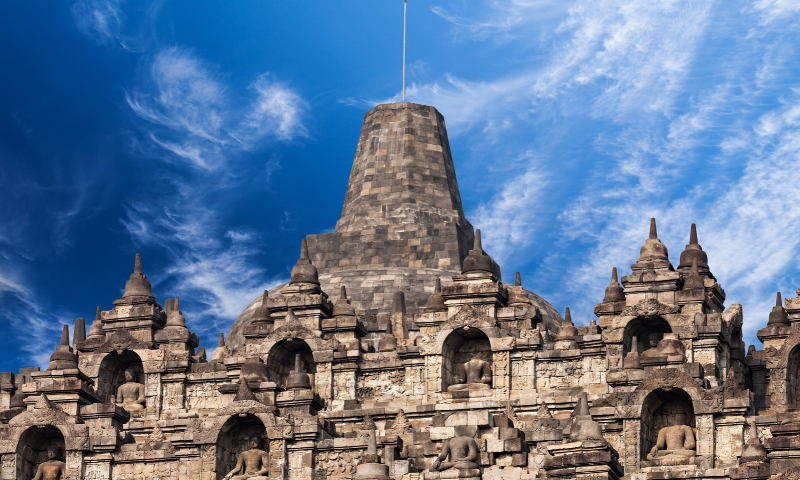
Few places outside India carry such a visible stamp of Sanatan heritage as the Prambanan temple complex in central Java. Built in the 9th century and dedicated to the Trimurti of Brahma, Vishnu, and Shiva, Prambanan sits roughly 40 kilometres from Borobudur, the world’s largest Mahayana Buddhist monument. Together, these two sites tell the story of how Indian spiritual traditions travelled across the ocean and took root in Southeast Asia.
For an Indian pilgrim, visiting Prambanan feels oddly familiar. The gopurams, the Ramayana friezes, the Nandi facing a towering Shiva shrine, all of it echoes temples back home. This guide covers the practical details that most generic travel pages skip, including entry rules, the ideal time for darshan, how to combine both monuments, and what Hindu travellers should pack.
Why Prambanan Matters for Hindu Pilgrims
Prambanan, locally called Candi Rara Jonggrang, was commissioned during the Sanjaya dynasty and stands as one of the largest Hindu temple complexes in Southeast Asia. UNESCO added it to its World Heritage list in 1991 for its outstanding example of classical Javanese Hindu art.
The main courtyard holds three towering shrines dedicated to the Trimurti. The central and tallest is the Shiva temple, rising to roughly 47 metres. Flanking it are the Brahma and Vishnu temples, with smaller companion shrines facing them for Nandi, Hamsa, and Garuda. The outer walls carry a continuous relief of the Ramayana, read in the traditional pradakshina direction. If you have followed the same story on a Lucknow Ayodhya Prayagraj Varanasi tour package back home, seeing it carved into Javanese basalt is quietly moving.
Prambanan is still an active place of worship. Local Balinese Hindus and Indian travellers perform small puja at the Shiva shrine, and the complex hosts an open-air Ramayana ballet during the dry season, performed under the stars with the temple as the backdrop.
Understanding Borobudur as a Companion Site
Borobudur is Buddhist, not Hindu, yet it belongs in any serious Java spiritual itinerary. Built during the Shailendra dynasty around the same period as Prambanan, it is a nine-level stupa laid out as a mandala, representing the Mahayana path from the world of desire to enlightenment.
For Indian travellers who have visited Bodh Gaya, Sarnath, or Sanchi, Borobudur completes a bigger picture. The monument reflects the same Indic philosophical world that produced Nalanda. Reliefs along the lower galleries draw on Jataka tales familiar to anyone who grew up with Panchatantra stories.
Many Hindu pilgrims visit both temples precisely because they show how Vedic and Buddhist traditions coexisted in the same region, patronised by neighbouring dynasties. The experience is similar in spirit to walking South India temple tour packages that preserve layered histories within a single landscape.
Best Time to Visit Prambanan and Borobudur
The dry season from May to September is the most reliable window. Mornings are clearer, afternoon rain is unlikely, and sunrise visits to Borobudur are far more rewarding. April and October work well too, with thinner crowds and softer light.
Avoid the deepest monsoon months of January and February unless you are comfortable with wet climbs on stone steps. Weekdays, particularly Tuesday to Thursday, see smaller tour groups. Reaching Prambanan by 7:30 am gives you nearly two hours before the first large buses arrive.
How to Reach Yogyakarta from India
Yogyakarta, often shortened to Jogja, is the gateway city for both temples. The nearest international airport is Yogyakarta International Airport in Kulon Progo, about an hour from the city centre.
From India, most pilgrims fly through Kuala Lumpur, Singapore, or Jakarta. Direct flights from Delhi, Mumbai, Bangalore, and Chennai to Jakarta take between seven and nine hours, after which a short domestic hop lands you in Jogja. Visa on arrival is available for Indian passport holders at major Indonesian airports, with a modest fee payable on landing.
Once in Jogja, hired cars with English-speaking drivers are the simplest option for day trips. Prambanan sits northeast of the city and Borobudur northwest, so a well-planned loop covers both. Travellers who want ground logistics handled end to end usually speak to a pilgrimage specialist like Traveloi before departure to coordinate flights, visas, and transfers from India.
A Practical One-Day Itinerary
A single day is tight but workable if you start before dawn. Here is a tested flow for Hindu pilgrims who want darshan at both sites without rushing.
- 4:00 am: Depart your Yogyakarta hotel for Borobudur. The drive takes about 75 minutes.
- 5:15 am: Reach the Manohara gate for Borobudur sunrise entry. Dawn breaking over Mount Merapi from the upper terraces justifies the early alarm.
- 7:30 am: Breakfast near the complex. Try local Javanese nasi gudeg if your diet allows.
- 9:00 am: Visit Candi Mendut and Candi Pawon, two smaller aligned temples that most rushed itineraries skip.
- 11:00 am: Drive to Prambanan, around two hours across Jogja.
- 1:30 pm: Lunch and rest. Prambanan opens into the afternoon.
- 3:00 pm: Enter Prambanan. Walk the Ramayana reliefs clockwise, then step into the Shiva shrine for darshan.
- 7:30 pm: During the dry season, catch the open-air Ramayana ballet staged inside the complex.
Pilgrims who want more time at each site should split the visit across two days with a buffer evening in Jogja.
Rituals, Etiquette, and Dress Code
Both monuments are protected archaeological sites first and places of worship second, so rules apply. At Prambanan, sarongs are given at the entrance if your legs are uncovered. Shorts above the knee and hard-soled shoes that could damage stone steps are discouraged.
Inside the Shiva shrine, quiet puja with incense is welcome, but open flames and large offerings are not. Keep arati small, use a battery diya instead of oil, and avoid sprinkling water or milk on the murti as this contributes to erosion.
At Borobudur, visitors circumambulate clockwise, as at any stupa in India. Climbing the central stupa or sitting inside it for photographs is forbidden. Group bhajans should be done at Candi Mendut, where an active worship area is set aside.
Carry a light shawl, modest clothing, a reusable water bottle, and a small cloth bag for prasad or offerings.
Where to Stay in Yogyakarta for Pilgrims
Jogja offers a wide spread of stays, from heritage hotels inside the old royal city to simple guesthouses near Malioboro Street. Pilgrims travelling with elders usually prefer four-star properties around Tugu Station for the air conditioning, lifts, and reliable kitchens that can accommodate vegetarian and jain preferences on request.
Those who want to be closer to the temples can stay at Manohara Hotel inside the Borobudur complex, which also provides direct sunrise access. For a quieter Prambanan-side base, the villages around Kalasan offer small boutique stays.
Travel Tips for Indian Hindu Pilgrims
- Carry a mix of USD and Indonesian rupiah in small denominations. Most sites accept cards but entry queues move faster with cash.
- Stick to bottled or filtered water. Street ice is best avoided during the first few days.
- Vegetarian food is widely available, but confirm the dish does not contain shrimp paste or fish sauce.
- Mobile data from Telkomsel or Indosat is affordable at the airport and reliable at both temple sites.
- Keep photocopies of your passport, visa stamp, and return ticket. Hotel reception counters usually hold the originals during check-in.
- Build in rest days. Java heat combined with early starts can tire even seasoned travellers.
Travellers mapping a longer Asian spiritual circuit often pair this trip with Chardham Yatra packages and other Himalayan pilgrimage journeys available through Traveloi.
Plan Your Java Pilgrimage with Confidence
If you want end-to-end help shaping this journey, from Jogja flights to a Ramayana ballet booking, speak to a Traveloi consultant and request a tailored Java and Bali itinerary. Travellers who prefer to begin with a nearby Southeast Asia break can first explore Thailand tour packages, then build Indonesia as a longer follow-up journey ahead of the busy May to September window.
Frequently Asked Questions
Can Hindus perform puja inside Prambanan temple?
Yes. Small personal puja is permitted inside the Shiva shrine. Keep offerings minimal, use battery-powered diyas instead of oil lamps, and avoid pouring liquids on the murti.
Is Borobudur a Hindu temple?
No. Borobudur is a Mahayana Buddhist monument built as a stupa and a mandala. It is often included in Hindu pilgrim itineraries because of its shared Indic heritage and its proximity to Prambanan.
How many days are enough for Prambanan and Borobudur?
Two full days are ideal, with one day for Borobudur and its satellite temples and one day for Prambanan and the Ramayana ballet. A rushed single day works for travellers short on time.
What is the best time of year to visit?
The dry season from May to September offers the clearest skies and the best sunrise views. April and October are good shoulder months with fewer crowds.
Do Indian travellers need a visa for Indonesia?
Indian passport holders can obtain a visa on arrival at major Indonesian airports. Carry a return ticket, proof of hotel booking, and a passport valid for at least six months.
Is there a dress code at Prambanan?
Shoulders and knees should be covered. Sarongs are provided at the entrance if needed. Modest clothing and a shawl are recommended.
Can I combine Bali with this trip?
Yes. A one-hour flight from Yogyakarta to Denpasar makes it easy to pair Java’s heritage temples with Bali’s living Hindu culture, including Pura Besakih and Tanah Lot.
