
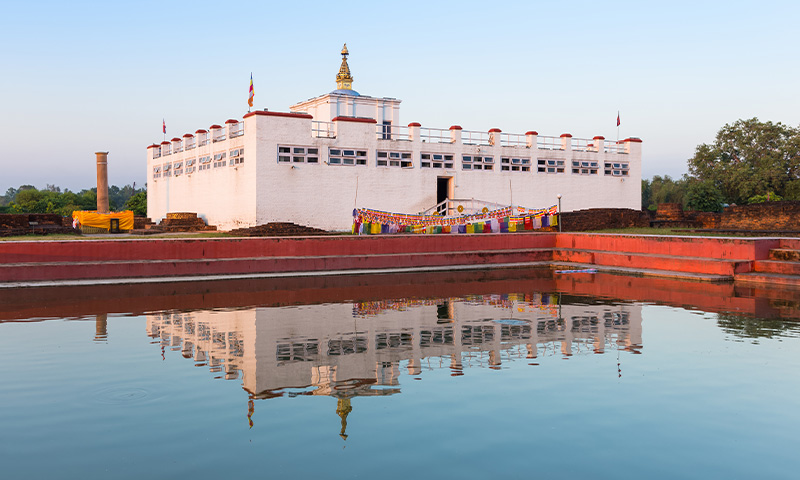
Nepal shares more than a border with India. It shares the roots of a spiritual tradition that shaped a large part of Asia. For Indian travellers planning a Buddhist pilgrimage, Lumbini sits at the heart of that journey. It is the birthplace of Siddhartha Gautama, the prince who later became the Buddha, and today it anchors a cross-border circuit that connects Nepal with the great Buddhist sites of Bihar and Uttar Pradesh.
This guide walks Indian pilgrims and curious travellers through the Lumbini Buddhist Circuit. How to plan it, what to see, how to reach it, and how to do it well without losing the quiet that gives the place its meaning.
Why Lumbini Matters on the Buddhist Map
Lumbini is a UNESCO World Heritage Site in the Rupandehi district of southern Nepal, close to the Indian border. According to tradition, Queen Maya Devi gave birth to Siddhartha here in the 6th century BCE. Emperor Ashoka later visited and installed a sandstone pillar that still stands today, carrying one of the earliest written records of the Buddha’s birthplace.
For Indian travellers, this is not a distant foreign destination. It is a continuation of the Buddhist trail that includes Bodh Gaya, Sarnath, and Kushinagar. Many pilgrims combine Lumbini with these Indian sites to complete the four most sacred stops in the life of the Buddha.
The Four Pillars of the Buddhist Circuit
A traditional Buddhist pilgrimage covers four major sites:
- Lumbini in Nepal, the place of birth
- Bodh Gaya in Bihar, where the Buddha attained enlightenment
- Sarnath near Varanasi, where he delivered his first sermon
- Kushinagar in Uttar Pradesh, where he attained Mahaparinirvana
Pilgrims often call these the Chaar Dham of Buddhism. Doing all four gives you a sense of the Buddha’s life as a journey rather than a single moment, and Lumbini is where that journey begins. Travellers interested in India-side spiritual circuits can also look at the spiritual and pilgrimage tours by Traveloi, which bring together comparable sacred routes with trusted logistics.
Key Sites Inside the Lumbini Complex
The Lumbini master plan, designed by Japanese architect Kenzo Tange, divides the area into three zones. Each one holds something worth slowing down for.
- Mayadevi Temple: The sacred heart of Lumbini. Inside, you can see the marker stone believed to indicate the exact spot of the Buddha’s birth, along with the nativity sculpture.
- Ashoka Pillar: Standing beside the temple, this pillar carries the inscription confirming Lumbini as the birthplace, written during Ashoka’s reign.
- Puskarini Pond: The sacred pool where Queen Maya is said to have bathed before giving birth. Pilgrims often circle it quietly.
- Monastic Zones: Two zones hold monasteries built by Buddhist nations including Thailand, Myanmar, China, Japan, Vietnam, Sri Lanka, and Germany. Each one reflects its country’s architectural style.
- World Peace Pagoda: A white stupa built by Japanese monks, offering a quiet closing point for most pilgrim visits.
Walking through these zones is a slow, reflective experience. Give yourself at least a full day inside the complex.
How Indian Travellers Can Reach Lumbini
The practical side of travel often decides the trip. For Indian citizens, Lumbini is one of the easiest international pilgrimages to plan.
- By road: The most common route is through Sonauli, the India to Nepal border point near Gorakhpur in Uttar Pradesh. From Gorakhpur, Sonauli is about three hours by road. Lumbini sits about 25 kilometres inside Nepal from the border.
- By air: Gautam Buddha International Airport in Bhairahawa, Nepal, opened in 2022 and is the closest airport, roughly 20 kilometres from Lumbini. Flights operate from Kathmandu and limited international routes.
- By rail: Indian travellers often take a train to Gorakhpur, which has strong connections from Delhi, Mumbai, Kolkata, and other major cities.
Indian passport holders do not need a visa to enter Nepal. A valid photo ID such as a passport, voter ID, or Aadhaar is accepted at the border, though carrying your passport remains the smoother option. To see curated Nepal routes used by Indian pilgrim groups, look at the Nepal destination page at Traveloi.
Best Time to Visit the Lumbini Buddhist Circuit
October to March is the preferred window. The weather stays cool and dry, which suits long walks around the complex and side trips to other Buddhist towns. April and May get hot and humid. The monsoon between June and September brings heavy rain that can slow down road travel between sites.
Buddha Jayanti, usually in April or May, draws large pilgrim crowds and a rich ceremonial atmosphere. If you prefer a quieter visit, aim for mid-November to February.
Building a Realistic Itinerary
A sensible Lumbini focused trip for Indian travellers runs around four to six days. A longer version combining the Indian Buddhist sites can go up to ten days. A sample flow looks like this:
- Day 1: Arrive in Gorakhpur, cross at Sonauli, reach Lumbini and settle in
- Day 2: Full day exploration of the Mayadevi Temple, Ashoka Pillar, and sacred garden
- Day 3: Monastic zones and the World Peace Pagoda
- Day 4: Day trip to Tilaurakot, the ancient Shakya capital where Siddhartha grew up
- Day 5: Return to India, continue to Kushinagar or Bodh Gaya if extending
Pilgrims who want to pair Lumbini with another Nepal spiritual site can extend into the Himalayan belt through the Muktinath 6 Days tour package by Traveloi, a sacred stop revered by both Hindu and Buddhist traditions. Note that Traveloi currently does not have a dedicated Lumbini Buddhist Circuit package listed, so the team usually tailors this route on request.
Where to Stay and Eat
Lumbini offers a range of stays, from basic lodges near the complex to a few mid-range and premium hotels in nearby Bhairahawa. Many monasteries also offer simple guesthouse rooms for pilgrims, though these fill up fast during festivals.
Food inside the complex leans vegetarian and sattvic. Outside the gates, you will find Nepali thali meals, Indian vegetarian restaurants, and small cafes serving momos and thukpa. Indian travellers rarely face food concerns here.
Practical Tips for Indian Pilgrims
- Carry Indian rupees in smaller denominations. Notes above 100 rupees are not freely accepted in Nepal.
- Mobile roaming works, but a local Ncell or NTC SIM is cheaper for longer stays.
- Dress modestly inside temples and monasteries. Shoes come off before entering the Mayadevi Temple.
- Hire a licensed guide at the entrance. The historical context they add makes the visit far richer.
- Photography is restricted inside the Mayadevi Temple. Be ready to put the phone away.
Combining Lumbini With Himalayan Travel
Many Indian travellers extend their Nepal visit beyond Lumbini. Pokhara, Kathmandu, and the Annapurna foothills sit within reasonable travel distance. A layered Himalayan journey turns a short pilgrimage into a richer cultural trip.
For readers who want to understand how Traveloi plans and operates such trips, the Traveloi about us page explains the team’s approach to responsible, value driven tours.
Travelling Responsibly in Lumbini
Lumbini is a living pilgrimage site. Local communities, monks, and conservation teams work to keep it clean and dignified. Small choices make a real difference. Carry a reusable water bottle. Avoid single use plastic inside the complex. Support local artisans selling prayer flags, singing bowls, and incense rather than mass produced souvenirs.
Plan Your Journey With Traveloi
Lumbini rewards travellers who arrive with time, patience, and a sense of history. For Indian pilgrims and curious travellers who want the circuit done well rather than fast, Traveloi plans trips that balance spiritual depth, comfort, and responsible travel. Share your travel dates and preferences through the Traveloi contact us page to start shaping your Buddhist circuit journey.
Frequently Asked Questions
Do Indian citizens need a visa to visit Lumbini in Nepal?
No. Indian citizens do not need a visa for Nepal. A valid passport or government issued photo ID is enough, though a passport is recommended for smoother border crossing and hotel check in.
How many days are needed for the Lumbini Buddhist Circuit?
A focused Lumbini trip takes about three to four days. Combining it with Bodh Gaya, Sarnath, and Kushinagar extends the full Buddhist circuit to seven to ten days.
Which is the nearest airport to Lumbini for Indian travellers?
Gautam Buddha International Airport in Bhairahawa, Nepal, is the closest. Gorakhpur Airport in India is a popular road access option for pilgrims arriving overland.
Is Lumbini safe for solo and senior Indian travellers?
Yes. Lumbini is considered safe, calm, and well managed. Senior pilgrims and solo travellers visit regularly. Hiring a guide and booking through a trusted operator adds comfort for first time visitors.
What is the best time to visit the Lumbini Buddhist Circuit?
October to March offers the best weather. Buddha Jayanti in April or May draws large pilgrim gatherings for those who prefer a more spiritual atmosphere, even if it is warmer.
Can I combine Lumbini with Pokhara or Kathmandu?
Yes. Pokhara is about eight hours by road from Lumbini, and Kathmandu is accessible by flight or road. Many Indian travellers combine the two for a richer Nepal trip.
