
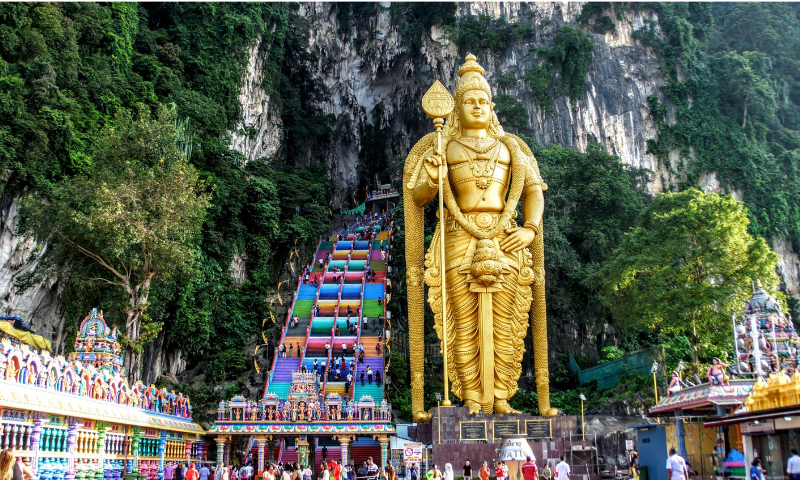
Just a short drive north of Kuala Lumpur, a towering golden statue watches over one of Southeast Asia’s most visited Hindu shrines. The Batu Caves have grown from a quiet limestone outcrop into a living centre of faith, culture, and curiosity. Pilgrims, backpackers, families, and photographers all find a reason to climb the 272 colourful steps that lead up to the main cavern.
This guide walks you through what the site actually offers, how to plan a visit sensibly, and what to keep in mind if you want to see Lord Murugan’s shrine with the respect it deserves. It is written for first-time visitors, repeat travellers, and anyone trying to decide if a half-day detour from Kuala Lumpur is worth the trip.
The Story Behind Batu Caves
The limestone hills that house the Batu Caves formed over an incredibly long span of geological time, long predating any human settlement in the region. Local Temuan communities used the caves for shelter, and in the late nineteenth century the Indian trader K. Thamboosamy Pillai identified the main cave entrance as a fitting place to install a shrine to Lord Murugan, the Tamil god of war and victory. The first Thaipusam procession to the site was held soon after, and the tradition has grown with every passing year.
The vel, Murugan’s divine spear, inspired the shape of the cave’s entrance. Since then, Batu Caves has become one of the most important Murugan shrines outside India, drawing worshippers from across Malaysia, Singapore, and the wider Tamil diaspora. Anyone interested in the spiritual side of travel can find similar depth closer to home in India’s own living temple traditions.
The Lord Murugan Statue
The first thing most visitors notice is the Lord Murugan statue standing at the base of the stairway. The towering gold figure is counted among the tallest Hindu deity statues in the world, visible from far down the approach road and almost impossible to miss as the train pulls in.
The statue was unveiled in the mid two thousands after years of construction, funded largely by donations from the Tamil community in Malaysia. Today it serves as the unmistakable symbol of the site. Mornings and late afternoons give you the best light for photos, with the gold catching the sun against the grey limestone cliffs behind it.
Climbing the Rainbow Staircase
The 272 steps leading up to the main Temple Cave were repainted in bright rainbow colours a few years ago. The change was not without debate, but it has given the site a new visual identity that travellers now recognise instantly.
The climb is not strenuous for most adults, but the steps are uneven in places and the long-tailed macaques along the railings can be bold. Hold on to your snacks, sunglasses, and any loose bags. Children and older travellers can take the climb in sections, with resting points along the way. Comfortable shoes with grip help far more than fashion sandals once the stone gets slick after a brief tropical shower.
Inside the main cavern, natural light filters through openings in the roof, lighting shrines dedicated to various deities. The main shrine honours Lord Murugan, and smaller altars dot the chamber. The temperature inside stays cooler than the humid air outside, which is a welcome relief after the climb.
Thaipusam at Batu Caves
If you plan your trip around Thaipusam, usually falling in late January or early February, you will see Batu Caves at its most intense. During the festival, devotees carry kavadis, elaborate wooden or metal structures balanced on the shoulders, as acts of devotion and penance. Many pierce their skin with small hooks and spears, walking in trance states up the stairs to the shrine.
The atmosphere is powerful, loud, and deeply moving, even for visitors with no personal connection to the tradition. Expect enormous crowds, limited transport, and early starts well before sunrise. Dress modestly, keep a respectful distance from processions, and ask before photographing devotees at close range. Public holidays are declared in Malaysian states with large Hindu populations, so plan onward travel accordingly.
Getting to Batu Caves from Kuala Lumpur
Batu Caves sits about thirteen kilometres north of central Kuala Lumpur, in the Gombak district of Selangor. The easiest route for independent travellers is the KTM Komuter train from KL Sentral to Batu Caves station, which drops you a short walk from the entrance. Grab rides and taxis are also straightforward, and useful if you plan to continue elsewhere afterwards. Journey time from the city centre runs around thirty to forty minutes outside peak hours.
If you prefer a guided experience that bundles transport, a knowledgeable escort, and a smoother cultural briefing, travellers who like temple visits often pair this stop with our pilgrimage tour packages in India, which share a similar devotional atmosphere. For readers mapping out a wider itinerary, our Sri Lanka tours and other South Asia circuits combine faith sites, heritage, and comfortable travel in a single plan.
Timings, Entry, and Dress Code
The main Temple Cave is generally open from early morning to early evening, with the surrounding complex accessible for longer hours. Entry to the main cave is free, though the Dark Cave and Ramayana Cave carry small separate fees that go toward conservation and upkeep.
A few practical notes that matter more than most travellers expect:
- Shoulders and knees should be covered. Sarongs are usually available for rent near the entrance if you arrive underdressed.
- Footwear stays on for the climb but comes off before entering inner shrine areas.
- Carry water, especially in the humid middle of the day.
- Keep an eye on bags around the macaques, who are quick and curious.
- Photography is allowed in most areas, but avoid flash near altars and ask before taking close portraits of worshippers.
- Carry a small bag of coins or small notes for the shoe caretakers and donation boxes inside the shrines.
Early mornings, ideally before nine, give you cooler temperatures, softer light, and far fewer tour buses. Weekdays outside festival periods are the calmest, and the monsoon months between November and February bring short, sharp showers that usually clear within the hour.
Beyond the Main Cave
Most visitors spend their time at the Temple Cave, but the complex has more to offer. The Dark Cave is a protected limestone ecosystem that runs guided tours focused on cave biology and rare species like the trapdoor spider. The Ramayana Cave sits off to the side and houses colourful dioramas narrating scenes from the epic, which can be a gentler option for families with young children.
A short walk around the base of the hills also brings you to smaller shrines, food stalls, and souvenir vendors selling everything from brass figurines to fresh coconut water. Give yourself at least two to three hours on site if you want to explore properly rather than rush the climb and leave.
Planning Your Visit with Traveloi
Travel through Southeast Asia rewards planning, especially when faith sites, local etiquette, and travel logistics all come together in a single afternoon. At Traveloi, we design journeys that respect the places we visit and the people who care for them, pairing careful ground arrangements with cultural context that helps you understand what you are seeing.
Across India, the Himalayas, and international circuits, our team builds itineraries that balance comfort with meaning. You can learn more about Traveloi and the way we plan responsible journeys, or contact our travel consultants to tie Kuala Lumpur and Batu Caves into a broader route that fits your pace, budget, and interests.
Frequently Asked Questions
Is there an entry fee for Batu Caves?
Entry to the main Temple Cave is free. The Dark Cave and Ramayana Cave charge small fees that support conservation and maintenance.
What is the best time to visit Batu Caves Malaysia?
Early mornings on weekdays are the most comfortable, with cooler temperatures and smaller crowds. Thaipusam offers the most intense cultural experience but comes with heavy crowds and long waits.
How do I reach Batu Caves from Kuala Lumpur?
The KTM Komuter train from KL Sentral runs directly to Batu Caves station in about thirty minutes. Grab rides and taxis are also easy options, and guided tours take care of transport and context in a single booking.
What should I wear to the Murugan Shrine at Batu Caves?
Modest clothing that covers shoulders and knees is expected. Sarong rentals are available at the entrance if needed, and comfortable shoes help with the climb.
Are the Batu Caves worth visiting?
Yes. The combination of a towering Murugan statue, a working Hindu shrine, and dramatic limestone caves makes Batu Caves one of the most memorable half-day trips from Kuala Lumpur.
Can I visit Batu Caves with children or older family members?
Yes, with planning. The 272 steps can be managed in stages, and the Ramayana Cave and surrounding grounds offer gentler alternatives for anyone who prefers not to climb.
How long should I spend at Batu Caves?
Two to three hours is a comfortable window for most travellers. Festival days and the extra caves need a longer visit, closer to half a day.