
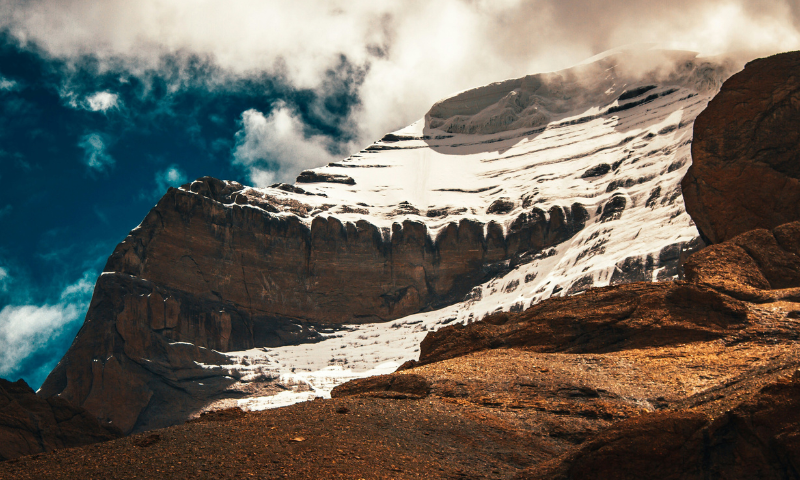
Mount Kailash is one of the most mystical peaks on Earth. For thousands of years, people of different religions have traveled to this sacred mountain with their devotion and desire to change their lives spiritually. While most are familiar with the traditional Outer Kora, the three-day circumambulation of Mount Kailash, few understand the Inner Kora, a deep path for those who have done the outer circuit at least thirteen times.
The Inner Kora is considered an important pilgrimage for serious devotees. This is a ritual walk that takes you closer to the base of the mountain, with an intimate spiritual experience that requires physical endurance and intense mental preparation.
Understanding the Inner Kora
The Inner Kora circles the base of Mount Kailash at a far tighter radius than the traditional path around the outside. This sacred route is about 34 kilometers long and takes pilgrims through some of the most challenging terrain in the Himalayas. The path takes you within touching distance of the face of the southern side of the mountain, which is regarded as the most sacred aspect of Kailash.
According to Tibetan Buddhist tradition, you have to complete thirteen Outer Koras before you have the spiritual merit to try the Inner Kora. The number thirteen is very significant in Buddhist numerology, and it is the completion of a spiritual cycle.
The route starts from Sershong on the Outer Kora path before Dolma La Pass. The path winds through narrow valleys, over icy streams and up steep sections of rock where careful footing and single-minded concentration are required.
The Spiritual Significance
What makes the Inner Kora different is not limited to physical geography. This path has an important spiritual significance in many faiths. Hindus believe in walking the Inner Kora that brings you closer to Lord Shiva’s dwelling place. Buddhists see it as meditation of impermanence and dissolution of self-ego. Jains and followers of the ancient Bon religion also appreciate the great spiritual power of this inner pilgrimage.
The southern face of Mount Kailash is considered to be home to the celestial palace of Hindu mythology. In the Buddhist texts it showed up as a mandala in physical form. Walking at this proximity to the base of the mountain is said to affect the advancement of one’s spiritual growth that might take lifetimes to achieve.
Many pilgrims report profound experiences in the Inner Kora. The isolation, proximity to the sacred peak and physical requirements provide conditions for deep thinking. Some describe feeling the presence of tangible energy emanating from the mountain. Others speak of having clarity or getting spiritual visions.
Physical Demands and Terrain
The Inner Kora is challenging even for experienced trekkers. The elevation varies from 4,700 to over 5,600 meters, with such thin air that each step is deliberate. Unlike the Outer Kora with trodden paths and basic infrastructures, the Inner Kora is raw and wild.
Rocky scrambles require using your hands as much as your feet. Stream crossings can be treacherous and even more so during monsoon season. The path becomes narrow where valley walls are close together, and concentration and balance are required. There are no teahouses or resting places. You have to carry all provisions, or you have to rely on support staff.
The usual completion time takes two to three days. Majority of pilgrims established two camps on the way. The first night is usually spent in Selung Valley.
Weather conditions keep changing rapidly. Morning sunshine could be replaced by afternoon snowfall. Temperatures fall dramatically after sunsets, and they are often minus ten degrees Celsius. Wind speeds can make exposed sections especially difficult.
Preparation Requirements
To attempt the Inner Kora without proper preparation is not a good idea and is dangerous. Physical conditioning must be started months before departure. Regular cardiovascular exercise helps to develop stamina for walking at high altitudes for long periods of time. Strength training, especially legs and core, helps to deal with rocky terrain.
Altitude acclimatization is very important. Spending time at progressively higher levels helps to mitigate the risk of altitude sickness. Many pilgrims make their thirteenth Outer Kora just before the Inner Kora, and use it as final acclimatization.
Mental preparation is also important. Meditation practice, mental visualization, and developing a powerful sense of purpose are contributing factors to success. Understanding why you are doing this pilgrimage helps in difficult times.
You need a 4-season sleeping bag that is rated for extreme cold. Waterproof and windproof outer layers are necessary. Trekking poles are used for stability on loose rock. High-quality trekking boots that have ankle support prevent injuries.
Comparing Outer Kora and Inner Kora
The Outer Kora introduces pilgrims to Mount Kailash; it offers breathtaking views as well as the challenge to cross the Dolma La Pass (5,636 meters). It possesses infrastructure, other pilgrims for company, and a path that thousands walk each year.
The Inner Kora takes away these comforts. You walk more in solitude with only a guide and small support team. The landscape feels wilder. This intensity creates space for more profound spiritual work. While the Outer Kora is about devotion through physical endeavor, the Inner Kora is about plunging into the mystery at the mountain’s heart.
Distance-wise, Inner Kora is shorter. Yet the technical challenge of the terrain and lack of infrastructure make it more difficult per kilometer. Many pilgrims describe the Inner Kora as being an entrance to a sacred chamber after spending time in the outer temple grounds.
Best Time for Inner Kora
The traditional pilgrimage season is between May and September when mountain passes are open, and when weather is relatively stable. June through August have the warmest temperatures and longest daylight hours.
May and September represent trade-offs. Temperatures are cooler, and you may even run into some late or early snow. However, you stay away from peak crowds. May is the month of new life after winter. September brings autumn colors and crystal clear skies.
Avoid spending winter months from October and April. Deep snow makes the route almost impassable. Extreme cold increases health risks. Most supporting services shut down.
Monsoon rains from mid-July through August may make stream crossings treacherous. Build flexibility into your schedule and be ready to cancel or postpone if conditions become unsafe.
Permits and Regulations
The Inner Kora requires a Tibet Travel Permit, Alien’s Travel Permit, and Military Permit. These must be arranged through a registered travel agency – it is not allowed to travel in Tibet independently as a foreigner.
Chinese authorities keep stringent rules on Mount Kailash pilgrimage. You must travel with a licensed guide and prearranged transportation. Working with an experienced operator to navigate changing requirements.
The thirteen kora requirement is not officially enforced but these traditions are maintained by the spiritual community that surrounds Mount Kailash. Local guides and monasteries trak completions informally.
Logistics and Support
Most pilgrims use support teams. Porters or pack animals are used to carry camping equipment, food and supplies. This enables you to walk with a lighter load. Support staff offers important help in setting up the camp and preparing meals.
Good local knowledge of the route on the Inner Kora is necessary, and an expert local guide is essential. The path is not always well marked out. Local knowledge of stream crossings, weather patterns and emergency procedures determines whether it will be a success or a failure.
Communication equipment is important. Satellite phones work where there is no cell coverage. Emergency evacuation plans need to be discussed before departure. Understand that it may take many hours to be rescued from remote sections.
The Role of Traveloi
Planning a journey as complex as the Mount Kailash Inner Kora requires help of experts. Traveloi’s niche is to develop meaningful pilgrimage experiences that blend spiritual authenticity and practical support. Our team knows the special needs of the high-altitude sacred journeys.
We take care of application for the permits, arrange communication with local authorities, take care of arranging experienced guides, and ensure that there are adequate acclimatization schedules. Our Kailash Mansarovar tour package can be tailored to include preparation for Inner Kora, which can help you build up to this ultimate goal of pilgrimage.
For travelers who are starting their Kailash journey, we provide complete Kailash Mansarovar yatra package options, which help you gain the necessary experience. This includes the traditional Outer Kora circuit, visiting Lake Mansarovar as well as proper acclimatization protocols.
Health and Safety Considerations
The major health issue is altitude sickness. Symptoms include headache, nausea, dizziness, and fatigue. Severe cases may cause life-threatening conditions. Proper acclimatization, proper hydration and recognizing the early warning signs are your best defense.
Hypothermia is another potential serious risk. The combination of high altitude, wind, and precipitation can cause the body temperature to drop rapidly. Carry extra warm layers, stay dry and know the signs of hypothermia.
Dehydration occurs rapidly at high altitude. Drink water regularly, even if you do not feel thirsty. Water purification is needed; take tablets or a filter system.
Common injuries are twisted ankles, cuts and blisters. A comprehensive first aid kit should have bandages, antiseptics, pain relievers and altitude sickness medication.
Environmental and Cultural Respect
The Inner Kora route cuts through fragile alpine ecosystems. Follow Leave No Trace principles. Pack out all trash, including toilet paper. Use designated camping areas, if available. Minimize impact on vegetation and wildlife.
Cultural sensitivity is also important. Mount Kailash is holy for several religions. Respect local customs, dress modestly and ask permission before taking photographs of people or religious sites. Many areas are considered too sacred for cameras; follow these guidelines.
The traditional direction for the Inner Kora is in the direction of the Buddhist religion, which is clockwise. Tibetan pilgrims perform full prostrations on the way. Give them space and time without interference.
Conclusion
The Mount Kailash Inner Kora is one of the greatest spiritual journeys in the world. This challenging pilgrimage is a unique and transformative experience for those who are willing to prepare for it in the right way. The physical demands are in the service of the spiritual purpose as they take comfort away to give space for true inner work.
Whether you fantasize about trying the Inner Kora or you are well on your way to preparing for your thirteenth Outer Kora, the knowledge of this sacred path helps you to approach it with due reverence. The journey isn’t measured in kilometers but in the internal distance gone through in the direction of clarity, peace and spiritual awakening.
Frequently Asked Questions
Q1: What is the main difference between the Outer Kora and Inner Kora at Mount Kailash?
The Outer Kora is a circumambulation of 52 kilometers that takes three days using basic infrastructure. The Inner Kora is a 34-kilometer trail where you get nearer the foot of the mountain, requires completion of thirteen Outer Koras, has no infrastructure and is much more challenging. Spiritually, the Inner Kora is known as a rather intimate and powerful journey, one which is reserved for the serious practitioner.
Q2: How many Outer Koras must be completed before attempting the Inner Kora?
Traditional Buddhist practice requires you to do thirteen Outer Koras before you are spiritually prepared. This requirement isn’t enforced by law but respected by the spiritual community and respected guides. The thirteen circuits provide proper experience, acclimatization and devotion. Some pilgrims do these over several years and some may do several in one season.
Q3: What is the cost range for completing the Mount Kailash Inner Kora?
Costs vary depending on route, number of people, service level and amenities. Budget considerations include permits, guide fees, support staff, equipment rental, accommodation, transportation to and from Tibet and food supplies. Working with a known operator is a better value and a better way of making arrangements. Request detailed quotes, breaking down all services. Cutting expenses on important components such as experienced guides or good equipment, can affect safety.
Q4: What level of physical fitness is required for the Inner Kora?
The Inner Kora requires great physical fitness. You should be able to comfortably trek 8 – 10 hours a day with a fair load at a high altitude. Cardiovascular endurance, leg strength and balance are important. Regular training should start at least 3 months before departure, which should include long hikes, climbing stairs, and altitude simulation if possible. Previous high-altitude trekking experience is helpful. Medical clearance is a good idea, especially if you suffer from heart or lung conditions.
Q5: Can the Inner Kora be completed without a guide?
Foreign visitors cannot go on the Inner Kora without a licensed guide due to Tibet travel regulations. Beyond the legal requirements, it is a matter of good common sense to hire an experienced guide. The route is not well-marked, weather changes quickly, stream crossings require local knowledge, and emergencies require immediate response from experts. The isolation and technical challenges make the attempt of the Inner Kora without the proper support unwise and potentially dangerous.
Q6: What is the best season to attempt the Mount Kailash Inner Kora?
The best time would be June through August, when the temperatures are warmest and the number of hours of daylight is greatest. May and September have cool conditions with fewer pilgrims. Avoid winter months between October and April when extreme cold and deep snow will cause the route to be impassable. Monsoon season in late July and August brings rain which can make stream crossings dangerous. Plan for weather flexibility because no one knows what the weather is going to be like even during peak months.
Q7: Are there accommodation facilities along the Inner Kora route?
There is no permanent accommodation available anywhere on the Inner Kora route. You will need to carry all of the camping equipment or arrange for support staff to carry and set up camps. Most pilgrims camp in Selung valley for the first night and at a second place depending on the pace. This means making arrangements for transport of tents, sleeping bags, cooking equipment and food supplies. Part of the reason the Inner Kora is so challenging – and spiritually important – is the lack of infrastructure.