
There are some trips you take for leisure. Then some journeys changed you from the inside out.
The latter is the Chota Chardham Yatra. Nestled in the high altitude reaches of the Garhwal Himalayas, in Uttarakhand, this sacred circuit covers four of the most revered shrines in Hinduism, known as Yamunotri, Gangotri, Kedarnath, and Badrinath. Together, they are believed to cleanse the soul of its nearing karma and take the devotee closer to liberation, or moksha.
The word “Chota” (meaning small) differentiates this circuit from the pan-India Char Dham set up by Adi Shankaracharya that traverses the four geographical corners of the subcontinent. But make no mistake, there is nothing small about this yatra. The altitudes are formidable, the trails are sporting, and the experience is unlike anything most travelers will see in a lifetime.
This guide walks you through everything you need to know, from the spiritual significance of each dham, the best time to go, practical tips on travel, how the route works, and what to look for when choosing your reliable Chardham tour package. Read ahead to know more:
What Is Chota Chardham Yatra?
The Chota Chardham are the four pilgrimage destinations that are found in the state of Uttarakhand:
- Yamunotri– the source of the Yamuna River, 3,293 metres
- Gangotri – source of the sacred Ganga, located on the banks of the Bhagirathi
- Kedarnath – one of the 12 Jyotirlingas, dedicated to Lord Shiva
- Badrinath – Abode of Lord Badrinarayan (Vishnu), close to River Alaknanda
The traditional sequence for the pilgrimage is in the direction of a clock from Yamunotri in the west and ending at Badrinath in the east. This order is a matter of spiritual significance in the Hindu traditions, but not strictly enforced.
The pilgrimage season is from late April to mid-November each year, before the mountain passes close due to heavy snowfalls, and the deities of the temple are transferred to their winter places at the abodes at lower altitudes.
The Four Sacred Dhams at a Glance
| Dham | Deity | Altitude | River | Known For |
| Kedarnath | Lord Shiva | 3,583 m | Mandakini | One of the 12 Jyotirlingas |
| Yamunotri | Goddess Yamuna | 3,293 m | Yamuna | Hot springs, Surya Kund |
| Badrinath | Lord Vishnu | 3,133 m | Alaknanda | Adi Shankaracharya’s seat of learning |
| Gangotri | Goddess Ganga | 3,048 m | Bhagirathi | Origin of the Ganga |
The Spiritual Significance of Each Dham
Yamunotri: Seeking Forgiveness at the Source
Yamunotri is the starting point of the pilgrimage. The temple here belongs to Goddess Yamuna, who is the daughter of Surya Dev and the sister of Yama, “the lord of death”. According to Hindu belief, a pure prayer at Yamunotri ensures freedom from untimely death and absolves pilgrims from accumulated sins.
The natural thermal springs here, particularly the Surya Kund, have long been a place for ritual bathing. The pilgrims traditionally prepare rice and potatoes in the scalding Surya Kund waters and make an offering of the boiled prasad to the deity.
Gangotri: The Divine Descent
The Ganga is sacred in the minds of people throughout India, but Gangotri is where the river’s mythological story starts. According to Hindu scripture, Ganga flowed down from the heavens when the penance of King Bhagirath made Lord Shiva release her from his locks. The Gangotri temple is located on the banks of the Bhagirathi river, which is supposed to be the Ganga’s earthly manifestation at this altitude.
The glacier in Gaumukh, about 19 kilometres from the Gangotri temple, is the actual physical source of the river, which is accessible via a trek for those who are physically prepared for it.
Kedarnath: Lord Shiva’s Most Dramatic Address
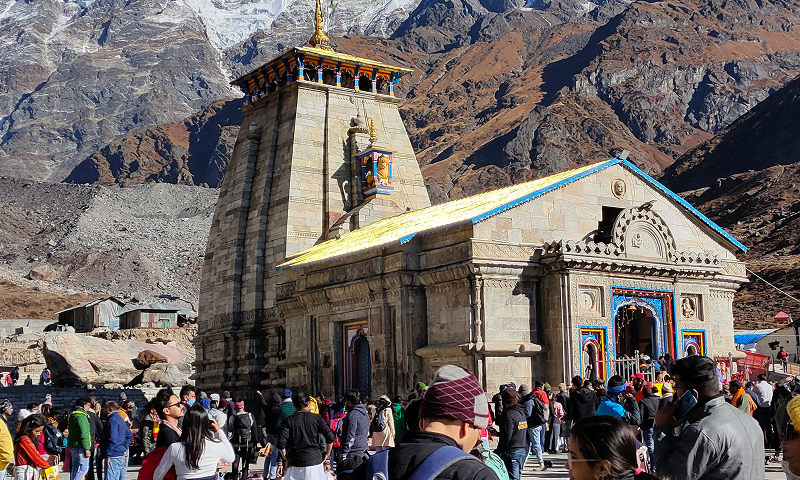
Kedarnath is arguably the toughest stop on the circuit and the most unforgettable. The temple, which is made entirely from grey stone slabs, is located at an elevation of 3,583 metres in front of a backdrop of snow-covered mountains. It has held up against centuries of terrible mountain weather, a testament to the craftsmanship and faith that built it.
The trek to Kedarnath starts at Sonprayag or Sitapur and covers approximately 21 kilometres. Ponies, palanquins, and helicopter services are available for those who are unable to complete the trek on foot.
Legend has it that Lord Shiva, to escape from the Pandavas after the Kurukshetra War, went into the earth here, leaving behind his back (hump), which is worshipped by devotees in stone form as a lingam.
Badrinath: Where Vishnu Meditated
Badrinath is the last destination and, for many, the emotional peak of the yatra. Situated close to the Indo-Tibetan border is the colourful Badrinath temple amidst against the dramatic Neelkanth peak. The surrounding landscape from the hot spring of Tapt Kund to the rock formation of Charan Paduka adds layers of mythology and beauty to every corner of the visit.
Just 3 kilometres away is Mana Village, which is traditionally known as the last Indian village before the Tibetan border. It is worth a short walk to Vyas Gufa (the cave where the Mahabharata was composed) and the Saraswati River.
Char Dham Opening & Closing Date 2026
The shrines have a seasonal calendar based on the Hindu Calendar and the weather conditions of the Himalayas:
| Dham | Opening Date (2026) | Closing Date (2026) |
| Yamunotri | 19 April 2026 | 10–11 November 2026 (approx.) |
| Gangotri | 19 April 2026 | 10–11 November 2026 (approx.) |
| Kedarnath | 22 April 2026 | 10–11 November 2026 (approx.) |
| Badrinath | 23–24 April 2026 | 13 November 2026 (approx.) |
Note: Closing dates are subject to change due to weather and snow conditions.
The most popular months to attend the yatra are May, June, and September. July and August bring the monsoon, which makes some routes slippery and susceptible to landslides. It is possible to travel, but with extra caution.
How to Reach the Char Dham Sites
By Air: Jolly Grant Airport in Dehradun is the nearest major airport. Helicopter services to the dhams are also available from Dehradun and a few other helipads en route, which is a choice for those who are on a tighter schedule or senior citizens.
By Train: The closest railway stations are Haridwar, Rishikesh, and Dehradun. These are well-connected to major Indian cities. From these points, pilgrims are transported by road to the Char Dham sites.
By Road: State and private buses are regularly available from Haridwar, Rishikesh, and Delhi. The road journey of the same is scenic and becoming better with the passage of time, but mountain roads do require a dose of patience and a good vehicle.
What to Carry: A Good Packing List
The mountains can be generous or unforgiving, depending upon how well you prepare. A few non-negotiables:
- Layered clothing: Temperatures at the dhams can drop sharply even in May or June
- Rain gear: A waterproof jacket, poncho, and water-resistant footwear are a must
- Medical kit: Include altitude sickness medication (acetazolamide is commonly used, but check with your doctor before starting, and include basic pain relief and ORS sachets, as well as any personal prescriptions.
- Cash: ATMs are not readily available on the high altitude route
- Dry snacks: Energy bars, dry fruits, and glucose supplements to get you through between meals
- Modest clothing: Expected for entry to the temple; bring a stole or shawl to cover the head
- Comfortable trekking footwear: Ankle support is also important, especially for Kedarnath
How to Pick the Right Package for Chardham
Not all travel operators are equal, and for a journey of this physical and spiritual intensity, the logistics really matter.
A well-structured Chardham yatra package usually includes:
- Accommodation (guesthouses or hotels on the way)
- Transportation (tempo travellers, cabs, or helicopters as per the package)
- Meals (pure vegetarian, as per the requirement at the dham sites)
- Local guides with knowledge of the area and temple etiquette
- Medical support or coordination in case of problems related to altitude
- Flexibility for accounting for weather-related delays
Traveloi, headquartered in Dehradun and with its in-depth local knowledge of the region through all the states of Uttarakhand, as well as the pilgrimage routes, offers various formats, road-based complete Chardham circuits to helicopter circuits that are built especially for those who cannot move or have limited time. The team manages all the processes involved in registering temples, setting up emergencies, and so on, so that pilgrims can simply experience and not have to worry about logistics.
You can take a look at the available itineraries and duration here: Chardham Yatra Packages – Traveloi
For people who are interested in completing only Kedarnath and Badrinath, there are Do Dham options available as well: Kedarnath Badrinath Do Dham Tour Package
Who Should Do This Yatra?
The Chota Chardham Yatra is spiritually open to all, but physically, it requires some preparation.
- Senior citizens: Helicopter-based packages take a lot of physical stress from shoulders. Ponies and palanquins are also available from Kedarnath.
- Families with older children: The circuit can be handled with planning and pacing.
- First-time pilgrims: A guided Chardham tour package helps in taking the fatigue of decision-making away and ensures you do not miss out on certain important rituals or locations.
- Health-conscious travelers: A basic fitness check and consultation with a physician is suggested to be taken before undertaking high altitude travel, specially Kedarnath leg.
Note on Responsible Pilgrimage
The Char Dham locations are located in environmentally sensitive areas. Pilgrims are being encouraged to:
- Avoid single-use plastic on the trek routes
- Carry waste back – rather than leaving it on the trail
- Respect the natural environment and local people
- Follow temple guidelines without having an argument or exception
This is not a matter of environmental responsibility; it goes hand in hand with the very spirit of the yatra. The journey is intended to foster reverence and not leave destruction in its wake.
View the full 12-day Chardham Yatra from Delhi package with pricing, inclusions, and day-by-day itinerary.
Frequently Asked Questions
Q1: What is the difference between Chota Chardham and Maha Chardham?
The Maha Chardham set up by Adi Shankaracharya comprises four places at four corners of India: Badrinath (in the north), Dwarka (in the west), Puri (in the east), and Rameswaram (in the south). The Chota Chardham is the name of the four shrines specifically in the state of Uttarakhand such as Yamunotri, Gangotri, Kedarnath, and Badrinath. Most pilgrims today use “Chardham Yatra” to denote the Uttarakhand circuit.
Q2: How many days do I need to complete the Chota Chardham Yatra?
A road-based full circuit usually takes between 10 to 12 days from Haridwar or Delhi, depending upon the pace and weather conditions. Helicopter-based packages can be taken to compress the journey to 5-6 days. Do Dham (Kedarnath and Badrinath only) packages usually go for 6-8 days.
Q3: Is the Chardham Yatra safe for elderly pilgrims?
Yes, with the right planning. Helicopter packages obviate the need for high-altitude trekking. At Kedarnath, palanquins and pony services are available down to the base point. It is good to consult with a physician prior to the trip and visit a package with a guide and medical support built in.
Q4: What is the best month to do the Chardham Yatra?
May to June and September to October are usually the best months. May and early June have clear weather before the monsoon. September and October offer crisp post-monsoon visibility and fewer crowds, especially great for those who prefer a less-overcrowded pilgrimage experience.
Q5: Can I do the Chardham Yatra without a travel operator?
It is technically possible, but it does come with a lot of logistical risk, especially for first-timers. Temple registration, accommodation bookings on the circuit, booking of pony/helicopter at Kedarnath in advance, or dealing with sudden changes in weather demands experience and local contacts. A Chardham tour package provides a structured way of completing these components so that you can focus on the spiritual purpose of the journey.
Q6: Is there a specific dress code for the Char Dham temples?
There is no strictly observed dress code, although it is expected that one dresses modestly and in accordance with their cultural norms. To cover your head before entering the temples is a common practice. It is recommended that one carry a light stole or dupatta. Non-vegetarian food and alcohol are strictly prohibited in all four dham sites.
Q7: What is the Char Dham registration process?The Uttarakhand government has made it compulsory for the pilgrims to register themselves online before they undertake the yatra. The registration involves collecting basic health information and traveler information. Most organized tour operators do this registration as part of the package.