
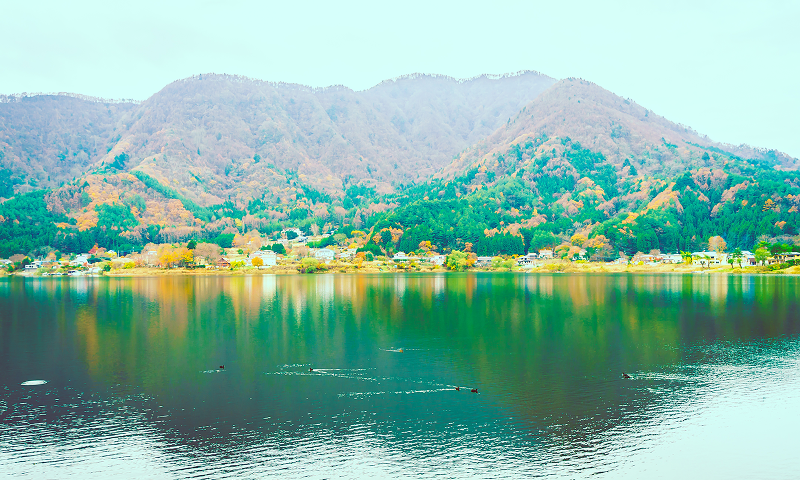
At an altitude of more than 4,500 metres in the remote Tibetan plateau, there is a lake that attracts pilgrims from all over the world. Not for its scenery alone, fantastic though it is, but for what it represents in the hearts and minds of those who believe. Lake Mansarovar is one of the most spiritually charged bodies of water on the planet, revered throughout Hinduism, Buddhism, Jainism, and the Bon tradition. The stories surrounding it have been passed on through generations, and a number of them still influence the way pilgrims approach the lake today.
This blog is an honest look at the myths, beliefs, and spiritual significance associated with Lake Mansarovar, which is based on scriptural traditions and time-honoured practice, not invented lore.
The Name Itself Tells You Something
“Mansarovar” is derived from two Sanskrit words, “Manas,” which means mind or consciousness and “Sarovar,” which means lake. Together, the name means something like “Lake of the Mind” or “Lake of Consciousness.”
This is not incidental. Hindu mythology states that the lake was first conceived in the mind of Lord Brahma, the creator deity, and then it appeared physically on the Earth. The idea is that Mansarovar is a manifestation of the divine thought, a place that exists simultaneously in the spiritual world and the physical world.
That origin story alone sets the tone for all the associated beliefs about the lake.
Lake Mansarovar in Hindu Mythology
In Hindu scripture, Lake Mansarovar has an important place in several texts, such as the Puranas and the Ramayana. Some of the beliefs that are consistently referred to are:
Brahma’s Creation: According to the Skanda Purana, Lord Brahma created the lake using his mind so that his sons, the Manasaputras, could take a bath in a holy and pure water body after their austerities. This is why the lake is characterized as particularly pure and spiritually powerful.
Lord Shiva’s Abode: Mansarovar, is in the shadow of Mount Kailash, which Hindu tradition believes is the eternal home of Lord Shiva and Goddess Parvati. The lake is far from being separate from this association. It is viewed as part of the holy geography of Shiva, and a holy dip in its waters is said to be equivalent to receiving the direct blessings of Shiva.
The Sacred Swan (Hamsa): The swan or the Hamsa has great symbolic significance in Hindu tradition. It is the symbol of soul, discrimination, and spiritual wisdom. According to belief, divine swans from Manasarovar, a heavenly lake, in Hindu cosmology, come down to bathe in Lake Mansarovar every year. Pilgrims who are lucky enough to spot a bar-headed goose or swan on the lake often regard it as a very auspicious sign.
Karma Purification: It is widely held in Hindu tradition that bathing in the waters of Lake Mansarovar will cleanse the accumulated sins and bad karma from one’s soul. Many pilgrims do not characterize the act as ritual bathing but as spiritual renewal. The water is glacially cold, but that does not deter those who have waited years for this moment.
What Buddhism, Jainism, and Bon Say About the Lake
Lake Mansarovar’s spiritual significance is much broader than Hinduism. Each tradition that venerated it brought with it a layer of its own meaning.
| Religion | Name for the Lake | Core Belief |
| Hinduism | Mansarovar | Created by Brahma; purifies karma; sacred to Shiva |
| Tibetan Buddhism | Mapham Yumtso | Residence of the deity Chakrasamvara; represents enlightenment |
| Jainism | Padma Hrad | First Tirthankara Rishabhadeva attained liberation near this region |
| Bon (pre-Buddhist Tibet) | Tso Mapham | Spiritual centre of the universe; home of cosmic energies |
For Tibetan Buddhists, the lake is called Mapham Yumtso, meaning “Undefeated Lake” or “Lake of Invincibility.” It is related to the tantric deity Chakrasamvara, and it is reputed to be a place of immense spiritual energy, which helps to accelerate the path towards enlightenment.
The Bon religion, which predates the Buddhist religion in Tibet, regarded Kailash and Mansarovar as the axis of the spiritual power of the world. Even to this day, Bon practitioners carry out the Kora of Mount Kailash in the opposite direction to Hindu and Buddhist pilgrims, but they share the same respect for the lake.
The Myths That Pilgrims Still Speak Of
Besides scriptural references, several oral traditions and local beliefs have been circulating about Lake Mansarovar for centuries. The following are some of the most persistent:
The Lake That Never Freezes in One Spot: Local tradition holds that there is a place on Lake Mansarovar that never freezes, even in the harshest of Tibetan winters. This spot is regarded as particularly sacred and is believed to be where the divine energy of the lake is most concentrated. Pilgrims seek it out when they arrive, though no one can say with any certainty where it lies on any given day.
The Sound of the Conch: A recurring belief among pilgrims is that, in the stillness of early morning, before the wind kicks up, a sound can be heard across the lake that resembles a conch shell being blown. In the Hindu traditions, the conch is inseparable from divinity. Those who describe having heard this sound claim it is unmistakable and deeply moving. Whether this has any natural explanation or not is moot to the pilgrims who experienced it.
The Appearance of Rainbows: Rainbows appearing over Lake Mansarovar are not rare, considering the altitude and atmospheric conditions. But in local and pilgrim belief, the rainbow over the lake is taken as a direct sign of the presence and auspice of a deity. It is treated as a blessing for the way ahead and for the Kora around Mount Kailash.
The Water That Carries Blessings Home: A very ancient custom, which is recorded in the pilgrimage stories of hundreds of years, is that pilgrims gather water from Lake Mansarovar to take home with them. This water is used in rituals and poured into household shrines and applied to the foreheads of family members as a sort of blessing. The belief is that the water keeps the sacred potency no matter how long the distance it travels.
The Rituals Practiced at the Lake
Understanding the myths alone is incomplete without the knowledge of how pilgrims actually interact with the lake. The rituals of Mansarovar are simple, sincere, and deeply personal.
- Parikrama of the Lake: Some of the pilgrims undertake a circumambulation of the lake itself, which is a considerable distance. This is considered separately meritorious from the Kora around Mount Kailash.
- The Holy Dip: Bathing in the lake at sunrise is perhaps the most important ritual act. Pilgrims go into the frigid water with prayers and most often come out in tears. The combination of cold, altitude, and the weight of having finally arrived makes an experience described by most who make the trek impossible to put into words.
- Offering of Lamps: Small diyas (oil lamps) or floating candles are released on the water at dusk. Watching the lights move across the unmoving surface of the Mansarovar against the background of Mount Kailash is one of the most quietly powerful things a man or woman can witness at this altitude.
- Prayer and Silence: Many pilgrims simply spend hours sitting on the water’s edge. No ritual, no specific prayer. Just the lake, the mountain, and the sky,
The Spiritual Geography of Mansarovar and Rakshas Tal
Just west of Lake Mansarovar lies Rakshas Tal, a saltwater lake which is visually darker and does not support the same kind of life as Mansarovar. In Hindu belief, Rakshas Tal is linked to Ravana, who is said to have done fierce penance here to please Lord Shiva.
The two lakes are connected by a narrow channel called Ganga Chhu. When water from Mansarovar flows into Rakshas Tal, it is believed to be a particularly auspicious period of pilgrimage. This natural event, which does not happen each year, attracts a lot of attention when it occurs.
The contrast between the two lakes, one bursting with life and life radiance, one still and severe, has always been seen as a reflection of the balance between light and dark, devotion and ego, or liberation and attachment.
Planning the Pilgrimage: A Practical Note
It is easy to see the spiritual attraction of Lake Mansarovar. The logistics of getting to it are not easy. The lake is located in Tibet, which means permits, visas, and high altitude acclimatization are needed, as well as careful route planning.
If you are considering this pilgrimage, the Kailash Mansarovar Yatra package offered by Traveloi covers the full journey, including permits, accommodation, meals, Sherpa support, and medical backup. The team at Traveloi has organised this pilgrimage to suit travellers of various fitness levels and ensures that the logistics do not overshadow the spiritual experience.
For those unable to make the trip to Tibet but wishing to pursue a high-altitude Himalayan pilgrimage journey with a similar spiritual depth, the Adi Kailash and Om Parvat Yatra is a good alternative within India, which has its own sacred ground and revered traditions.
If you are still in the planning stage and want to start with a well-known pilgrimage circuit closer home, the Chardham Yatra is a good starting point in building the physical and spiritual stamina that a Mansarovar journey calls for.
FAQs Regarding Holy Lake Mansarovar: Myths and Beliefs
Q1. Why is Lake Mansarovar considered sacred in Hinduism?
Lake Mansarovar is sacred in Hinduism as it was supposed to have been created by the Hindu Gods, Lord Brahma, in his mind before manifesting itself on Earth. It is at the foot of Mount Kailash, the eternal abode of Lord Shiva. Bathing in its waters is traditionally believed to help a person cleanse negative karma and purify the soul.
Q2. What does the name “Mansarovar” mean?
The name derives from the Sanskrit Manas (mind or consciousness) and Sarovar (lake). It is often translated as “Lake of Consciousness” or “Lake of the Mind,” reflecting its origin in the mythological tradition, which has it as Brahma’s divine thought.
Q3. Is Lake Mansarovar significant only for Hindus?
No. Lake Mansarovar is worshipped in four religious beliefs. Tibetan Buddhists refer to it as Mapham Yumtso, and it is identified with the deity Chakrasamvara. Jains believe that the region around is connected to the liberation of Rishabhadeva, the first Tirthankara. The Bon religion of Tibet also considers the lake to be a centre of cosmic spiritual energy.
Q4. What is the belief behind taking a holy dip in Lake Mansarovar?
According to Hindu tradition, bathing in Lake Mansarovar washes away accumulated sins and negative karma of one’s lifetime. Many pilgrims report that the act is emotionally overwhelming, not just physically shocking (the cold water). The ritual is done at sunrise and is considered one of the most sacred acts a pilgrim can do.
Q5. What is the connection between Lake Mansarovar and Mount Kailash in mythology?
The two are considered inextricably associated in sacred geography. Mount Kailash is the dwelling place of Lord Shiva, and the Lake Mansarovar, located at the foot of the mountain, is the lake of divine consciousness. Together, they constitute an entire spiritual landscape that is a representation of both the masculine and feminine cosmic energy in Hindu cosmology. Completing the Kailash Kora and bathing in Mansarovar are considered to be complementary acts of devotion.
Q6. Is there a best time to visit Lake Mansarovar for pilgrimage?
The lake and the route to it are reachable between May and September. This is when passes are open, and the weather permits safe travel. July and August bring occasional monsoon rains, but the landscapes are also at their most dramatic during this time. The Kailash Mansarovar yatra package from Traveloi operates during this window with carefully planned itineraries.
Q7. Can the water from Lake Mansarovar be taken home?
Yes, it is well accepted pilgrim tradition to collect water from the lake and take it home. The water is used in household rituals, offered at shrines and given as a blessing to family members who were unable to make the journey. This practice has been recorded throughout centuries of pilgrimage stories.
Read about Traveloi’s approach to pilgrimage travel and understand what to expect from a Kailash Mansarovar journey before you decide.
