
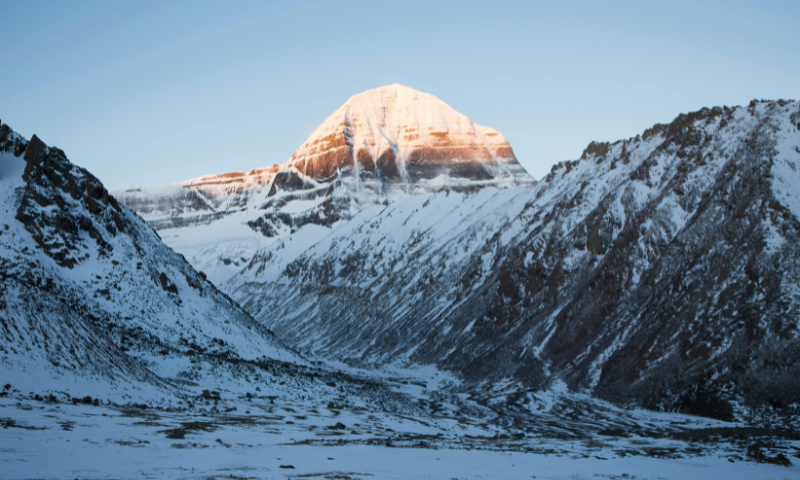
Mount Kailash is not the tallest peak in the Himalayas, nor is it the most photographed. Yet for many pilgrims and spiritual seekers, its significance has little to do with height or appearance. Pilgrims often describe a profound stillness around the mountain, something that feels difficult to explain through landscape alone.
Located in western Tibet near the borders of India and Nepal, Mount Kailash occupies a unique place in the spiritual traditions of Asia. It is considered sacred in Hinduism, Buddhism, Jainism, and the Bon faith, making it one of the few mountains in the world revered across multiple religions.
Yet, despite being one of the most revered sites on Earth, Kailash remains unclimbed. No mountaineer has summited it, not because the terrain is impossibly difficult, but because religious authorities and governments have consistently discouraged any attempt out of respect for its spiritual significance. That alone tells you something about how seriously the world takes this mountain. For those planning a pilgrimage, choosing the right Kailash Mansarovar yatra package is the first and most important step toward making this sacred journey a reality.
Why Mount Kailash Matters to Four World Religions
The spiritual weight of Mount Kailash comes from its place in the belief systems of over a billion people.
In Hinduism, Mount Kailash is the abode of Lord Shiva and Goddess Parvati. It is where Shiva is believed to sit in eternal meditation, holding the universe in balance. Hindu texts describe the mountain as the earthly representation of Mount Meru, the cosmic axis around which the entire universe revolves. For devout Hindus, completing the Parikrama (circumambulation) of Mount Kailash is considered one of the highest acts of devotion, capable of cleansing a lifetime of sins and opening the door to moksha, or spiritual liberation.
For Buddhists, Mount Kailash is the seat of Buddha Demchok (also called Chakrasamvara), who represents supreme bliss. Tibetan Buddhists consider the Kailash Kora, the walk around the mountain, a powerful act of merit that accelerates spiritual progress. Many monks and nuns complete the circuit multiple times in their lifetime.
In Jainism, Mount Kailash is Ashtapada, the site where the first Tirthankara, Rishabhadeva, attained liberation (moksha). For Jain followers, the mountain represents the ultimate point of spiritual achievement.
Followers of the ancient Bon religion, which predates Buddhism in Tibet, regard Kailash as the seat of all spiritual power and the place where their founder descended from heaven.
What makes this remarkable is the convergence. Four distinct faiths, each with its own theology and history, all pointing toward the same mountain as sacred. That kind of cross-cultural reverence is found nowhere else.
Lake Mansarovar: The Sacred Water Body at the Foot of Kailash
A few kilometres from the base of Mount Kailash lies Lake Mansarovar, one of the highest freshwater lakes in the world. Hindu scriptures say the lake was first created in the mind of Lord Brahma before it took physical form on Earth. Its turquoise waters, set against the backdrop of snow peaks and vast Tibetan plains, create a landscape that feels otherworldly.
For pilgrims on the Kailash Mansarovar pilgrimage, a holy dip in the lake is a key ritual. It is believed that bathing in Mansarovar cleanses negative karma and purifies the soul across lifetimes. Many devotees collect the sacred water and carry it back home as a blessing.
Even if you approach the lake as a traveller without religious intent, the sheer visual impact of standing at its shores at sunrise, watching golden light stretch across still water while Kailash towers in the background, is enough to alter your internal state. It is one of those rare places where nature and the sacred overlap so completely that you cannot separate the two.
The Kailash Parikrama: 52 Kilometres of Devotion
The spiritual heart of the Kailash Mansarovar yatra is the Kora, or Parikrama. This is the circumambulation of Mount Kailash, a 52-kilometre trek that typically takes three days to complete. The route passes through some of the most dramatic and demanding terrain in the Tibetan plateau, reaching its highest point at Dolma La Pass at 5,636 metres.
Here is what each day on the Kailash Kora trek generally looks like:
- Day 1 takes pilgrims from Darchen to Dirapuk, roughly 20 kilometres along the western and northern faces of Kailash. The trail follows the Lha Chu valley, with views of the mountain’s north face unfolding gradually. The camp at Dirapuk offers one of the most iconic views of Kailash, especially under moonlight.
- Day 2 is the hardest stretch. The route climbs steeply from Dirapuk to Dolma La Pass. The altitude, thin air, and physical strain make this the most challenging portion. Prayer flags flutter in every direction at the pass, and pilgrims pause here to pray and reflect. The descent leads to Zuthulpuk, passing Gauri Kund, a small emerald green lake associated with Goddess Parvati.
- Day 3 is the return stretch from Zuthulpuk back to Darchen, completing the circuit. Most pilgrims feel a distinct shift in themselves by this point, a quiet sense of completion that is hard to describe in words.
Tibetan Buddhists believe that completing 108 Kora around Mount Kailash guarantees liberation in this lifetime. Many devout pilgrims complete the circuit by performing full body prostrations, a process that can take weeks.
How to Reach Mount Kailash: The Three Main Routes
Getting to Mount Kailash requires careful planning. The mountain sits in a remote part of the Tibet Autonomous Region of China, and access is regulated through permits, visas, and organised tour groups. There are three established routes that pilgrims typically use.
The Lipulekh Pass Route (Via Uttarakhand, India)
This traditional route starts from Uttarakhand and involves trekking through rugged Himalayan terrain. It is physically demanding but offers an immersive experience of the raw Himalayan landscape. The route passes through remote border villages and high altitude passes before entering Tibet.
The Simikot to Hilsa Route (Via Nepal)
This is currently the most popular option. Pilgrims fly to Nepalgunj, then to Simikot, and take a helicopter to Hilsa on the Tibet border. From Hilsa, road travel takes you to Lake Mansarovar and Mount Kailash. This route reduces the trekking required and saves time, while still delivering the adventure and spiritual gravitas of the journey. Traveloi offers comprehensive Kailash Mansarovar tour packages via this route, handling permits, transport, accommodation, and medical support from start to finish.
The Lhasa Route (Via Tibet)
For those who want a more gradual cultural immersion, flying into Lhasa and driving through Tibetan towns to Kailash is an excellent choice. This route allows time to acclimatize and explore Tibetan monasteries and local culture before reaching the sacred mountain. The drive itself passes through some of the most stunning and desolate landscapes on the plateau.
Each route has its own character. The choice depends on your physical fitness, budget, time, and how much of the journey you want to experience on foot versus by vehicle.
Best Time to Visit Kailash Mansarovar
The Kailash Mansarovar yatra season typically runs from May to September, with the peak window falling in May and June. During these months, the weather is relatively warm, skies are clear, and the mountain paths are accessible. Visibility is at its best, which means uninterrupted views of both Mount Kailash and Lake Mansarovar.
July and August bring occasional light rain, but the landscape turns lush and green. September offers post monsoon clarity and fewer crowds, but temperatures begin dropping.
The region remains closed during the winter months due to extreme cold, heavy snowfall, and road closures. Planning your travel within the right window is essential, and a detailed season guide for the Kailash Mansarovar yatra can be found on the Traveloi website.
Physical Preparation and Health Considerations
The Kailash Mansarovar trip is not a casual vacation. The altitude, terrain, and thin air demand preparation. Altitude sickness is a real risk at heights above 5,000 metres, and the Dolma La Pass crossing is particularly strenuous.
Here is what helps:
- Start a walking or cardio routine at least two to three months before your yatra. Daily walks of 5 to 8 kilometres build the stamina you need.
- Practice breathing exercises and yoga. Pranayama specifically helps your body manage reduced oxygen levels at altitude.
- Carry personal medications, especially for cold, headache, and nausea. Most organised tour packages include medical backup and oxygen cylinders.
- Acclimatization is critical. Do not rush the journey. Spending an extra day at intermediate altitudes before attempting the Parikrama reduces your risk significantly.
- Stay hydrated throughout the trek. Drink warm water frequently and avoid alcohol.
The good news is that pilgrims of varying ages and fitness levels have completed the yatra with the right preparation and support. With a well-structured Kailash Mansarovar yatra package, trained Sherpa support and medical teams are part of the journey.
Adi Kailash: The Indian Alternative
Not everyone can travel to Tibet for the Kailash Mansarovar pilgrimage. Visa restrictions, health limitations, budget, or time constraints can make the journey difficult. For those devotees, Adi Kailash in Uttarakhand offers a spiritually fulfilling alternative.
Located in the Pithoragarh district near the Indo-Tibetan border, Adi Kailash (also known as Chota Kailash) stands at 6,310 metres and is revered as the earthly counterpart of Mount Kailash in Tibet. Nearby Om Parvat carries a naturally formed snow pattern resembling the Hindu sacred symbol Om, adding to its spiritual magnetism. Traveloi offers dedicated Adi Kailash yatra packages that cover permits, transport, accommodation, and guided treks through this sacred Himalayan corridor.
For a deeper understanding of the religious significance of these mountains, the Traveloi guide on the sacred importance of Adi Kailash and Om Parvat in Hinduism is a valuable read.
What Makes a Kailash Yatra Different from Regular Travel
The Kailash Mansarovar yatra is not a sightseeing trip. It is a pilgrimage in the truest sense. The physical hardships, the altitude, the stripped down simplicity of life on the trail, all of it serves a purpose. It removes the noise of everyday life and forces a kind of inner quiet that most people rarely experience.
Pilgrims often describe a shift in perspective after the yatra. The mountain does not give you anything material. It takes away what you do not need. The ego quiets down. The need to control loosens. And what remains is a sense of peace that stays long after you return home.
This is why choosing the right travel partner matters. A poorly planned yatra can turn a sacred journey into a logistical nightmare. Traveloi, with its years of experience in Himalayan and pilgrimage travel, structures its Kailash Mansarovar tour package to keep group sizes comfortable, provide trained Sherpa support, and ensure that pilgrims are never unsupported on the trail. From securing permits and visas to arranging stays, meals, and medical backup, the logistics are handled so that your focus stays where it should: on the journey itself.
For those also interested in Uttarakhand’s broader pilgrimage circuit, the Chardham Yatra covering Yamunotri, Gangotri, Kedarnath, and Badrinath is another deeply meaningful journey that pairs well with a Kailash pilgrimage.
You can also explore all of Traveloi’s pilgrimage tour packages or browse the full Kailash Mansarovar yatra packages for detailed itineraries, pricing, and route options.
Ready to Plan Your Kailash Mansarovar Yatra?
If you have been thinking about this journey for a while, now is the time to start planning. The yatra window is limited, permits take time, and physical preparation cannot be rushed.
Get in touch with the Traveloi team to discuss your preferred route, travel dates, fitness level, and budget. A well-planned Kailash Mansarovar yatra package takes the guesswork out of the journey and lets you focus entirely on the experience.
Frequently Asked Questions
Q1. What is the spiritual significance of Mount Kailash and why is it called the holiest peak in the world?
Mount Kailash is sacred to four religions: Hinduism, Buddhism, Jainism, and the Bon tradition. Hindus consider it the abode of Lord Shiva, while Buddhists associate it with supreme bliss. Jains believe their first Tirthankara attained liberation here, and Bon followers see it as the spiritual centre of the universe. This multi faith reverence, shared across over a billion believers, makes it the holiest mountain on the planet.
Q2. How long does the Kailash Mansarovar yatra take and what does it include?
The Kailash Mansarovar yatra typically takes 12 to 15 days, depending on the route chosen. The journey includes travel to the base region, acclimatization days, the 52 kilometre Parikrama (circumambulation) of Mount Kailash over three days, and a visit to Lake Mansarovar for the holy dip. A comprehensive Kailash Mansarovar yatra package covers permits, transport, accommodation, meals, and medical support.
Q3. What is the best time to visit Kailash Mansarovar?
The best time for the Kailash Mansarovar yatra is between May and September. May and June offer the clearest skies and warmest temperatures, making them ideal for the trek and the Parikrama. September is good for those who prefer fewer crowds and post monsoon clarity. The region is inaccessible during winter due to extreme cold and heavy snowfall.
Q4. Is there an alternative to the Kailash Mansarovar yatra for those who cannot travel to Tibet?
Yes. Adi Kailash in Uttarakhand’s Pithoragarh district is revered as the earthly counterpart of Mount Kailash in Tibet. At 6,310 metres, it carries deep spiritual significance in Hinduism, Buddhism, and Jainism. The nearby Om Parvat features a naturally occurring snow formation shaped like the sacred Om symbol. Traveloi offers dedicated Adi Kailash yatra packages for those seeking a spiritually fulfilling pilgrimage within India.
Q5. How physically demanding is the Kailash Parikrama and who can attempt it?
The Kailash Parikrama is physically demanding due to the high altitude and the crossing of Dolma La Pass at 5,636 metres. Pilgrims do not need to be athletes, but good stamina, regular cardiovascular exercise, and breathing practice in the months before the yatra are essential. With proper preparation, acclimatization, trained Sherpa support, and medical backup provided as part of an organised Kailash Mansarovar tour package, pilgrims of different ages have completed the journey successfully.
Q6. What are the main routes to reach Mount Kailash for the yatra?
There are three main routes: the Lipulekh Pass route via Uttarakhand (India), the Simikot to Hilsa route via Nepal, and the Lhasa route via Tibet. The Nepal route is the most popular as it reduces trekking time. The Lhasa route offers cultural immersion through Tibetan towns. The choice depends on your fitness level, budget, and the kind of travel experience you prefer.
