
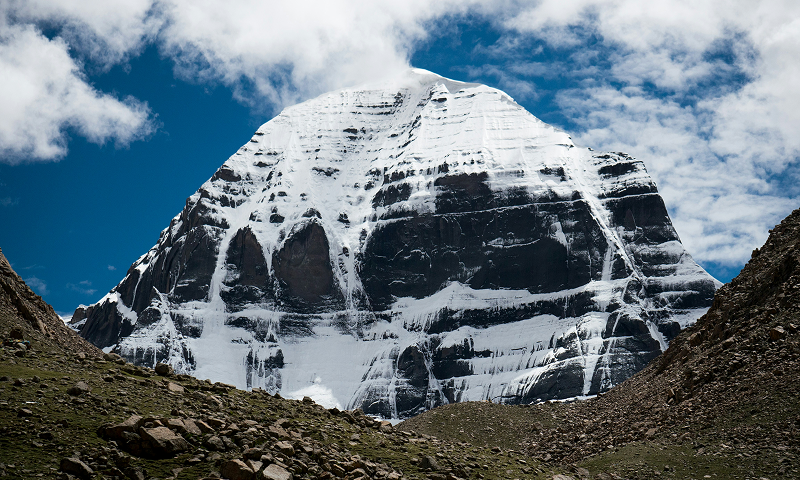
For millions of Hindus, Buddhists and Jains all over the world, Mount Kailash is not only a geographical landmark. It is the most sacred mountain on the planet. Tucked deep inside the Tibetan plateau, at an altitude of 6,638 meters, it attracts pilgrims from all corners of the world, including an increasing number of devotees and spiritual travelers based in the United States.
If you are an American citizen with Indian origin, or if you are just someone who is attracted to one of the most awe-inspiring spiritual destinations in the world, then planning a trip like this from the USA can be a complicated affair. Different time zones, visas, long-haul flights, and high-altitude logistics are all factors that add layers of complexity that a standard vacation does not have.
This guide has been written especially for you. It covers every practical angle, from routes to documents to the right season to physical preparation, so you can make informed decisions before you book.
Why This Journey Matters for the Indian Diaspora in America
Indians living in the United States bring their roots with them. Festivals, temples, and cultural ties are strong and have not faded with the generations. For many NRIs, the Kailash Mansarovar pilgrimage is much more than a travel goal. It is a life-long goal, something that one speaks of at family gatherings and passes down through generations.
The yatra is very significant in four religions. In Hinduism, Mount Kailash is the abode of Lord Shiva, and always has been. In Buddhism, it is the seat of Buddha Demchok. For Jains, it is the place of liberation of their first Tirthankara. Bon practitioners regard it as the spiritual center of the whole universe.
Lake Mansarovar, near the mountain, is one of the world’s highest lakes that is full of fresh water. Hindu scriptures have described it as a lake, which was first conceived in the mind of Lord Brahma before it took its physical form. Taking a holy dip here is said to be one of the most purifying activities for a devotee.
For NRIs and Americans of Indian descent, this journey is often said to be spiritually completing the circle.
Getting Here from the USA: The Basics of Long-Haul Planning
Flying to the Kailash region from the US usually requires you to pass through Delhi, Kathmandu, or Lhasa, depending on your route of entry. Most of the travelers who are flying from major US cities like New York, Chicago, Los Angeles, or Houston are connecting through Delhi or Kathmandu.
Key practical points to note from the outset:
- Total travel time from a major US city to Kathmandu, with layovers, normally ranges between 18 and 26 hours.
- It is important to have advance planning. Permits for Tibet take a while to process and group visas are issued in Kathmandu. It is strongly recommended to book at least 3 to 4 months in advance.
- Tour operators in India take care of the ground logistics like Tibet Travel Permits, Alien Travel Permits, Military Permits, etc., and liaise with Chinese authorities on your behalf.
- NRI travelers with US passport must ensure that OCI card information is up to date because this will impact visa requirements and entry documentation.
- Currency and payments should be arranged in advance because access to ATM is extremely limited outside of Kathmandu and Lhasa.
Three Routes to Kailash Mansarovar and Which One Suits You
Reaching Mount Kailash involves the choice of a path to it with care. Each one has a different balance of accessibility, adventure and comfort. Here is a clear breakdown:
| Route | Entry Point | Travel Mode | Ideal For | Approx. Duration |
| Simikot to Hilsa (Nepal) | Nepal | Flights + Helicopter + Road | Most travellers; Moderate fitness | 12 to 15 days |
| Lipulekh Pass (Uttarakhand, India) | India | Trek-heavy route | Adventure seekers; High fitness | 18 to 24 days |
For US-based travelers, the Nepal route through Simikot and Hilsa is the most commonly used route nowadays. You fly into Kathmandu, acclimate for a short time, and then take domestic flights to Nepalgunj and Simikot, which are then followed by a helicopter transfer to the Tibet border at Hilsa. From there, the journey is continued by road to Lake Mansarovar.
If you are looking for a slower, more involved cultural journey with slower altitude gain, the Lhasa route is certainly worth consideration. You take a plane to Lhasa, spend a couple of days sightseeing in monasteries and acclimating to the altitude, and continue your journey by road towards Mansarovar and Kailash. This is especially appropriate for older travelers or for those who have not visited high-altitude places before.
What Happens During the Parikrama (Circumambulation)
The spiritual heart of the journey is the Parikrama, which is the circumambulation of Mount Kailash. The entire circuit is about 52 kilometers and is normally done in three days.
The route leads through Dirapuk, where pilgrims enjoy the best and closest view of the north face of Kailash. The hardest part of the circuit, physically, is crossing the Dolma La Pass, which is at an elevation of 5,636 meters. This is the highest point of the whole Parikrama. Prayer flags mark this sacred high point, and many pilgrims stop here for reflection and prayer.
Along the route, you will also pass Gauri Kund, which is a small emerald green lake that is associated with Goddess Parvati. Tucked in the rugged mountain terrain, it creates a moment of quiet reverence to an already spiritually charged journey.
The landscape throughout is open, raw, and unlike most of the country that travelers see anywhere in the world.
Completing the Parikrama is believed to be one of the most important spiritual acts that a devotee may perform in his life. For detailed route information and what is included in each package, visit the Kailash Mansarovar Yatra page on Traveloi before making your travel decision.
Key Highlights of the Journey at a Glance
- Standing by Lake Mansarovar at sunrise with Kailash in the background
- Taking a ritual dip in the sacred waters of Mansarovar
- Crossing the Dolma La Pass (5,636 meters)
- Visiting the Dirapuk monastery from the north face of Kailash, directly in front
- Seeing prayer flags at high altitude camps flutter in complete silence
- Passing through Tibetan towns with centuries of history intact
- For those on the Nepal route, exploring the temples in Kathmandu before and after the yatra
If you are also interested in a less strenuous alternative that will still connect you to the spiritual circuit of Kailash, then the Adi Kailash and Om Parvat Yatra in Uttarakhand is a good idea to explore.
Documents and Permits Required for US Passport Holders
Traveling to Kailash Mansarovar as a US passport holder includes more documentation than a standard international trip. Since Mount Kailash and Lake Mansarovar are in Tibet, all pilgrims must have a series of permits issued by Chinese authorities in addition to regular travel papers.
At the very least, you will need a valid US passport with enough validity beyond your travel dates. Multiple Tibet-specific permits are required, which include a Tibet Travel Permit, Alien Travel Permit, and Military Permit for border regions close to Kailash. These are not available to individual travellers, and you must arrange these through a licensed tour operator on your behalf.
For those traveling through Nepal, a Chinese group visa will normally be arranged in Kathmandu during the tour process. Nepal entry requirements should be checked independently before travel, as visa policies are subject to change.
NRI travelers holding an OCI card but travelling on a US passport go through the same permit process as any other US passport holder. OCI status does not exempt anyone from Tibet-specific entry requirements.
The important thing to learn in practical terms is very simple. None of these permits can be self-arranged. Booking through a reliable operator with direct experience of handling this documentation is not an option; it is essential. The entire process of getting the permits for pilgrims is managed by Traveloi on their behalf as part of the Kailash Mansarovar Yatra package, which means the travelers are busy with their preparation rather than paperwork.
Best Time to Travel from the USA
The yatra season is between May and September. Outside this window, the mountain passes are closed because of extreme weather and snow.
| Month | Conditions | Recommendation |
| May to June | Clear skies and cool temperatures | Excellent; great for first-timers |
| July to August | Occasional monsoon showers; greener landscapes | Good; plan carefully |
| September | Clear again; crowds reduce | Very good; comfortable |
For NRIs in the US, summer months coincide conveniently with school holidays and annual leave cycles, so June and July feature popular booking windows. Book at least 3 to 4 months in advance to reserve permits and preferred departure slots.
Physical Preparation for US-Based Travelers
Altitude is the one factor that is most underestimated by most travellers. At sea level, there is no preparation in the body to function at 5,000 plus meters where oxygen levels are significantly reduced.
Begin preparing at least 3 months physically before leaving:
- Daily brisk walks – 5 to 6 kilometers, slowly increasing distance
- Stair climbing and uphill walking to increase endurance in the legs
- Pranayama (breathing exercises) and Yoga to enhance lung capacity
- Drinking sufficient fluids and limiting processed food in the months before traveling
- A pre-travel health check, including blood pressure screening, cardiac and respiratory screening
- Consulting a travel medicine specialist about the use of altitude sickness medication
You are not required to be an athlete. But you do need to be able to honestly assess yourself. Many pilgrims in their 50s and 60s undertake the Parikrama every year with proper preparation and proper ground support.
Choosing the Right Kailash Mansarovar Yatra Package
Not all packages are equal. When booking from the US, you are working across time zones and trusting a ground operator to take care of highly-sensitive logistics such as government permits, high altitude medical support, accommodation in remote areas, as well as emergency protocols.
Look for operators who:
- Provide full permit assist including Tibet Travel Permits and Chinese group visa
- Offer acclimatization stops to be included in the itinerary
- Include oxygen cylinders, first aid support, and trained guides in the package
- Are clear about what is/ is not included in the base price
- Have documented experience specifically with Kailash Mansarovar yatra package departures
Traveloi has been organising pilgrimage journeys across India and outside India for years and has a track record of successfully organising pilgrimage journeys for people from different walks of life, such as NRIs who are from the US, UK, and Southeast Asia. The team organizes ground operations out of Dehradun and Kathmandu and is in touch throughout the trip.
Drop an inquiry with your travel month of choice and passport information, and kick off the permit process as soon as possible.
The Chardham Yatra Connection
Many NRIs of the US integrate spiritual tours into a combination of more than one year or one trip. If one immediately finds Kailash physically strenuous, the Chardham Yatra, taking a round of Uttarakhand, is a meaningful start. It covers Yamunotri, Gangotri, Kedarnath, and Badrinath. It builds your comfort level with the high altitude pilgrimage terrain in India and is often described as a foundation for those who eventually plan to go to Kailash.
FAQs: Kailash Mansarovar Tour From Usa For Americans And NRIs
Q1. Can a US passport holder travel to Kailash Mansarovar without a group tour?
No. Tibet has strict regulations on its entry. Independent travel to Kailash is not allowed. All pilgrims, including those with US passports, have to travel as part of an organized group with a licensed tour operator. The tour operator prepares the mandatory Tibet Travel Permit, Alien Travel Permit and Chinese group visa, none of which can be obtained separately.
Q2. How much does a Kailash Mansarovar trip from the USA typically cost?
The cost of a Kailash Mansarovar trip can vary depending on factors such as the route chosen, the duration of the journey, the size of the group, and the level of accommodation and support services included in the trip. Most of the organised pilgrimage packages usually include permits, transport in the region, accommodation, meals, and guide assistance. Travellers will likewise need to consider flights into the city of origin (international flights), travel insurance for high altitude travel, and personal expenditure.
Q3. Is the Kailash Mansarovar yatra open to non-Hindus and non-Indians?
Yes. The yatra is open to people of all nationalities and spiritual backgrounds. Buddhist pilgrims from Southeast Asia and Western countries come to Kailash on a regular basis. American travellers who have no specific religious beliefs but have a deep interest in spiritual geography, high-altitude landscapes, and cultural immersion also make this journey. The mountain is important to many religions, and the experience resonates with many who would not consider themselves traditionally religious.
Q4. What is the best route for a first-time American or NRI traveler?
The Nepal route through Simikot and Hilsa is generally regarded to be the best route for first-timers. It reduces extended trekking while still delivering the full experience. Flights and helicopter transfers alleviate some of the physical demands of the Tibet border, and the route allows for some acclimatization time in Kathmandu beforehand. It is also the quickest route in terms of total trip duration, which is useful for travellers with only a limited annual leave.
Q5. How far in advance should NRIs in the USA book a Kailash Mansarovar tour?
Book at least 3 to 4 months in advance of your intended month of travel. Tibet permits must be processed ahead of time, and June and September are two of the most popular departure slots that fill quickly. If you are going for a specific window of travel, contact us by February or March, at the latest, for a May or June departure.
Q6. Are there any age restrictions for this pilgrimage?
There are no hard age cut-offs. The only requirement is good physical fitness and a clean bill of health from a doctor. Pilgrims who are older than 60 are advised to see a physician for specific advice on risks associated with high altitude travel. Those having uncontrolled hypertension, active cardiac conditions, or serious respiratory illness are generally advised against undertaking the Parikrama. The road route to Nepal is a slightly easier way than the Lipulekh trek for elderly people.
Q7. Can NRIs visit the Nepal page on Traveloi for related itineraries?
Yes. Since the most popular route to Kailash is via Kathmandu, the webpage of Nepal on Traveloi has some relevant context for NRIs planning travel via Nepal as part of a larger spiritual itinerary.
Browse all available Kailash Mansarovar Yatra packages on Traveloi to compare routes, inclusions, and departure timelines.