
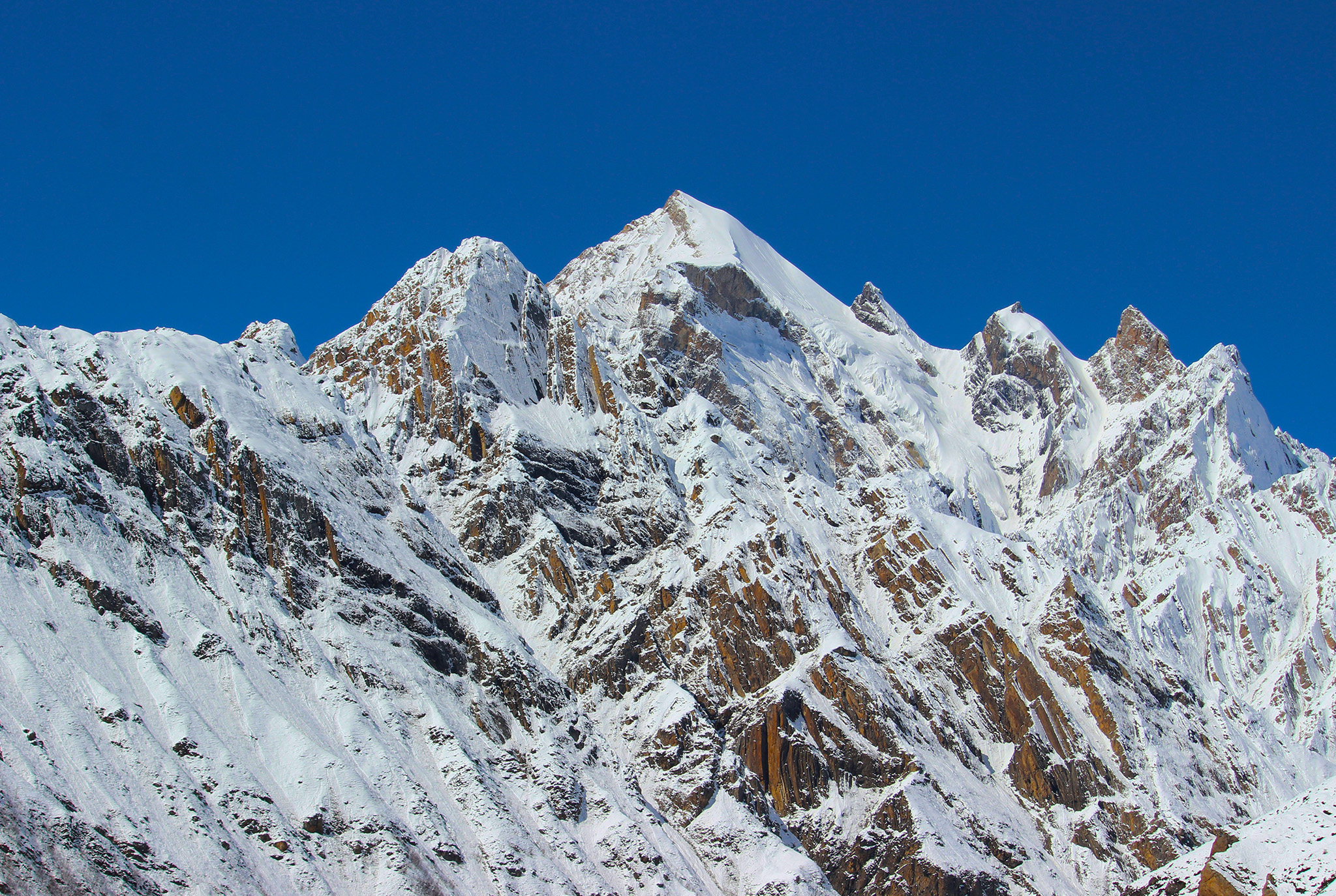
Deep in the Kumaon Himalayas of Uttarakhand, two mountains sit close enough that pilgrims often see them within the same journey, yet each carries a distinct meaning in Hindu belief. Adi Kailash, revered locally as Chota Kailash, is understood as an earthly seat of Lord Shiva. Om Parvat, standing across the border-facing ridges near Nabhidhang, holds a snow pattern that reads clearly as the sacred syllable ॐ.
Together they anchor one of the most quietly powerful pilgrimages in India, one that predates modern tourism by centuries. The importance of Adi Kailash and Om Parvat in Hinduism goes well beyond geography. It touches scripture, symbolism, ascetic practice, and the daily faith of the mountain communities who live around these peaks. This guide unpacks that significance without the usual travel-brochure gloss.
Why Adi Kailash Is Called the Second Kailash
Adi Kailash rises to 6,310 metres in the Pithoragarh district near the Indo-Tibetan border. Its shape closely resembles Mount Kailash in Tibet, which explains the older names Chota Kailash and Baba Kailash used by locals for generations.
In Shaivite tradition, Mount Kailash is considered the axis of the spiritual world. When physical, political, or financial constraints make the Tibetan yatra impossible, Adi Kailash is treated not as a substitute but as its own sanctified counterpart. Priests in the region are firm on this point: the peak is not lesser, only less known.
A few features anchor its status in Hindu practice:
- Parvati Sarovar sits at the base and is associated with the presence of Goddess Parvati
- Gauri Kund nearby holds strong ritual significance for water offerings
- A modest Shiva shrine at Jolingkong is the traditional darshan point
- The peak has never been summited, a fact many devotees regard as evidence of its consecrated nature
For readers researching the wider Shiva circuit, our guide to Mount Kailash and why it draws millions of devotees explains how the two peaks sit within one theological frame.
The Symbolism of Om Parvat
Om Parvat stands at roughly 6,191 metres and is best viewed from Nabhidhang, close to the India-Nepal-China trijunction. Its distinguishing feature is the natural formation of snow deposits on the mountain face that consistently form the shape of the syllable ॐ.
The Om symbol is central to Hindu, Buddhist, and Jain thought. It represents the primordial sound from which the universe is understood to have emerged. To see it inscribed by weather and geology on a Himalayan face, without any human hand, is what makes Om Parvat different from every other sacred site in India. Nothing here has been carved, painted, or installed.
Devotees describe darshan of Om Parvat as one of the quietest moments of the yatra. Groups often fall silent when the peak first appears. Read as coincidence or as design, the visual weight of the symbol on the mountain is undeniable, and it is this that has drawn ascetics to the region since long before roads reached these valleys.
Scriptural and Puranic References
Hindu scriptural literature does not always name mountains by their modern designations, which is why tracing Adi Kailash and Om Parvat through the Puranas takes some care. Several traditions and regional texts point to this belt of the Kumaon Himalayas as part of the broader Kailash region referenced in the Skanda Purana and the Shiva Purana.
The Manas Khand of the Skanda Purana, which covers the geography of the Kumaon region in detail, references sacred lakes and Shiva-associated peaks in areas that scholars and local priests identify with the present-day Vyas Valley and Darma Valley. The Kailash of the Puranas is often described less as a single peak and more as a spiritual zone, which is why multiple mountains including Adi Kailash and Om Parvat are held sacred within the same theological frame.
Regional oral traditions maintained by the Rung community also preserve stories of Lord Shiva’s presence in these valleys, of Parvati’s ritual bathing at the sarovar, and of sages meditating in caves along the Kuthi Yankti river. These accounts are older than any tourist infrastructure and continue to guide how the yatra is performed today.
Spiritual Practices Tied to These Peaks
The importance of Adi Kailash and Om Parvat in Hinduism shows itself most clearly in the rituals that pilgrims perform on site rather than in written doctrine.
Common practices include:
- Circumambulation, or parikrama, of the sacred lake at Jolingkong
- Water offering rituals at Parvati Sarovar and Gauri Kund
- Silent meditation at first light when Om Parvat is best visible
- Simple pujas at the Shiva shrine near the Adi Kailash base
- Fasting through the higher-altitude days as a form of tapas
Many pilgrims choose to time their journey with the Shravan month, when Shiva devotion peaks across the country. Our note on Sawan Somwar practices and Shiva pilgrimage explains how the fasting cycle can be observed on route.
The yatra itself functions as a physical discipline. High altitude, long drive days, and basic lodging strip away the comforts that usually cushion daily practice, and this austerity is understood in Hindu thought as its own form of worship.
Cultural Significance for the Border Communities
The Rung and Bhutia communities of the Vyas and Darma valleys hold Adi Kailash and Om Parvat as central to their identity, not just their calendar. Village elders in Gunji, Nabhi, and Kutti still perform rituals that pre-date the modern pilgrimage circuit, and many of the priests who guide arriving devotees are drawn from these families.
For these communities, the peaks are not remote symbols. They are visible from doorways, tied to weather forecasts, and referenced in local songs. Operations in this region rely heavily on Rung guides and drivers, which is one of the reasons the Adi Kailash and Om Parvat Yatra theme page treats cultural immersion as part of the experience rather than an add-on.
Why Devotees Undertake This Yatra Today
Interest in the Adi Kailash and Om Parvat yatra has grown steadily over the last few years. Several factors explain the shift.
- The Kailash Mansarovar route through Tibet has been closed or restricted for most recent seasons, redirecting devotees to the Indian side
- Improved road infrastructure to Jolingkong has reduced the trek from several days to a manageable drive
- Media coverage of Om Parvat and its natural symbol has reached audiences who had never heard of the peak
- Younger pilgrims are combining spiritual travel with Himalayan exploration, and this circuit fits both intentions
The core motivation, though, remains theological. For a Shaivite pilgrim, standing at Jolingkong with Adi Kailash rising ahead and offering water at Parvati Sarovar is understood as a rare form of darshan. The 8-day Adi Kailash and Om Parvat Yatra from Kathgodam is designed around this darshan sequence, with the drive days paced for altitude acclimatisation rather than sightseeing volume.
Planning Your Own Visit
The yatra window is narrow. Roads typically open around late May and close by mid-October, subject to weather. Permits are mandatory for the inner line beyond Dharchula, and these are processed through registered operators. Physical preparation matters more than most first-time pilgrims expect, and a basic medical check-up before booking is a sensible step. If you are still weighing dates and route options, the Traveloi team can walk you through the planning decisions before you commit.
Plan the Yatra With People Who Know the Route
Traveloi operates this circuit through the Rung community and handles permits, acclimatisation stops, and darshan sequencing end to end. If Adi Kailash and Om Parvat are on your mind for this season, speak to the team about dates before the window fills up.
Frequently Asked Questions
Why is Adi Kailash considered sacred in Hinduism?
Adi Kailash is considered an earthly seat of Lord Shiva and is closely associated with Goddess Parvati through Parvati Sarovar and Gauri Kund. Its resemblance to Mount Kailash in Tibet and its place in the Manas Khand tradition of the Skanda Purana anchor its religious importance.
What is special about the Om symbol on Om Parvat?
The ॐ shape on Om Parvat is formed entirely by natural snow deposits on the mountain face. It has not been carved or created by any human hand, which is what gives it unique spiritual weight in Hindu, Buddhist, and Jain traditions.
Is Adi Kailash the same as Mount Kailash?
No. Mount Kailash sits in Tibet at 6,638 metres. Adi Kailash sits in Uttarakhand at 6,310 metres. Both are held sacred as seats of Lord Shiva, but they are distinct peaks with separate pilgrimage routes.
Can non-Hindus visit Adi Kailash and Om Parvat?
Yes. The yatra is open to travellers of any faith, subject to Indian permit rules for the inner line area.
When does the Adi Kailash yatra season open?
The route typically opens between mid-May and late May and closes by mid-October, subject to weather.
How physically demanding is the yatra?
Moderate. The journey is largely road-based with short walks at each darshan point. Altitude is the main challenge, with campsites and darshan points above 3,500 metres.
Do I need a permit for the Adi Kailash and Om Parvat yatra?
Yes. Inner line permits are required beyond Dharchula and are arranged by registered tour operators as part of the yatra package.