
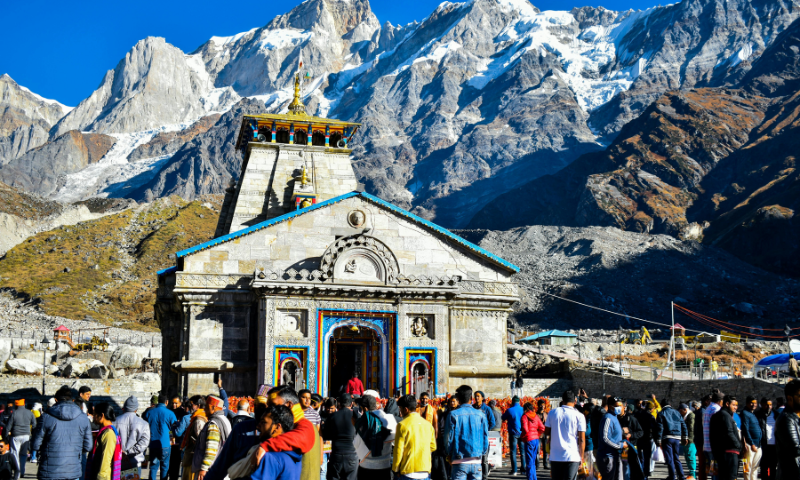
Kedarnath Temple has survived avalanches, glacial floods, and over a thousand Himalayan winters. In June 2013, when flash floods ripped through the Mandakini valley and levelled nearly everything in their path, the temple stood. A massive boulder, now called Bhim Shila, lodged itself directly behind the shrine and split the floodwater around it. Engineers and geologists offered explanations. Devotees had only one: Mahadev.
That single event tells you something important about Kedarnath. It is not simply a pilgrimage site. It is a place where geology, myth, and faith overlap so completely that separating them feels unnecessary. For the millions who trek 18 kilometres uphill from Gaurikund each year, the destination is not just a temple at 3,583 metres. It is proof that some things endure.
This blog goes beyond the standard travel guide. It traces Kedarnath’s roots through mythology, recorded history, and the lesser-known stories that most pilgrims never hear about. If you are planning a Kedarnath yatra or simply curious about why this temple commands such devotion, read ahead to know more:
The Mythology of Kedarnath: Why the Pandavas Came Here
The origin story of Kedarnath is inseparable from the Mahabharata. According to Hindu mythology, after winning the devastating Kurukshetra war, the five Pandava brothers were consumed by guilt. They had killed their own cousins, the Kauravas, and the weight of that violence haunted them. They sought Lord Shiva’s forgiveness, knowing that only he could absolve them of sins this grave.
The Pandavas first travelled to Varanasi (Kashi), believed to be Shiva’s favourite city. But Shiva, angered by the bloodshed and deceit of the war, was in no mood to meet them. He fled to the Garhwal Himalayas and disguised himself as a bull (Nandi) to avoid detection. Bhima, the second Pandava brother, spotted the bull grazing near a place now called Guptakashi, literally meaning “hidden Kashi,” a name that directly references Shiva’s act of hiding.
What happened next is the foundation of not one but five temples. When Bhima grabbed the bull by its hind legs and tail, the animal dove into the ground. But its body re-emerged in five separate parts across the Garhwal region:
- The hump appeared at Kedarnath
- The arms surfaced at Tungnath
- The face showed up at Rudranath
- The navel and stomach appeared at Madhyamaheshwar
- The hair emerged at Kalpeshwar
The Pandavas built temples at all five locations. These are collectively known as the Panch Kedar, and their pilgrimage circuit remains active to this day. Kedarnath, as the site of the hump (the most prominent part of the bull), holds the highest status in this circuit. The Shivling inside the Kedarnath Temple is conical in shape, representing that hump, and it is this formation that devotees worship.
After completing the Panch Kedar temples, the Pandavas are said to have performed a yagna (fire sacrifice) at Kedarnath and then ascended to heaven through a path called the Mahapanth, also known as Swargarohini.
For travellers interested in following the Pandavas’ trail across these five sites, the 3 Days Chopta Tungnath tour package covers Tungnath, the highest Shiva temple in the world at 3,680 metres high and the second shrine of the Panch Kedar.
The Historical Record: Adi Shankaracharya and the 8th Century Revival
While mythology takes Kedarnath back to the Mahabharata era, verifiable historical records begin around the 7th and 8th centuries. One of the earliest textual references to Kedarnath appears in the Skanda Purana, which describes “Kedara” as the place where Lord Shiva released the holy Ganga from his matted hair.
The most significant historical figure associated with Kedarnath is Adi Shankaracharya, the 8th-century Vedic philosopher from Kerala. Shankaracharya is credited with reviving the temple, restructuring its worship traditions, and integrating it into a broader Shaiva pilgrimage network. As noted on the Traveloi Chardham guide, he also established the Chota Char Dham circuit (Kedarnath, Badrinath, Yamunotri, and Gangotri) to rekindle interest in Hindu pilgrimage across the Himalayan belt.
What many people do not know is that Shankaracharya is also believed to have attained Mahasamadhi (a yogi’s final conscious departure from the body) near Kedarnath. A samadhi shrine dedicated to him stands directly behind the temple. A 12-foot statue of Adi Guru Shankaracharya now marks the spot, placed over a Shri Yantra.
By the 12th century, Kedarnath had become a well-established pilgrimage centre, referenced in the text Kritya-kalpataru by the Gahadavala minister Bhatta Lakshmidhara. Some historians also attribute the temple’s construction (or a major renovation) to King Bhoj of Malwa, who ruled between 1076 and 1099 CE. A stone inscription found in Gwalior, Madhya Pradesh supports this claim.
The temple itself is a masterwork of ancient engineering. It is built using massive grey stone slabs fitted together with an interlocking technique, without the use of mortar. Iron clamps hold the blocks in place. The inner walls are decorated with carved figures of deities and mythological scenes, including idols of the Pandavas, Krishna, Draupadi, and Virbhadra. A stone statue of Nandi (Shiva’s bull) guards the entrance.
The Panch Kedar Circuit: Kedarnath’s Place in a Larger Spiritual Map
Most pilgrims visit Kedarnath as a standalone destination or as part of the Chardham Yatra. But the temple’s deepest mythological significance comes from its position as the first of the Panch Kedar temples. According to tradition, completing the pilgrimage of all five temples is the proper way to seek Shiva’s complete darshan, since each temple represents a different part of his divine form.
Here is the full circuit in the order traditionally followed:
Kedarnath (3,583 m): The hump of Lord Shiva. This is the most visited of the five and one of the twelve Jyotirlingas. The temple is accessible via a trek from Gaurikund or by helicopter from Phata, Guptakashi, and Sersi.
Tungnath (3,680 m): The arms of Lord Shiva. Tungnath is the highest Shiva temple in the world and sits near Chopta, often called the “mini Switzerland of Uttarakhand.” The trek from Chopta is roughly 3.5 kilometres and is suitable for beginners.
Rudranath (3,559 m): The face of Lord Shiva. This is the most remote of the five temples and requires a challenging alpine trek through high meadows and thick forests.
Madhyamaheshwar (3,490 m): The navel and stomach of Lord Shiva. This temple is located in the Mansoona valley and involves a trek of about 24 kilometres from Ransi village.
Kalpeshwar (2,200 m): The hair (jata) of Lord Shiva. This is the only Panch Kedar temple accessible year-round, located in the Urgam valley.
An unwritten but widely followed tradition holds that after completing the Panch Kedar circuit, pilgrims should visit Badrinath (dedicated to Lord Vishnu) as a final act of devotion. This is one reason why the Do Dham Yatra package combining Kedarnath and Badrinath is so popular among serious pilgrims.
The 2013 Floods: Destruction, Survival, and Bhim Shila
No account of Kedarnath is complete without addressing what happened on 16 and 17 June 2013. Uttarakhand received unprecedented rainfall during those days. The Chorabari glacier behind the Kedarnath valley destabilised, sending a wall of water, mud, and debris crashing down the Mandakini river valley. The damage was catastrophic. The pilgrimage route was destroyed for 14 kilometres. Hundreds of lives were lost. But the temple survived.
A massive rock, which locals now call Bhim Shila, had lodged itself directly behind the temple and split the floodwater into two streams that flowed around the shrine. The temple structure, built with those ancient interlocking stone slabs, held firm. Devotees and many locals interpret the event as divine intervention.
Since then, significant reconstruction work has been carried out. A new trekking route has been built on the left bank of the Mandakini River. A three-layer protective wall now stands behind the temple to divert water flow. Retaining walls line both the Mandakini and Saraswati rivers. The pilgrimage infrastructure, including rest stops, medical facilities, and the route itself, has been rebuilt with modern engineering standards.
For first-time pilgrims planning a Kedarnath trip, the logistics are far more organised today than they were a decade ago. The 6 Days Do Dham yatra package from Haridwar offered by Traveloi accounts for these route changes and includes structured halt points for acclimatisation and rest.
Lesser-Known Secrets of Kedarnath
Beyond the well-known mythology and history, Kedarnath holds several details that most travel guides skip:
The Nara-Narayana legend: There is a second, less popular origin story. Twin incarnations of Lord Vishnu, named Nara and Narayana, performed intense penance at nearby Badrikashram (modern Badrinath) in front of a Shivling made of earth. Pleased with their devotion, Shiva appeared and granted them a wish. They asked him to reside permanently at Kedarnath as a Jyotirlinga for the welfare of humanity. He agreed.
The priests are from Karnataka: The head priest (Rawal) of Kedarnath Temple belongs to the Veerashaiva (Lingayat) community from Karnataka, not from Uttarakhand. This tradition has been maintained for centuries. The Teerth Purohits (local pilgrimage priests), however, are Brahmins from the Garhwal region who trace their lineage back to the time of the Pandavas.
Winter migration of the deity: Every year, on or around Kartik Purnima (the autumn full moon), the temple closes for winter. The vigraha (deity) is ceremonially moved to Ukhimath, about 40 kilometres away, where worship continues for the next six months. The temple reopens on Akshaya Tritiya, typically in late April or early May.
Kedarnath has never been fully unoccupied: Even during the harshest winters, when snow buries the temple entirely, local caretakers from the surrounding villages maintain a watch. The temple may be closed to pilgrims, but it is never truly abandoned.
The Shivling is not sculpted: Unlike most temple deities, the Shivling at Kedarnath is a naturally formed, triangular rock believed to be the actual hump of Lord Shiva. It is not a man-made idol, which adds to the temple’s unique spiritual claim.
How to Plan Your Kedarnath Yatra
The Kedarnath temple is open from late April or early May until early November. Here is a practical breakdown for planning your trip:
Best time to visit: May to June and September to October offer the most favourable weather. The monsoon months (July to September) bring heavy rain and an increased risk of landslides, so most experienced pilgrims avoid this period.
Getting there: The nearest rail station is Haridwar, well connected to Delhi and other major cities. From Haridwar, you drive to Sonprayag (roughly 230 km, about 7 to 8 hours by road) via Rudraprayag and Guptakashi. From Sonprayag, a local taxi takes you to Gaurikund, where the 18-kilometre trek to Kedarnath begins.
Trek options: The trek from Gaurikund takes 7 to 8 hours on foot. Pony, palki (palanquin), and porter services are available for those who need them. Helicopter services from Phata, Guptakashi, and Sersi are another option, particularly for elderly pilgrims and families with children.
What to carry: Layered clothing, waterproof trekking shoes (broken in, not new), rain gear, sunscreen, a first-aid kit with altitude sickness medication, energy snacks, and a headlamp. For a detailed list, the Chardham packing checklist on Traveloi covers everything you need.
Registration: Char Dham Yatra registration is mandatory and can be completed online through the Uttarakhand government portal. Medical fitness certificates may be required for Kedarnath, especially for senior travellers.
Traveloi offers multiple itineraries for pilgrims, from the Chardham tour package from Delhi covering all four sacred sites to focused Do Dham packages that pair Kedarnath with Badrinath. For those short on time or with mobility limitations, the Chardham Yatra by helicopter reduces the journey from 10 to 14 days by road to just 5 to 6 days.
Nearby Spiritual and Scenic Stops
If you are extending your time in the region, consider adding these stops to your Kedarnath itinerary:
- Guptakashi: The town where Shiva hid from the Pandavas. Home to the Vishwanath Temple and the Ardhnareshwar Temple (dedicated to the combined form of Shiva and Parvati).
- Devprayag: The sacred confluence where the Bhagirathi and Alaknanda rivers merge to form the Ganga. It is one of the Panch Prayag (five holy confluences) of Uttarakhand.
- Rudraprayag: Another of the Panch Prayag, where the Mandakini meets the Alaknanda. A spiritually significant and visually striking stop.
- Chopta and Tungnath: A short detour from the main route takes you to Chopta, from where you can trek to Tungnath, the second Panch Kedar temple.
- Badrinath: Dedicated to Lord Vishnu, Badrinath is the natural companion to Kedarnath. Most pilgrims visit both on the same trip.
For a broader Uttarakhand experience that blends pilgrimage with nature and adventure, the Uttarakhand Tour packages list several packages covering Auli, Rishikesh, Chopta, and more.
Frequently Asked Questions
Q1. What is the history behind the Kedarnath Temple?
Kedarnath Temple is believed to have been originally built by the Pandavas after the Kurukshetra war to seek Lord Shiva’s forgiveness. The current structure was revived in the 8th century by Adi Shankaracharya. It is one of the twelve Jyotirlingas and the first of the Panch Kedar temples in the Garhwal Himalayas.
Q2. Why is Kedarnath considered the most sacred Jyotirlinga?
Kedarnath sits at 3,583 metres, making it the highest Jyotirlinga in India. Its mythological connection to the Pandavas and Adi Shankaracharya, combined with its extreme remoteness and the physical effort required to reach it, elevates its spiritual significance. The fact that the temple survived the devastating 2013 floods has only deepened its sacred status.
Q3. What is the Panch Kedar pilgrimage and how does Kedarnath fit in?
The Panch Kedar refers to five temples where different parts of Lord Shiva’s body are believed to have appeared. Kedarnath represents the hump, Tungnath the arms, Rudranath the face, Madhyamaheshwar the navel, and Kalpeshwar the hair. Kedarnath holds the first position in the circuit and is the most accessible of the five.
Q4. How long is the trek from Gaurikund to Kedarnath Temple?
The trek is approximately 18 kilometres and takes about 7 to 8 hours on foot. Pony, palki, and helicopter options are available. The trail has been rebuilt after the 2013 floods and now follows the left bank of the Mandakini river with improved safety infrastructure.
Q5. What is Bhim Shila and why is it significant?
Bhim Shila is a massive boulder that lodged itself behind Kedarnath Temple during the 2013 flash floods. It split the floodwater into two streams that flowed around the temple, effectively shielding it from destruction. Devotees now worship it as a symbol of divine protection.
Q6. When does Kedarnath Temple open and close each year?
The temple opens on or around Akshaya Tritiya (late April or early May) and closes on Kartik Purnima (the autumn full moon, typically in November). During winter, the deity is moved to Ukhimath, where worship continues until the temple reopens.
Q7. Can I combine Kedarnath with Badrinath in a single trip?
Yes. The Kedarnath and Badrinath Do Dham Yatra is one of the most popular pilgrimage itineraries in Uttarakhand. Packages typically range from 6 to 8 days. Visiting Badrinath after Kedarnath also aligns with the traditional practice of seeking Vishnu’s blessings after completing Shiva’s darshan at the Panch Kedar.