
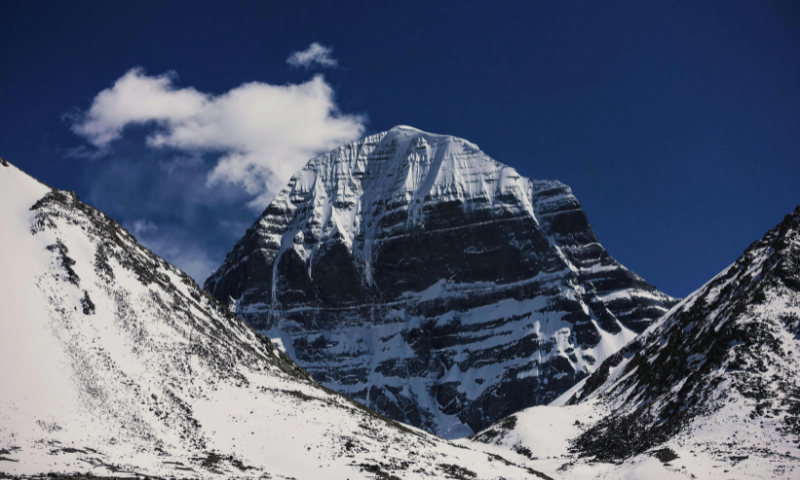
At 5,653 metres, the Manimahesh Kailash Peak in Himachal Pradesh’s Chamba district has never been summited. Not because it is the tallest mountain in the region, but because no one has managed to reach its top. Multiple expeditions, including a joint Indo-Japanese attempt in 1968, have been called off due to extreme weather, technical failure, or what local Gaddi tribes simply call “the will of Lord Shiva.”
That, in many ways, captures the essence of Manimahesh. It is not a place you conquer. It is a place that allows you in, if at all. For devotees and trekkers across India, the annual Manimahesh Yatra is one of the most revered Shiva pilgrimages, combining high-altitude trekking with deep spiritual significance. And for those looking to explore Himachal beyond its popular hill stations, this is a journey that hits differently.
This guide covers everything you need to know about Manimahesh Kailash, from the mythology and trek logistics to packing tips and the best time to plan your visit.
What Is Manimahesh Kailash and Why Does It Matter?
Manimahesh Kailash, also known as Chamba Kailash, is part of the Pir Panjal Range in Himachal Pradesh. It sits roughly 26 kilometres from Bharmour, the ancient capital of Chamba. At its base lies the Manimahesh Lake, locally referred to as Dal Lake, resting at an altitude of approximately 3,950 metres.
The name itself is deeply symbolic. “Mani” means jewel, and “Mahesh” is a name for Lord Shiva. Together, Manimahesh translates to “the jewel on Lord Shiva’s crown.” According to local legend, on full-moon nights, the moonlight reflects off the peak in a way that resembles a glowing jewel, visible from the lake’s surface.
What sets Manimahesh apart from other pilgrimage destinations in Himachal Pradesh is its raw, unaltered character. There are no cable cars, no paved pathways, and no luxury hotels at the lake. The only way to reach it is on foot (or by mule and helicopter in some sections). It is one of the few places in India where the pilgrimage still demands physical effort and genuine commitment.
For those who wish to explore Manimahesh as a destination, our Himachal Tour Packages offer both the body and the spirit.
The Mythology Behind Manimahesh
Hindu mythology holds that Lord Shiva created Manimahesh after his marriage to Goddess Parvati, who is worshipped here as Mata Girija. The region around the lake and peak is considered his permanent abode, and the snowfield at the base of the mountain is called “Shiva’s Chaugan” (meaning Shiva’s playground) by the local Gaddi community.
A rock formation near the summit closely resembles a Shivling, which devotees regard as a natural manifestation of Lord Shiva himself. Several smaller peaks surround the main summit, and according to Gaddi folklore, these are the remains of a local shepherd and his flock who attempted to scale the peak and were turned to stone for the transgression.
Another widely recounted legend says that even a serpent tried to climb Manimahesh Kailash and was petrified mid-attempt. The message from every tale is consistent: the mountain is not meant to be scaled. It is meant to be revered.
Devotees also believe that the Kailash peak becomes visible to them only when Lord Shiva is pleased. On days when the peak hides behind clouds and fog, locals interpret it as a sign of his displeasure. This belief adds an almost personal dimension to the trek. You do not just walk to the lake. You wait to be seen by the mountain.
Manimahesh is counted among the Panch Kailash, the five sacred peaks associated with Lord Shiva across the Himalayas. For devotees who have already completed the Kailash Mansarovar Yatra or the Adi Kailash Om Parvat Yatra, Manimahesh becomes a natural next step in the spiritual circuit.
Manimahesh Yatra: The Annual Pilgrimage
The Manimahesh Yatra is an annual event that begins on the festival of Janmashtami and concludes on Radha Ashtami. It falls in the Hindu month of Bhadon, which typically corresponds to August or September. During this window, thousands of pilgrims assemble at Manimahesh Lake to take a holy dip in its cold, glacial waters.
The yatra traditionally starts from the Lakshminarayan Temple in Chamba town and moves through Bharmour, where pilgrims stop at the 7th-century Chaurasi Temple complex. From Bharmour, the route continues to Hadsar village, which is the last road-connected point. The 13-kilometre trek from Hadsar to the lake begins here.
Along the route, the Himachal Pradesh government and voluntary organisations set up temporary camps, tents, and medical aid stations. Langars (free community kitchens) operate at multiple points, and basic toilet facilities are available at regular intervals. Despite the infrastructure, this yatra retains its rugged character. You should be prepared for unpredictable weather, steep gradients, and stretches with limited mobile connectivity.
For first-time pilgrims, Traveloi recommends starting with a physical fitness check and consulting a doctor about altitude sickness precautions. If you have done the Chardham Yatra before, the terrain will feel familiar, though the altitude and remoteness here are a notch higher.
Trek Route: How to Reach Manimahesh Lake from Hadsar
The most popular and accessible route for the Manimahesh Kailash trek starts at Hadsar village, roughly 17 kilometres from Bharmour. Here is what the route looks like, broken into sections:
Hadsar to Dhancho (7 km): This is the gentler half of the trek. The trail moves through dense forests and meadows, with a steady but manageable incline. Dhancho is a key rest stop and overnight halt point, with temporary shelters and food stalls available during the yatra season. The walk takes roughly three to four hours at a comfortable pace.
Dhancho to Gauri Kund (3 km): The trail gets steeper from Dhancho. Gauri Kund is a small natural water body where female pilgrims traditionally take a dip before proceeding to the main lake. The terrain becomes rockier, and the vegetation thins out noticeably.
Gauri Kund to Manimahesh Lake (3 km): The final stretch is the most challenging. The landscape turns barren, with loose rocks, glacial debris, and a sharp incline. But the first sight of Manimahesh Lake with the Kailash peak reflected in its still waters makes the effort worthwhile.
There is an alternate route from Holi village that involves a higher ascent before descending to the lake, but it is far less frequented and not recommended for first-timers.
If you are planning a broader Himachal trip, you can club this trek with visits to Dharamshala, Dalhousie, or Khajjiar. The Himachal tour packages on Traveloi list several itineraries that cover the state’s spiritual and scenic highlights together.
Best Time to Visit Manimahesh Kailash
The trekking window for Manimahesh opens in mid-May and extends through October. However, the ideal time depends on what kind of experience you are after:
May to June: The snow starts melting, and the trail opens up. The weather is pleasant during the day but it can drop sharply at night. This is a good window for trekkers who want a quieter experience without the yatra crowds.
August to September (Yatra season): This is when the annual Manimahesh Yatra takes place. The trail is busiest during this period. The advantage is better infrastructure, langars, and medical support along the route. The disadvantage is rain, which can make parts of the trail slippery and muddy.
October: The tail end of the season. Snow begins to set in at higher altitudes. Only experienced trekkers should attempt this window.
For spiritual travellers, the yatra season is the most meaningful. But for those purely interested in trekking and nature, May and June offer the best balance of weather, visibility, and solitude.
Planning a Himachal pilgrimage tour around the yatra season gives you the chance to combine Manimahesh with other spiritual destinations in the state. Traveloi’s pilgrimage tour packages can help you design a multi-stop itinerary that aligns with your schedule and interests.
What to Pack for the Manimahesh Trek
Packing for a high-altitude trek in the Pir Panjal Range is not the same as packing for a weekend trip to Shimla. The weather is unpredictable, the terrain is rough, and access to shops and supplies beyond Hadsar is nonexistent. Here is a practical packing list:
- Layered clothing: thermals, a fleece jacket, and a windproof outer layer
- Waterproof trekking shoes (broken in, not brand new)
- A sturdy rain poncho or waterproof jacket
- Sunscreen, sunglasses, and a wide-brimmed hat (UV exposure is strong at altitude)
- A basic first-aid kit with altitude sickness medication (consult your doctor about Diamox)
- Energy snacks, dry fruits, and electrolyte sachets
- A refillable water bottle and water purification tablets
- A headlamp or torch with spare batteries
- Personal toiletries and wet wipes (bathing facilities are limited)
- Devotional items if you are undertaking the yatra for religious purposes
If you have done a Himalayan pilgrimage before, the packing list will feel familiar. For those planning their first such trip, the Char Dham packing checklist on Traveloi covers essentials that apply to most high-altitude pilgrimages, including Manimahesh.
How to Reach Bharmour and Hadsar
Reaching the trek starting point involves a mix of air, rail, and road travel.
By Air: The nearest airport is Kangra (Gaggal Airport), roughly 200 kilometres from Bharmour. From there, you will need to take a taxi or bus to Chamba and then onward to Bharmour.
By Rail: Pathankot is the nearest major railway station, located about 175 kilometres from Bharmour. Pathankot is well-connected to Delhi, Chandigarh, and other North Indian cities. From Pathankot, you can hire a cab or take a state transport bus to Chamba, followed by another short ride to Bharmour.
By Road: If you are driving from Delhi, the route goes via Chandigarh and Pathankot. The total distance is roughly 630 kilometres and takes about 13 to 14 hours. Buses from Bharmour to Hadsar are available during the yatra season. Outside the season, shared taxis are the best option.
For travellers already in Himachal, Bharmour is accessible from Dalhousie (about 100 km) and Chamba town (about 65 km). If you are building a broader Himachal itinerary, Traveloi’s destination experts can help connect Manimahesh with other stops like Dharamshala, Kullu, or even a quick side trip to Uttarakhand’s spiritual circuit.
Nearby Attractions Worth Exploring
If you have extra days in the region, consider adding these stops to your trip:
- Chaurasi Temple Complex, Bharmour: A cluster of 84 ancient temples dating back to the 7th century. It is the starting point of the yatra and a significant heritage site in its own right.
- Khajjiar: Often called a mini Switzerland, this meadow town is about 120 kilometres from Bharmour and makes for a relaxed day trip.
- Dalhousie: A quiet hill station with colonial-era architecture, pine forests, and views of the Dhauladhar Range.
- Chamba Town: The former princely capital, known for the Lakshminarayan Temple, Chamba Rumal embroidery, and the famous Minjar Mela.
For those interested in other Lord Shiva pilgrimages in the Himalayas, the Chopta Tungnath tour package offers a visit to the highest Shiva temple in the world, located in Uttarakhand.
Tips for a Safe and Meaningful Manimahesh Yatra
- Start physical preparation at least four to six weeks before the trek. Focus on cardiovascular fitness, leg strength, and stamina.
- Acclimatise properly. If possible, spend a day in Bharmour before beginning the trek.
- Do not attempt shortcuts on the trail. Stick to the marked path, especially in bad weather.
- Carry your own waste back. Manimahesh is an ecologically sensitive zone, and responsible travel practices matter here.
- Respect local customs. Wear modest clothing at the lake and temples. Avoid playing loud music on the trail.
- Keep your family informed about your itinerary, especially in areas with no mobile network.
Traveloi’s team specialises in spiritual treks in Himachal Pradesh and across the Himalayas. If you need help building a custom Manimahesh itinerary or want guidance on logistics, the team is available to assist through the Traveloi website.
Frequently Asked Questions
Q1. What is the best time to visit Manimahesh Kailash for the annual yatra?
The Manimahesh Yatra takes place between Janmashtami and Radha Ashtami, usually in August or September. This is the most significant time for pilgrims. For trekking without the yatra crowds, May to June is ideal.
Q2. How difficult is the Manimahesh Lake trek from Hadsar?
The trek is approximately 13 kilometres one way, with a moderate to challenging difficulty level. The first half up to Dhancho is relatively easy, while the stretch from Gauri Kund to the lake involves steep, rocky terrain. Basic fitness is essential.
Q3. Can beginners attempt the Manimahesh Kailash trek?
Yes, beginners can attempt the trek with adequate physical preparation. However, prior experience with at least one Himalayan trek is recommended. Starting fitness training four to six weeks before the yatra will make a significant difference.
Q4. Is helicopter service available for Manimahesh Yatra?
Helicopter services are available during the yatra season and can shorten the journey considerably. Availability depends on weather conditions and demand. It is best to book in advance through official channels or a reliable tour operator.
Q5. How do I reach Bharmour from Delhi for the Manimahesh trek?
From Delhi, you can take a train to Pathankot (approximately 10 hours) and then drive to Bharmour via Chamba (approximately 5 to 6 hours). Alternatively, fly to Kangra Airport and travel by road to Bharmour. Driving directly from Delhi takes about 13 to 14 hours via Chandigarh and Pathankot.
Q6. What should I pack for the Manimahesh Yatra?
Pack layered clothing, waterproof trekking shoes, rain gear, sunscreen, a first-aid kit with altitude sickness medication, energy snacks, and a headlamp. Devotional items are recommended if you are undertaking the trip as a pilgrimage.
Q7. Is Manimahesh Kailash part of the Panch Kailash pilgrimage circuit?
Yes. Manimahesh Kailash is one of the five sacred peaks (Panch Kailash) dedicated to Lord Shiva. The others include Kailash Mansarovar in Tibet, Adi Kailash in Uttarakhand, Kinner Kailash in Himachal Pradesh, and Shrikhand Mahadev, also in Himachal Pradesh.
