
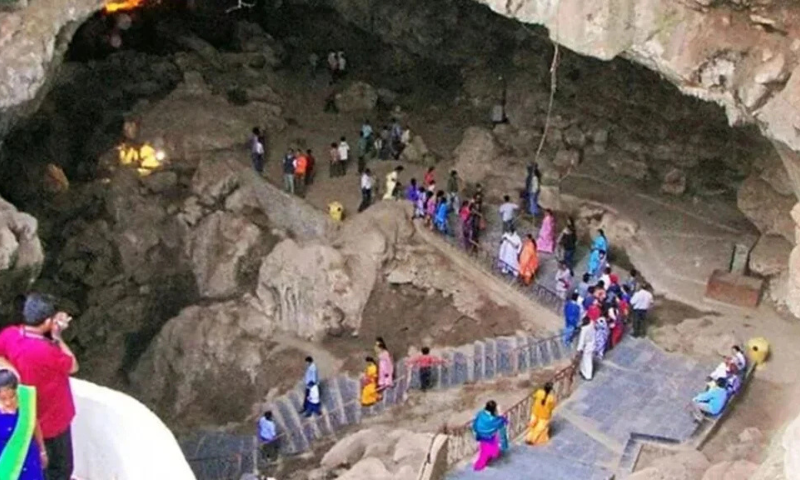
Somewhere in the Kumaon Himalayas, tucked behind a cluster of villages that most GPS systems struggle to pin, there is a crack in the earth that leads to an underground world. It is not a metaphor. Patal Bhuvaneshwar is a limestone cave temple located about 14 kilometres from Gangolihat in Uttarakhand’s Pithoragarh district. It is one of the most quietly extraordinary pilgrimage sites in India.
Unlike the popular Chardham circuit or the well-trodden trail to Kedarnath, this cave does not draw millions. What it offers is rarer: a direct descent into the heart of Hindu mythology, literally carved by water into the belly of the mountains over thousands of years. For anyone interested in Kumaon spiritual destinations, Patal Bhuvaneshwar sits at the very top of the list. Yet, it remains largely unknown outside devoted spiritual circles.
This guide walks you through everything you need to know before visiting, from the ancient legends associated with the cave to the practical details of getting there and what to expect once you are inside.
What Is Patal Bhuvaneshwar Cave Temple?
Patal Bhuvaneshwar is not a man-made structure. It is a natural underground cave system formed over millennia by water erosion of limestone. The cave is approximately 160 metres long and reaches a depth of about 90 feet from the entrance. What makes it sacred is not just its geological beauty, but what devotees and pilgrims see inside: stalactite and stalagmite formations that closely resemble Hindu deities and mythological characters.
The cave is dedicated to Lord Shiva. It is believed to be the abode of 33 koti (types, not crores) of gods and goddesses. The Skand Puran’s Manas Khand section refers to this cave, lending scriptural weight to its spiritual significance. The entire site is now protected by the Archaeological Survey of India (Dehradun Circle).
The underground cave temple in Uttarakhand is not a single chamber. It is a network of caves hidden within caves, each revealing a different chapter of Hindu sacred history through its natural rock formations. Visitors descend roughly 90 steps through a narrow, dimly lit entrance to reach the sanctum, a journey that genuinely feels like entering the centre of the earth.
The Mythology Behind Patal Bhuvaneshwar
The legends tied to this cave span multiple yugas, and that is part of what makes it compelling for pilgrims and history enthusiasts alike.
According to Hindu belief, King Rituparna of the Surya Dynasty (Solar Dynasty), who ruled Ayodhya during the Treta Yuga, was the first human to enter the cave. The story goes that King Nala, defeated by his wife Queen Damayanti, sought refuge with Rituparna. Rituparna hid Nala in the Himalayan forests. On his return, Rituparna chased a mysterious deer into the woods, only to lose sight of it. Exhausted, he fell asleep under a tree and dreamt of the deer asking him not to hunt it. When he woke, he found a cave entrance guarded by a sentinel. He entered and was received by Sheshnag, the serpent king, who carried him through the cave on his hood. Inside, Rituparna witnessed all 33 types of gods and goddesses, including Lord Shiva in his celestial form.
After Rituparna’s visit, the cave is said to have been sealed for ages. It was Adi Shankaracharya who rediscovered and reopened it, marking the beginning of modern pilgrimage history at Patal Bhuvaneshwar. This connection to Adi Shankaracharya ties the cave temple to the broader tradition of Kumaon spiritual destinations that he helped establish across Uttarakhand.
What You Will See Inside the Cave
The journey inside Patal Bhuvaneshwar is not for the claustrophobic, but it rewards the curious. Holding on to protective iron chains, visitors move through feeble lighting (the cave is now electrically illuminated) to encounter a series of formations that devotees identify as sacred figures.
Here are some of the key formations you will encounter:
- Sheshnag: A stone formation believed to represent the serpent king who holds the earth, the heavens, and the underworld. This is one of the first sights as you descend.
- Lord Shiva’s Jatas: Massive stalactites hanging at various points inside the cave, resembling the matted locks of Lord Shiva.
- Lord Ganesha: A distinctly shaped rock formation at the cave entrance, believed to guard the passage.
- Kal Bhairav: Another prominent figure within the cave, recognisable in its rocky silhouette.
- The four gateways: Inside the cave, there are said to be four doors named Randwar (the door of war), Paapdwar (the door of sin), Dharamdwar (the door of righteousness), and Mokshadwar (the door of liberation). According to belief, Paapdwar was closed after the death of Ravana, and Randwar was sealed following the Mahabharata war. Only two gateways remain open today.
A havan (fire sacrifice) is also performed inside the cave in a dimly lit, solemn atmosphere, accompanied by the sound of holy chants. The atmosphere is unlike any surface temple. The coolness, the echoes, and the play of light on ancient rock formations create a setting that is equal parts reverent and otherworldly.
For those exploring the Patal Bhuvaneshwar cave history, the layers of mythology attached to each formation give the visit a narrative depth that few religious sites can match.
Best Time to Visit Patal Bhuvaneshwar
Timing matters. The cave is accessible year-round, but certain months offer a significantly better experience.
Mid-March to June is the most comfortable window. The weather is pleasant, the roads are clear, and the surrounding Kumaon hills are at their greenest. This is also the beginning of the broader pilgrimage season across Uttarakhand, including the Chardham Yatra, which means travel infrastructure in the region is well-staffed and functional.
October to February is another option, especially for those who enjoy cold weather. The temperatures drop noticeably, and warm clothing is essential. However, the skies tend to be clearer, offering excellent views of the surrounding Himalayan landscape.
July to September is the monsoon season. While the cave itself remains open, the roads leading to Gangolihat and Pithoragarh can be affected by landslides and heavy rain. Unless you are an experienced mountain traveller, it is best to avoid this period.
How to Reach Patal Bhuvaneshwar
Getting to Patal Bhuvaneshwar requires a bit of planning, but the route itself is scenic and adds to the overall experience.
By Air: The nearest airport is Pantnagar Airport, located approximately 224 kilometres away. From there, you can hire a taxi or take a bus through the hill roads to Gangolihat.
By Rail: The closest railway station is Kathgodam, roughly 195 kilometres from the cave. Kathgodam is well-connected to Delhi, Lucknow, and Howrah. From Kathgodam, taxis and state transport buses are available.
By Road: Patal Bhuvaneshwar is approximately 380 kilometres from Delhi via Haldwani and Almora. The motorable road ends about half a kilometre from the cave entrance. From there, you walk down to the cave.
If you are combining this visit with other Uttarakhand pilgrimages, our 8 Days Adi Kailash and Om Parvat Yatra Tour Package is a perfect fit for you, as this route passes through Pithoragarh and connects naturally. This Adi Kailash itinerary, in fact, often includes a stop at Patal Bhuvaneshwar as part of the broader Kumaon Himalayas pilgrimage circuit.
Nearby Spiritual Destinations Worth Pairing
One of the biggest advantages of visiting Patal Bhuvaneshwar is its proximity to other sacred sites across the Kumaon region. If you are already in the area, it makes sense to build a broader itinerary.
Gangolihat: Just 14 kilometres away, Gangolihat is home to the Haat Kalika Temple, one of the most revered Shakti Peethas in Uttarakhand. It is the regimental deity of the Kumaon Regiment of the Indian Army.
Jageshwar Dham: A complex of over 100 ancient stone temples dedicated to Lord Shiva, nestled in a dense deodar forest. Jageshwar is one of the twelve Jyotirlingas according to some regional traditions and is a significant stop for anyone exploring spiritual places near Pithoragarh.
Kainchi Dham: The ashram of Neem Karoli Baba, located near Nainital, has become a globally recognised spiritual retreat. Many travellers visiting the Kumaon belt include Kainchi Dham on their route, particularly those coming through from the Adi Kailash circuit.
Chitai Golu Devta Temple: Located near Almora, this temple is famous for its unique tradition of devotees tying letters and bells as offerings, seeking justice from the deity Golu Devta.
Traveloi, with its deep expertise in Uttarakhand spiritual tourism, regularly curates itineraries that combine Patal Bhuvaneshwar with these destinations for a more fulfilling pilgrimage experience. If you are considering a Chardham tour package and want to extend your trip into the Kumaon hills, Traveloi’s team can design a customised route that covers both Garhwal and Kumaon sacred sites without backtracking.
Practical Tips for Visiting Patal Bhuvaneshwar Cave
A few things to keep in mind before you head underground:
- Wear sturdy, non-slip footwear. The cave floor can be damp and slippery.
- Carry a light jacket or shawl. The temperature inside the cave is noticeably cooler than outside.
- Photography is allowed, but flash photography is discouraged to protect the delicate rock formations.
- The descent involves roughly 90 steep steps through a narrow passage. Anyone with severe knee problems or claustrophobia should assess their comfort level before attempting it.
- Only vegetarian food is available in and around Patal Bhuvaneshwar. There are a few local dhabas and small eateries near the cave, but options are basic.
- Accommodation in the area is modest. A KMVN (Kumaon Mandal Vikas Nigam) guesthouse is available at Patal Bhuvaneshwar, and more options exist in Gangolihat and Pithoragarh. Do not expect luxury stays.
- The site sits at an altitude of approximately 1,350 metres above sea level, so altitude sickness is generally not a concern. However, the drive through hilly terrain can be tiring, so pace yourself.
For packing guidance relevant to Himalayan pilgrimages, the checklist for the Chardham Yatra covers most of what you would need for this region as well.
Why Patal Bhuvaneshwar Deserves More Attention
Most conversations about spiritual travel in Uttarakhand revolve around the Chardham circuit, Rishikesh, or Haridwar. And rightly so. But limiting yourself to those destinations means missing the quieter, equally profound corners of Devbhoomi.
Patal Bhuvaneshwar stands apart because it is not a surface-level spiritual experience. You do not just see a temple. You descend into the earth. You move through darkness. You hold iron chains and duck under ancient rock. The mythology is not painted on walls; it is shaped by water over thousands of years into the limestone itself. It is worship through geology, and that combination is exceedingly rare.
For those planning Uttarakhand tours that go beyond the mainstream, the Kumaon Himalayas pilgrimage circuit that includes Patal Bhuvaneshwar, Jageshwar, and extends up to Adi Kailash and Om Parvat offers a journey through some of the oldest and most spiritually charged landscapes in the country. This is exactly the kind of responsible, culturally rich travel that Traveloi has built its reputation on, connecting travellers to meaningful destinations, not just popular ones.
FAQs About Patal Bhuvaneshwar Cave
Q1. What is Patal Bhuvaneshwar and where is it located?
Patal Bhuvaneshwar is a natural limestone cave temple dedicated to Lord Shiva, located about 14 kilometres from Gangolihat in the Pithoragarh district of Uttarakhand. The cave is approximately 160 metres long and 90 feet deep, and it is believed to house formations representing 33 types of Hindu gods and goddesses.
Q2. How do I reach Patal Bhuvaneshwar from Delhi?
The most common route from Delhi is by road via Haldwani and Almora, covering approximately 380 kilometres. The nearest railway station is Kathgodam (about 195 km away), and the nearest airport is Pantnagar (about 224 km away). From either point, taxis and local buses are available to reach Gangolihat, from where the cave is a short drive.
Q3. What is the best time to visit Patal Bhuvaneshwar cave?
Mid-March to June offers the most comfortable weather and clear road conditions. October to February is also suitable if you are prepared for cold temperatures. The monsoon months (July to September) should be avoided due to the risk of landslides and road closures in the Pithoragarh region.
Q4. Is Patal Bhuvaneshwar safe for senior citizens and children?
The cave involves a descent of roughly 90 steep steps through a narrow passage, which can be physically demanding. Senior citizens with reasonable mobility can manage it with assistance, but those with severe knee issues or breathing difficulties should exercise caution. Children who are comfortable in confined spaces can visit, but close supervision is necessary.
Q5. Can I visit Patal Bhuvaneshwar as part of a Chardham tour package?
While Patal Bhuvaneshwar is in the Kumaon region and the Chardham circuit is in Garhwal, it is possible to include both in an extended Uttarakhand pilgrimage itinerary. A customised Chardham tour package with additional days for the Kumaon belt is a practical way to cover both circuits in a single trip.
Q6. What should I carry when visiting Patal Bhuvaneshwar?
Carry sturdy non-slip shoes, a light jacket, a torch as a backup, and modest clothing suitable for a temple visit. Only vegetarian food is available near the cave, so carrying some light snacks is advisable. A basic first-aid kit is always a good idea for Himalayan travel.
Q7. Is worship at Patal Bhuvaneshwar considered equivalent to the Chardham Yatra?
According to local belief and certain scriptural references, worship at Patal Bhuvaneshwar is considered equivalent to worshipping at the Char Dham of Uttarakhand. The cave is also believed to be internally connected to the four sacred abodes, adding to its spiritual significance among Kumaon spiritual destinations.