
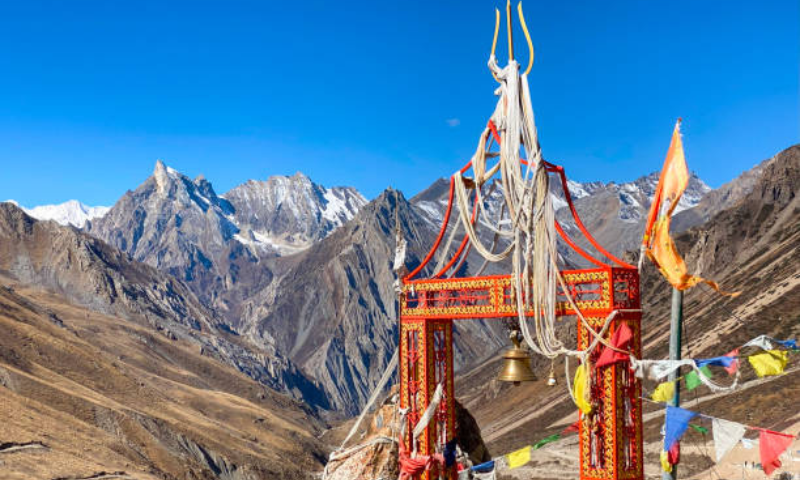
In the remote Kumaon Himalayas of Uttarakhand, two sacred peaks sit as silent witnesses to the devotion and spiritual awakening of centuries. Adi Kailash and Om Parvat are more than geographical features. They represent the greatest spiritual aspirations of Hindu devotees who seek divine connection and inner transformation.
These twin holy destinations have been the destination of pilgrims for generations. The trek to these peaks challenges the physical limits while fostering spiritual growth. For those who cannot make the arduous Kailash Mansarovar Yatra in Tibet, these peaks provide an equally powerful alternative on Indian soil.
Adi Kailash: The Earthly Abode of Shiva
Adi Kailash, which is at 6,310 meters near the Indo-Tibetan border, has a profound significance in the Hindu mythology. The name “Adi” means “first” or “original,” implying this peak represents the primordial manifestation of the divine energy of Mount Kailash.
Hindu scriptures describe Adi Kailash as a sacred house of abode of Lord Shiva and Goddess Parvati, who reside in eternal meditation. The mountain’s pyramid shape echoes the cosmic Mount Meru that was described in ancient texts, and adds to the belief in its divine nature.
Ancient sages and yogis have chosen the area around Adi Kailash for deep meditation and spiritual activities. The pristine environment, untouched by the modern world, provides natural conditions for contemplation in the area. Pilgrims report feeling a deep sense of peace and spiritual clarity near the top.
Parvati Sarovar and Gauri Kund
Two sacred water bodies, near Adi Kailash, enhance its spiritual significance. Parvati Sarovar and Gauri Kund are taken as manifestations of Goddess Parvati herself. Devotees believe bathing in these waters cleanses karmic burden and bestows divine blessings.
The crystal clear waters reflect the snow-covered peaks, creating a mirror image that symbolizes the union of earth and heaven. Pilgrims perform rituals and offer prayers at these lakes, where the silence surrounding the lake adds to the meditative atmosphere. Many devotees find their time at Parvati Sarovar to be life-changing, as they feel connected to something much larger than themselves.
Om Parvat: Nature’s Divine Script
Om Parvat is a witness to one of the most mystical phenomena in nature. The sacred symbol “ॐ”(Om) is seen in nature, formed in snow on the mountain’s surface. This formation can be seen from Nabidang, which is very close to the India-Nepal border and it produces a great sight for the pilgrims.
The Om symbol is of supreme importance in Hinduism. It is the primeval sound of creation, the sound vibration out of which the universe came. Seeing this holy syllable naturally engraved on a Himalayan peak strengthens beliefs about the divine presence in nature.
Spiritual Symbolism of the Om Formation
The natural representation of the Om symbol on a mountain peak has a deep philosophical meaning. It implies that divine consciousness is everywhere in the universe and that it pervades the physical landscape. The mountain becomes a teacher and demonstrates spiritual truths without words.
Hindu Philosophy is that Om is the total of all sounds and knowledge and existence. The symbol is made up of three curves, one semicircle, and a dot, which represent different states of consciousness. Witnessing this formation at Om Parvat reminds the pilgrims of these deep teachings. The formation can be seen for most of the pilgrimage season, although weather conditions may play a factor in visibility.
Mythological Links and Ancient Myths
Hindu mythology is interwoven with several stories around these sacred peaks. According to the local legends, the Pandavas of the Mahabharata had passed through this area during their final journey to heaven. The spiritual power of the area directed them to their ultimate destination.
Other legends state that different sages and mystics gained enlightenment in the valleys around Adi Kailash. The isolation and natural purity of this region had provided the perfect conditions for spiritual practices. These stories continue to motivate modern pilgrims to achieve their own spiritual breakthroughs.
The link between Adi Kailash and Mount Kailash in Tibet is very deep in Hindu belief. Some texts indicate that they are two manifestations of the same divine energy, in which case Adi Kailash is especially important to devotees who are unable to travel to Tibet.
The Pilgrimage Journey as Spiritual Practice
The trip to Adi Kailash and Om Parvat changes the participants in ways that go beyond religious ritual. The physical challenges of high-altitude travel, long drives through mountain terrain, and basic accommodations take away worldly comforts, helping pilgrims to focus on spiritual goals.
Traveling through remote villages in the Himalayas allows pilgrims to be exposed to other ways of life. The Rung and Bhutia communities living close to the Indo-Tibetan border have traditional ways of life that have deep links to their spirituality. Their hospitality and faith is inspiring to visitors.
The Kali River Valley route gives constant reminders of the power and beauty of nature. Flowing along the Indo-Nepal border, the river forms a natural boundary while linking different spiritual traditions. The journey turns into a moving meditation, in which at every turn new landscapes and insights unfold.
Adi Kailash in Context of Uttarakhand’s Spiritual Heritage
The significance of Adi Kailash and Om Parvat goes beyond their individual significance. They are part of Uttarakhand’s rich spiritual heritage, which includes the famous Char Dham circuit, the Panch Kedar temples, and many other such places.
Uttarakhand’s spiritual destinations form a whole network of divine energy. The geographic location of the state in the Himalayas makes it the meeting point between the earthly world and the divine world. Ancient text talks about this region as “Dev Bhoomi” or “Land of Gods,” comprehending its special spiritual status.
Pilgrims often combines visit to Adi Kailash along with other sacred sites in the area, forming full pilgrimages to several sacred sites that focus on various aspects of devotion and practice. The cumulative effect makes the transformative experience more profound.
Accessibility and Modern Pilgrimage
Recent infrastructure improvements made these remote peaks more accessible. The Border Roads Organization has improved road connectivity and thus vehicles can approach closer to sacred sites. This development has made it possible to conduct pilgrimage by elderly devotees and those with limited physical capabilities.
Despite better access, the journey still has its difficult character. High altitude, weather unpredictability and simple facilities make sure that pilgrims have to prepare both physically and mentally. This preparation itself is a part of the spiritual journey, teaching discipline and determination.
Choosing a well-planned Adi Kailash tour package is helpful for pilgrims to overcome all the complexities of permits, accommodation, and transportation. Professional tour operators take care of the logistics and also ensure safety and comfort so the devotees can concentrate on spirituality.
Seasonal Considerations and Spiritual Timings
The pilgrimage season is from May through October; each period of the year has different experiences. Early season travel offers solitude and new post-winter landscapes. Post-monsoon months bring clear skies and stable weather, ideal for viewing from the mountain as well as photography.
Hindu tradition at certain times considered it more auspicious to perform a pilgrimage. Many people schedule their journeys in accordance with religious festivals or dates that have personal significance. Weather conditions play a big role in the experience as there are clear days when Om Parvat’s sacred symbol and Adi Kailash, its majestic peak, can be seen without any obstructions.
Permits And Border Proximity
The proximity of the region to international borders means that special permits are required. The Inner Line Permit (ILP) process is both for security and safety reasons, where there are documents and permission from the local authorities of Dharchula and Pithoragarh.
Villages such as Gunji and Kuti give us glimpses of Himalayan life close to the trijunction of India, Nepal, and Tibet. These communities have ancient traditions that they keep while embracing changes in the modern era. Their stone houses, traditional food, and warm hospitality make for memorable cultural experiences. Local people often tell stories and legends about the sacred mountains that add extra dimension to the pilgrimage aside from its original religious motive.
Environmental Consciousness and Sacred Responsibility
The ecological sensitivity of the Himalayan environment is such that responsible travel practices must be employed. Hindu philosophy focuses on human-nature harmony. Pilgrims should fulfill this tenet by reducing environmental impact and respecting the holy landscape.
Avoiding littering, using water wisely and using the designated paths protect the pristine condition of the region. These practices are in line with the concept of “seva” or selfless service. Caring for the environment becomes an offering to the divine presence that is the mountains.
Personal Transformation Through Pilgrimage
Beyond religious duties, the pilgrimage to Adi Kailash and Om Parvat helps one in personal transformation. The physical challenges help develop resilience and confidence. The spiritual practices create an inner peace and clarity. The cultural experiences broaden perspectives and increase compassion.
Many pilgrims report returning from the yatra as different people. The conditions in which the combination of natural beauty, physical exertion, spiritual attention, and cultural immersion combine to create conditions for profound change. Old patterns and limiting beliefs often get dropped in the mountain environment.
The isolation from modern technology enables more serious self-reflection. Without the constant connectivity, pilgrims are able to reconnect with themselves and their spiritual aspirations. This digital detox often turns out to be as valuable as the explicitly religious elements of the pilgrimage.
Comparative Spiritual Significance
While Mount Kailash in Tibet is of paramount importance in the Hindu, Buddhist, Jain, and Bon traditions, Adi Kailash is no less in terms of spiritual benefits. Its location within India helps make it accessible for devotees who have limitations with traveling or financial constraints.
The two peaks have similar pyramid shape and similar associations with Lord Shiva. Many spiritual teachers suggest that the place of devotion is not as important as one’s devotion. Adi Kailash provides for total spiritual fulfillment for those approaching it with an attitude of true faith and openness.
Medical and Physical Preparation
High altitude travel has special health problems. Altitude sickness can be a problem for anyone, regardless of fitness level. Proper acclimatization, water provision and knowledge of warning signs become very important for safe pilgrimage.
Physical preparation should be done weeks before leaving. Regular walking, breathing exercises and cardiovascular conditioning are beneficial to help bodies adjust to lower levels of oxygen. Mental preparation through meditation and prayer strengthens resolve to go through challenging moments. Consulting healthcare providers before embarking on high-altitude travel will ensure that existing conditions won’t create dangerous situations.
The Role of Faith and Devotion
Ultimately, the significance of Adi Kailash and Om Parvat in Hinduism is due to the faith and devotion of devotees. The mountains are the points of spiritual energy and aspiration. Their physical grandeur reflects the pilgrims consciousness outside normal experience.
Devotional practices done at these sites have special significance. Prayers offered in such holy surroundings are more powerful. The combination of natural beauty, spiritual tradition and personal devotion produces transformative experiences that are beyond intellectual understanding.
Continuing Legacy and Future Pilgrimage
As more and more pilgrims make their pilgrimages to Adi Kailash and Om Parvat, the spiritual importance of these peaks continues to rise. Each visitor adds his or her prayers and good energy to the accumulated spiritual power of centuries. This shared devotion enhances the sacred nature of the sites.
Future generations will inherit the physical landscape, as well as the spiritual legacy. Responsible pilgrimage today ensures these sacred peaks continue to remain pristine and accessible. The timelessness of these mountains lends comfort and continuity, and offers the same spiritual opportunities for seekers in the future as they’ve done for countless generations.
Frequently Asked Questions
Q1: What makes Adi Kailash important in Hindu spirituality?
The earthly manifestation of Mount Kailash is Adi Kailash, which is the sacred dwelling place of Lord Shiva. Its pyramid shape, its proximity to such sacred lakes as Parvati Sarovar and its connection with ancient sages make it of immense importance. Pilgrims feel that by visiting Adi Kailash they gain divine blessings, spiritual purity and inner transformation much the same as the Kailash Mansarovar Yatra in Tibet.
Q2: Why is the Om symbol on Om Parvat considered miraculous?
The Om symbol naturally formed in snow on Om Parvat is the symbol of divine consciousness manifesting itself in the physical world. This phenomenon strengthens Hindu beliefs relating to the feeling of the presence of sacred in nature. Seeing this primordial sound in visual form on a Himalayan peak evokes deep spiritual experiences among devotees in order to remind them of the unity of physical and spiritual worlds.
Q3: Can elderly people undertake the Adi Kailash pilgrimage?
Recent upgrade of the roads has made the yatra more accessible to the aged pilgrims. Most of the journey can be covered by vehicle with short walks at sacred sites. However, the high altitude and rudimentary facilities are demanding in terms of good health and proper preparation. Consultation of doctors beforehand, gradual acclimatization and travel in organized tour packages ensure the safe completion of the pilgrimage by the elderly devotees.
Q4: How long does the Adi Kailash and Om Parvat yatra typically take?
The entire pilgrimage typically takes 9 to 12 days, depending on the itinerary and the point of departure. This includes travel from Kathgodam or Haldwani, formalities of permits at Dharchula, acclimatization days, visits to holy places and the return journey. Shorter periods can be offered but well-rounded itineraries will enable proper acclimation and meaningful spiritual experiences at each location.
Q5: Which is the best time to visit Adi Kailash and Om Parvat?
The pilgrimage season is from May to October. Early season (May-June) provides pleasant weather and reduced crowds, but it is possible that there are still some snow patches remaining. Post-monsoon months (September-October) are the time of the year when skies are crystal clear, the weather stable and the mountain views are excellent. July-August is a period of monsoon rains, occasional landslides, and low visibility and is not as suggested for pilgrimage.
Q6: Are special permits required for this pilgrimage?
Yes, Inner Line Permits (ILP) are mandatory as a result of the region’s proximity to the international borders. These permits are given by the authorities at Dharchula and Pithoragarh after verifying the documents. Travelers must have valid government identification, photographs and other documents. Organized tour packages generally take care of the permits for us, as well as making it easier for pilgrims and ensuring that all the legal requirements are covered.
Q7: How does the spiritual experience at Adi Kailash compare to other pilgrimage sites?
Adi Kailash provides unique spiritual energy because of its remote location, pristine natural environment and association of Lord Shiva. While major pilgrimage centres such as Char Dham host a larger number of flock, the relative isolation of Adi Kailash allows for more intimate spiritual experiences. The physical challenges of the journey and cultural immersion lend transformative aspects in addition to the traditional visits to temples, and makes it very meaningful for serious spiritual seekers.