
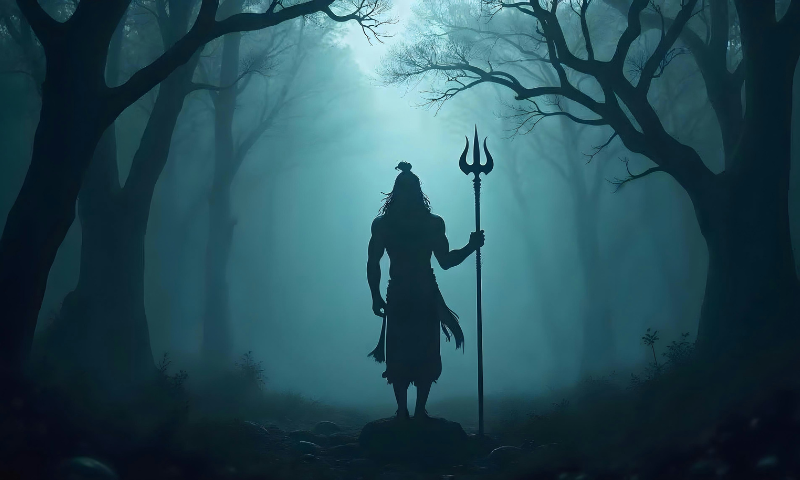
In every ancient temple bell that echoes across the Himalayan valleys, in every chant of “Om Namah Shivaya” rising from the ghats of Varanasi, and in every snow-dusted peak standing silent above the treeline, there is an invitation. It is not a loud one. Lord Shiva, the Mahadeva, does not demand attention. He simply exists, sitting in deep meditation on Mount Kailash, wearing ash on his body, a crescent moon in his matted hair, and a serpent coiled casually around his neck. And yet, for millions of devotees across the world, that quiet stillness holds answers to life’s loudest questions.
This blog is not a retelling of mythology you already know. It is a bridge between what Lord Shiva represents spiritually and how that spiritual pull translates into real-world journeys, the kind of journeys that take you from the comfort of your home to the freezing heights of Kedarnath or the remote mysticism of Kailash Mansarovar.
Who Is Lord Shiva and Why Does He Matter Beyond Religion?
Lord Shiva is one of the three principal deities in Hinduism, forming the holy trinity alongside Brahma (the creator) and Vishnu (the preserver). He is called Shiva, meaning “the auspicious one,” and also as the destroyer. That title confuses people. Destruction sounds harsh until you understand the philosophy behind it.
In Hindu cosmology, destruction is not chaos. It is a transformation. Lord Shiva destroys ignorance, ego, and attachment, the very things that keep human beings stuck in cycles of suffering. When he opens his third eye, it is not rage. It is clarity. When he performs the Tandava, it is not aggression. It is the cosmic rhythm of creation and dissolution happening simultaneously.
This is why Shiva is worshipped as the supreme serenity in the storm of existence. He does not run from the storm. He sits at its center, calm and undisturbed.
For travellers with a spiritual bent, this philosophy is not abstract. It becomes tangible the moment you stand before the Kedarnath temple at dawn, with fog rolling through the valley and silence pressing in from every direction. You feel it when you look at the north face of Mount Kailash glowing under moonlight. These are not just destinations. They are encounters with something far larger than yourself.
The Many Faces of Shiva: Understanding His Forms
One of the most fascinating aspects of Lord Shiva is his contradictions. He is the ascetic who lives in the mountains, yet he is also a devoted husband and father. He is the destroyer of the universe, yet devotees call him Bholenath, the innocent one. He is simple in his needs but limitless in his power.
Here are some of his most revered forms and what they mean for spiritual seekers.
Nataraja, the Lord of Dance, represents the cosmic cycle of creation and destruction. The Nataraja pose is one of the most recognizable symbols in Indian art and philosophy, illustrating that everything in the universe moves in rhythm.
Ardhanarishvara is the half-male, half-female form of Shiva, symbolizing that masculine and feminine energies are not opposites but two halves of the same whole.
Dakshinamurthy is the teacher form of Shiva, where he sits beneath a banyan tree and transmits knowledge through silence. This form is particularly significant in the Advaita Vedanta tradition.
Bhairava is the fierce protector, the guardian of sacred spaces. The Bhairav Temple near Kedarnath, dedicated to Lord Bhairav as the protector of the Kedar Valley, is a must-visit for pilgrims on the Chardham yatra packages.
Each form reveals a different layer of the same truth: that life is not black and white. It is messy, beautiful, terrifying, and sacred all at once. And Shiva holds all of it without flinching.
Sacred Geography of Shiva: Where Faith Meets Landscape
Lord Shiva’s presence in India is not limited to texts and temples. It is embedded in the landscape itself. The Himalayas, rivers, caves, and forests of India carry his stories in their geography. For those planning a spiritual journey, understanding this sacred geography is essential.
Kedarnath: The Jyotirlinga in the Clouds
Kedarnath is arguably the most emotionally overwhelming Shiva pilgrimage in India. Sitting at an altitude of 3,583 meters near the Mandakini River in Uttarakhand, this temple is one of the 12 Jyotirlingas and a key part of the Chardham circuit.
The Kedarnath temple trek is not easy. The 16-kilometer path from Gaurikund tests your stamina, patience, and resolve. But here is the thing: every pilgrim who has completed it will tell you that something shifts inside you on that walk. The weight of daily life begins to peel away, and by the time you reach the temple made of grey stone slabs, you feel lighter.
According to Hindu mythology, this is the place where Lord Shiva forgave the Pandavas and absolved them of their sins. The temple remains open from approximately late April to early November each year, depending on weather conditions.
If Kedarnath is on your list, a well-planned Chardham yatra package can make the difference between a chaotic trek and a meaningful pilgrimage. Traveloi offers 12 Days Chardham yatra from Delhi that covers all four sacred sites, Yamunotri, Gangotri, Kedarnath, and Badrinath, with reliable logistics, comfortable stays, and knowledgeable guides.
Kailash Mansarovar: The Abode of Shiva
If Kedarnath is where Shiva forgave, Kailash is where Shiva resides. Mount Kailash, standing at 6,638 meters in Tibet, is considered the earthly manifestation of Mount Meru, the cosmic axis in Hindu cosmology. For Hindus, it is the home of Lord Shiva and Goddess Parvati. Buddhists, Jains, and followers of the Bon religion also hold Kailash sacred.
The Kailash Mansarovar yatra is one of the most challenging pilgrimages in the world. The full circumambulation (Parikrama or Kora) of Mount Kailash covers 52 kilometers and is typically completed over three days, with the highest point being the Dolma La Pass at 5,636 meters.
What makes this journey unique is not just the physical challenge but the internal one. Pilgrims describe a stripping away of pretense that happens at those altitudes. When oxygen is thin, and the landscape is vast, you stop performing and start simply being. That is the Shiva state, undistracted awareness.
For those planning this life-altering journey, the Kailash Mansarovar yatra tour packages by Traveloi cover everything from permits and visas to Sherpa support, comfortable camps, and medical backup.
Adi Kailash and Om Parvat: The Sacred Alternative Within India
Not everyone can make it to Tibet. And that is okay. Adi Kailash, also known as Chota Kailash, stands at 6,310 meters in the Kumaon Himalayas of Uttarakhand, near the Indo-Tibetan border. It is believed to be the earthly replica of Mount Kailash and holds equal reverence among devotees.
Nearby, Om Parvat is a natural wonder where snow formations create the sacred “Om” symbol on the mountain’s surface, visible from Nabhidhang near the India-Nepal border.
Together, these two sites form the Adi Kailash and Om Parvat Yatra, a deeply fulfilling spiritual journey through remote villages, alpine meadows, and raw Himalayan terrain.
Varanasi: The City That Never Stops Praying
No discussion of Lord Shiva’s sacred geography is complete without Varanasi. This is Shiva’s city, his Kashi, where he is believed to reside eternally as Vishwanath (the Lord of the Universe).
Varanasi operates on a different clock. The morning Ganga Aarti, the narrow lanes leading to the Kashi Vishwanath Temple, and the evening sound of temple bells all create an atmosphere that is both ancient and intensely alive.
For travellers who want to combine Varanasi with other spiritual destinations like Ayodhya and Prayagraj, Traveloi curated the Varanasi and Ayodhya Tour Packages, connecting these cities into one cohesive spiritual circuit.
The Spiritual Philosophy Behind Shiva Pilgrimages
Why do people travel hundreds of kilometers, endure altitude sickness, and walk in freezing temperatures just to stand before a temple or a mountain?
The answer is not just faith. It is a disruption. In your daily life, you have routines, roles, and responsibilities that define you. A Shiva pilgrimage strips all of that away. At 3,500 meters, nobody cares about your job title. At the Dolma La Pass, the only thing that matters is the next step.
Shiva, in mythology, is the one who renounced everything, wealth, comfort, and status, to sit in meditation. A pilgrimage to his sacred sites is a temporary act of renunciation. You leave behind the familiar and enter the unknown. And in that unknown, something genuine often surfaces.
This is why spiritual travel in India continues to draw travellers across generations. It is not nostalgia or tradition alone. It is a functioning reset button for people living in a world that rarely pauses.
Planning Your Shiva Pilgrimage: Practical Considerations
Before you lace up your trekking shoes and head for the hills, some practical groundwork will make your journey safer and more fulfilling.
Physical preparation matters. The Kedarnath temple trek and the Kailash Mansarovar Parikrama both demand reasonable fitness. Start walking or jogging regularly at least two months before departure. Cardiovascular exercises and pranayama (breathing exercises) are recommended.
Pack smart, not heavy. Layered clothing is essential. Mountain weather is unpredictable, and temperatures can drop sharply after sunset. Rain jackets, woollen inners, sturdy trek shoes, and a basic medical kit with painkillers, altitude sickness medication, and antiseptic cream should always be in your bag.
Carry cash. ATMs are not easily available in the remote areas along these pilgrimage routes. Plan accordingly.
Respect the rules of the sacred sites. Alcohol and non-vegetarian food are not permitted at most temple sites. Photography may be restricted inside temples. Dress modestly and carry stoles to cover your head when entering temples.
Book with a trusted travel partner. Pilgrimage logistics in the Himalayas can be complex, involving permits, accommodation, transport, and weather-dependent schedule changes. Traveloi, with its deep expertise in pilgrimage travel across Uttarakhand and beyond, handles all of this so you can focus on what matters: the experience itself.
Beyond the Temple Walls: What Shiva Teaches Modern Travellers
You do not need to be Hindu to take something meaningful from a Shiva pilgrimage. The principles Shiva embodies, non-attachment, equanimity in chaos, the courage to face your own inner darkness, are universal.
Modern travel culture often prioritizes content creation over contemplation. We rush to the photo spot, post it, and move on. Shiva pilgrimages, by design, slow you down. The treks are long. The temples are often in places with no phone signal. The landscapes are too vast to fit into a frame.
And that is the gift. When you stop trying to capture the moment and start living inside it, you get closer to what Shiva represents: presence without performance.
Frequently Asked Questions
Q1: Why is Lord Shiva worshipped as the destroyer in Hinduism?
Lord Shiva is called the destroyer because he dissolves ignorance, ego, and attachment rather than physical matter. In Hindu philosophy, destruction is a necessary part of the cosmic cycle. Without it, transformation and renewal cannot happen. Shiva’s destruction clears the path for new creation, making him a symbol of liberation and inner clarity.
Q2: What is the best time to visit Kedarnath temple for a Shiva pilgrimage?
The Kedarnath temple typically opens in late April or early May and closes by early November. The best months to visit are May, June, September, and October. July and August bring heavy monsoon rains, which can cause landslides and road closures. If you plan to include Kedarnath in a Chardham yatra package, booking early and staying flexible with dates is advisable.
Q3: How do I plan a Kailash Mansarovar yatra from India?
The Kailash Mansarovar yatra can be undertaken through multiple routes, including the Lipulekh Pass route via Uttarakhand, the Simikot-Hilsa route via Nepal, or the Lhasa route via Tibet. Each route requires specific permits and varying levels of physical fitness. A well-structured Kailash Mansarovar tour package from a trusted operator like Traveloi covers permits, visas, Sherpa support, medical backup, and comfortable stays, making the planning process significantly easier.
Q4: What is the significance of the 12 Jyotirlingas dedicated to Lord Shiva?
The 12 Jyotirlingas are considered the most sacred Shiva temples in India, each representing a different manifestation of Lord Shiva as an infinite column of light. These include Kedarnath in Uttarakhand, Somnath in Gujarat, Kashi Vishwanath in Varanasi, and Mahakaleshwar in Ujjain, among others. Visiting all 12 is considered a complete act of devotion in Hindu tradition, and many pilgrim circuits in India are designed around this journey.
Q5: Is Adi Kailash a good alternative to the Kailash Mansarovar yatra?
Yes. Adi Kailash, located in Uttarakhand’s Kumaon Himalayas, is revered as the earthly replica of Mount Kailash in Tibet. For travellers who cannot undertake the Tibet journey due to physical limitations, permit challenges, or time constraints, the Adi Kailash and Om Parvat Yatra offers a deeply fulfilling spiritual alternative within India, complete with raw Himalayan beauty and sacred significance.
Q6: Can families with senior citizens undertake Shiva pilgrimages like Chardham or Kedarnath?
Absolutely. Helicopter options are available for Chardham and Kedarnath, making these pilgrimages accessible for senior citizens and those with mobility concerns. Traveloi offers Chardham yatra packages by helicopter from Dehradun, which significantly reduce the physical strain while preserving the spiritual essence of the journey.
Q7: What makes spiritual travel in India different from other pilgrimage destinations worldwide?
India’s spiritual geography is unique because it blends mythology with living tradition. Temples like Kedarnath and cities like Varanasi are not museums. They are active centers of worship where rituals have been performed continuously for centuries. The Himalayan landscape adds another dimension, with high-altitude treks that create both physical challenge and meditative solitude. This combination of ancient devotion and raw natural beauty makes a Jyotirlinga pilgrimage or a Shiva temple tour in India a genuinely transformative experience.
