
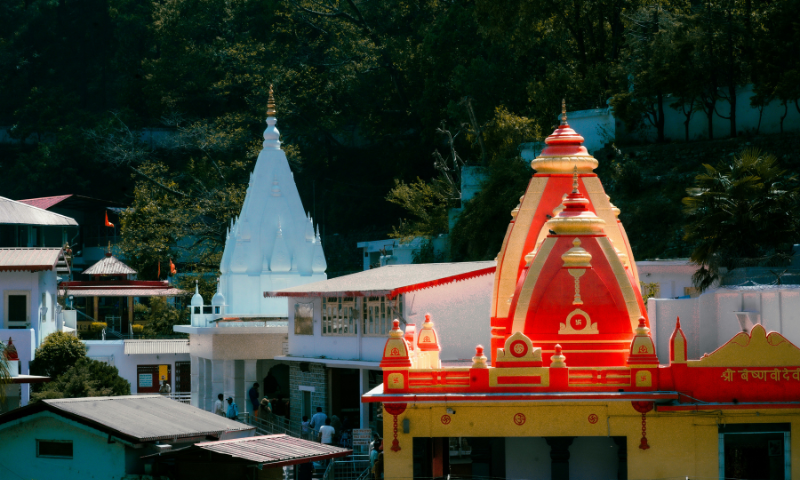
Most people hear about Kainchi Dham for the first time through one of two stories. The first is about Steve Jobs, who visited this remote ashram in the Kumaon Hills during the 1970s while searching for clarity and direction. The second is about Mark Zuckerberg, who was reportedly advised to visit Kainchi Dham before making a major decision about Facebook’s future. Both stories are real, and both point to the same place: a small, unassuming ashram on the Nainital-Almora Road in Uttarakhand, founded by one of India’s most revered spiritual figures, Neem Karoli Baba.
But Kainchi Dham is not famous because of Silicon Valley names. It is famous because for decades, thousands of devotees, pilgrims, and spiritual seekers have found something here that is hard to put into words. A stillness. A sense of being held. A feeling that the place remembers you even if you have never been before.
If you are planning a visit and asking where exactly Kainchi Dham is, how to get there, what the darshan timings are, and how to fit it into a broader Uttarakhand trip, this guide covers it all.
The Exact Location of Kainchi Dham
Kainchi Dham is located in the Nainital district of Uttarakhand, in the Kumaon region. It sits on the Nainital-Almora Road, roughly 17 kilometres from Nainital town and about 9 kilometres from Bhowali.
The ashram sits at an altitude of approximately 1,400 metres above sea level, nestled in a quiet valley with the Kosi River flowing nearby. Pine and oak forests cover the surrounding hills, and the air has that clean, resin-scented quality that the Kumaon belt is known for.
The name “Kainchi” comes from a local dialect word for two sharp hairpin bends in the mountain road at this spot. The bends form a scissor-like shape, which is how the village and the ashram got their name. It has nothing to do with the Hindi word for scissors, despite what many visitors assume.
The ashram’s full postal address is Shree Kainchi Hanuman Mandir, Kainchi, District Nainital, Uttarakhand, 263132.
For travellers already visiting Nainital or nearby hill stations like Bhimtal, Mukteshwar, or Ramgarh, Kainchi Dham is an easy addition to the itinerary. It also falls naturally on the route for those heading deeper into the Kumaon Himalayas toward destinations like Jageshwar Dham or Almora.
Who Was Neem Karoli Baba?
To understand Kainchi Dham, you need to understand the person behind it. Neem Karoli Baba, also known as Maharaj ji by his devotees, was born as Lakshman Narayan Sharma around 1900 in the village of Akbarpur in Uttar Pradesh’s Faizabad district.
He left home as a young boy to become a wandering sadhu. After years of spiritual journeying across Northern India, he settled in the Kumaon Hills, where his reputation as a saint with extraordinary spiritual presence grew rapidly. His teachings were not built on complex philosophy. They were simple: love everyone, serve everyone, remember God, and feed people.
Neem Karoli Baba was a deeply devoted follower of Lord Hanuman. This devotion is reflected across all his ashrams, including Kainchi Dham, where the main temple is dedicated to Hanuman ji. During his lifetime, two primary ashrams were established in his name: one at Kainchi and one at Vrindavan.
He passed away on 11 September 1973 in Vrindavan, but his spiritual presence at Kainchi Dham is something devotees say they continue to feel to this day. The kalash (urn) containing his ashes was installed at the Kainchi Dham ashram, and a temple in his honour was built in 1974.
His influence stretched well beyond India. Among his most prominent Western devotees were Ram Dass (author of “Be Here Now”), musician Krishna Das, and spiritual teacher Ma Jaya. The ashram’s connection with global spiritual seekers is one reason Kainchi Dham attracts visitors from around the world, not just from India.
What You Will Find Inside the Ashram Complex
Kainchi Dham is not a grand, ornate temple complex. It is intentionally modest, reflecting Neem Karoli Baba’s emphasis on simplicity and humility.
The ashram complex includes three main temples. The Hanuman Temple is the central shrine and the first one built on the premises. Alongside it is the Neem Karoli Baba Temple, which houses his murti (idol) and is the primary focus of devotional activity. The third is a smaller temple dedicated to Vaishnavi Devi.
There is also a cave beside the main temple where Neem Karoli Baba is said to have spent time in prayer and meditation. Devotees often sit quietly near this cave as part of their visit.
The grounds are clean and well-maintained. Shaded courtyards, small gardens, and seating areas are spread throughout the complex. The Kosi River flows just below the ashram, and you can hear it clearly from inside, adding to the calm atmosphere.
There is no entry fee to visit Kainchi Dham. Darshan and access to the temples are free for everyone. Prasad meals (langar) are served on certain days, including Tuesdays, Fridays, Saturdays, and Sundays. On the annual Bhandara celebration held every 15 June, large-scale community meals are distributed to thousands of visitors.
A few visitor rules to keep in mind:
- Photography is not allowed inside the main shrine areas.
- Mobile phones should be kept on silent or switched off inside the temple.
- Modest clothing is expected. Shoes must be removed before entering.
- Pets are not permitted on the ashram premises.
- There is no ticketing or VIP darshan system. Any person outside the ashram claiming to offer paid entry is unofficial.
Darshan Timings at Kainchi Dham
The ashram is open daily. Timings shift slightly depending on the season.
During summer months (roughly April to October), the ashram is typically open from around 6:00 AM to 7:00 PM. In winter months (November to March), the hours are generally 7:00 AM to 6:00 PM. These timings can vary on special festival days or during periods of extremely heavy rainfall or snowfall.
Morning aarti takes place around 6:45 AM at the main Hanuman Temple. Evening aarti is held at approximately 6:45 PM. Both are worth attending for the chanting, bells, and devotional energy they create.
Tuesdays are considered especially significant. The evening extends into a longer kirtan (devotional singing) session, usually lasting until about 9:00 PM. Free prasad meals are also commonly served on Tuesday evenings.
For the most peaceful experience, arriving early on a weekday morning, outside of the peak June period, is your best bet. Weekends and holidays can get crowded, especially during summer months when Nainital sees heavy tourist traffic.
How to Reach Kainchi Dham
Getting to Kainchi Dham is straightforward, especially if you are already in the Kumaon region. Here are the primary options.
By Road: Kainchi Dham is on the well-maintained Nainital-Almora highway. Private taxis and shared cabs from Nainital, Bhowali, and Bhimtal are easily available. From Nainital, the drive takes around 30 to 40 minutes. From Bhowali, it is roughly 15 to 20 minutes.
By Rail: The nearest railway station is Kathgodam, which is approximately 37 to 40 kilometres from Kainchi Dham. Kathgodam is connected by direct trains from Delhi, Lucknow, and other major cities. From Kathgodam, you can hire a taxi to reach the ashram.
By Air: The nearest airport is Pantnagar Airport, about 70 kilometres from Kainchi Dham. From Pantnagar, the road journey takes roughly two hours. For travellers coming from further away, Delhi’s Indira Gandhi International Airport is the most practical option, followed by a train to Kathgodam or a road trip via Haldwani.
Private vehicles are not allowed to enter the ashram premises directly. Visitors are required to park at designated areas roughly 20 minutes away and take a shared cab or walk to the ashram entrance. Planning for this extra time is important, especially during peak season.
Best Time to Visit Kainchi Dham
Kainchi Dham is open throughout the year, but certain months offer a significantly better experience than others.
March to June is widely considered the best window. The weather is pleasant, the hills are green, and the Nainital-Almora Road is in good condition. Temperatures hover between 15 to 25 degrees Celsius during the day, making travel comfortable.
If you are looking for a spiritually charged visit, plan around 15 June. This is the annual Bhandara and Pratishtha Divas, marking the foundation day of the ashram. Thousands of devotees gather for continuous kirtan, community meals, and collective prayer. Keep in mind that accommodation in the area fills up quickly during this period, so booking at least two to three months in advance is necessary.
September to November is another excellent window, especially for visitors who prefer fewer crowds. The post-monsoon air is crisp, the skies are clear, and the Kumaon landscape looks refreshed.
December to February brings cold but serene conditions. Temperatures can drop to around 4 degrees Celsius. This period is ideal for those seeking a deeply quiet and contemplative darshan experience, though you will need warm clothing and should check road conditions before travelling.
July and August bring monsoon rains, which can cause road blockages and make travel unpredictable. While the valley looks stunning in green during this time, the practical challenges make it less ideal for planned visits.
How Kainchi Dham Fits Into a Broader Uttarakhand Pilgrimage
One of the smartest ways to visit Kainchi Dham is as part of a wider spiritual trip through Uttarakhand. The state is often called Devbhoomi (Land of the Gods) for a reason. It holds some of India’s most important temples, ashrams, and pilgrimage circuits, and Kainchi Dham connects naturally with several of them.
For travellers planning a Chardham Yatra, Kainchi Dham makes for a meaningful stop either before or after the main circuit. The Chardham route covers Yamunotri, Gangotri, Kedarnath, and Badrinath in the Garhwal region, but many devotees extend their journey into the Kumaon belt to include Nainital spiritual destinations like Kainchi Dham, Jageshwar Dham, and Ghorakhal Golu Devta Temple. You can explore Traveloi’s Chardham Yatra packages to see how the pilgrimage is typically structured.
Similarly, those visiting Kainchi Dham often combine it with a trip to the Adi Kailash and Om Parvat Yatra, since several Adi Kailash itineraries begin from Kathgodam or Haldwani and pass through the Nainital-Bhimtal corridor. The 8-day Adi Kailash and Om Parvat Yatra from Kathgodam actually includes Kainchi Dham as one of the sightseeing stops on the route.
For a deeper understanding of Uttarakhand’s pilgrimage circuits, Traveloi’s detailed guide on the Chota Chardham Yatra is a helpful read, covering the spiritual significance, logistics, and practical tips for the entire four-temple circuit.
Other Nainital Spiritual Destinations to Visit Alongside Kainchi Dham
Kainchi Dham does not need to be a standalone trip. The Kumaon region around Nainital is packed with spiritual sites that complement the ashram visit. Here are the ones worth considering.
Jageshwar Dham is a cluster of ancient Shiva temples set deep in a deodar forest near Almora. It is one of the twelve Jyotirlingas and holds immense significance in Hindu tradition. The carvings and architecture date back centuries, and the forested setting gives the temple complex a meditative quality that mirrors the calm of Kainchi Dham.
Ghorakhal Golu Devta Temple, located between Bhowali and Bhimtal, is dedicated to Golu Devta, the God of Justice in Kumaoni tradition. Devotees write their wishes on paper and tie them to the temple premises with bells. It is a unique spiritual practice found primarily in this region.
Chitai Golu Devta Temple near Almora is another significant site dedicated to the same deity, known for the thousands of brass bells that devotees offer after their wishes are fulfilled.
Mukteshwar Dham Temple, about 50 kilometres from Nainital, is a Shiva temple perched at the edge of a cliff at 2,286 metres. The panoramic views of the Himalayan range from this location are extraordinary, and the spiritual atmosphere matches the setting.
Naina Devi Temple, located on the northern shore of Naini Lake in Nainital town itself, is one of the 51 Shakti Peeths in India. It is believed to be the spot where the eyes of Goddess Sati fell.
All of these spiritual sites around Nainital can be clubbed together into a well-planned Kumaon pilgrimage circuit. Traveloi regularly arranges customised Uttarakhand pilgrimage tours that combine these destinations based on the traveller’s time, interest, and pace.
Practical Tips for First-Time Visitors to Kainchi Dham
A few things no guide usually tells you, but make a real difference during your visit:
- Carry snacks and water. The ashram does not operate a regular canteen for casual visitors outside of specific langar days. There are a few shops outside the complex, but options are limited.
- Arrive early. If you want a genuinely peaceful darshan, reach by 7:00 AM on a weekday. The afternoon hours get busier, especially during tourist season.
- Wear comfortable shoes that you can slip off easily. You will be removing footwear multiple times as you move between temple areas.
- There is no official online booking system for the ashram stay. Accommodation inside the ashram is limited and prioritised for long-term devotees. Most visitors stay in Nainital, Bhowali, or Bhimtal and drive to the ashram for the day.
- Mobile connectivity is generally available in the area, but signals can be patchy inside the valley. Treat it as an opportunity to disconnect.
- If you are visiting during the June 15 Bhandara, plan for heavy crowds and traffic. The district administration sets up special traffic arrangements during this event.
Traveloi has first-hand experience arranging visits to Kainchi Dham as part of customised Uttarakhand itineraries, including a Chardham tour package that incorporates Kumaon region stops. Their on-ground knowledge of road conditions, accommodation quality, and local logistics takes the guesswork out of planning.
Frequently Asked Questions About Kainchi Dham
Where exactly is Kainchi Dham located?
Kainchi Dham is located on the Nainital-Almora Road in the Nainital district of Uttarakhand, India. It is approximately 17 kilometres from Nainital town and 9 kilometres from Bhowali. The ashram sits at an altitude of around 1,400 metres in the Kumaon Hills, with the Kosi River flowing nearby.
What are the darshan timings at Kainchi Dham?
The ashram is generally open from 6:00 AM to 7:00 PM during summer and 7:00 AM to 6:00 PM during winter. Morning aarti takes place around 6:45 AM and evening aarti around 6:45 PM. On Tuesdays, the ashram extends its hours until approximately 9:00 PM for a special kirtan session.
Is there an entry fee to visit Kainchi Dham?
No. Entry to Kainchi Dham is completely free for all visitors. There is no ticketing system, no VIP darshan, and no paid booking. Anyone claiming to charge for entry outside the ashram is operating unofficially and should be avoided.
Can I combine a Kainchi Dham visit with the Chardham Yatra?
Yes. Many pilgrims add Kainchi Dham to their Uttarakhand spiritual itinerary either before or after the Chardham Yatra circuit. The Kumaon region around Nainital offers several important Nainital spiritual destinations that complement the Garhwal-based Chardham route. A well-planned Chardham tour package can include these stops for a more complete pilgrimage experience.
What is the best time to visit Kainchi Dham for a peaceful experience?
March to June and September to November offer the best weather and comfortable travel conditions. For the most peaceful darshan with minimal crowds, visit on a weekday morning during these months. December and January are excellent for solitude and contemplation, but you will need warm clothing.
How far is Kainchi Dham from Kathgodam Railway Station?
Kainchi Dham is approximately 37 to 40 kilometres from Kathgodam Railway Station. The drive takes roughly one to one and a half hours, depending on traffic and road conditions. Taxis are readily available from the station, and the route passes through Bhowali before reaching Kainchi.
Why is Kainchi Dham significant for international visitors?
Kainchi Dham gained global attention after Apple co-founder Steve Jobs visited the ashram in the 1970s during a spiritual journey through India. Years later, Facebook founder Mark Zuckerberg was also reportedly advised to visit the ashram for clarity during a pivotal business decision. Beyond these high-profile connections, the ashram’s global following stems from the universal appeal of Neem Karoli Baba’s teachings on love, service, and devotion, which have resonated with spiritual seekers worldwide for decades.