
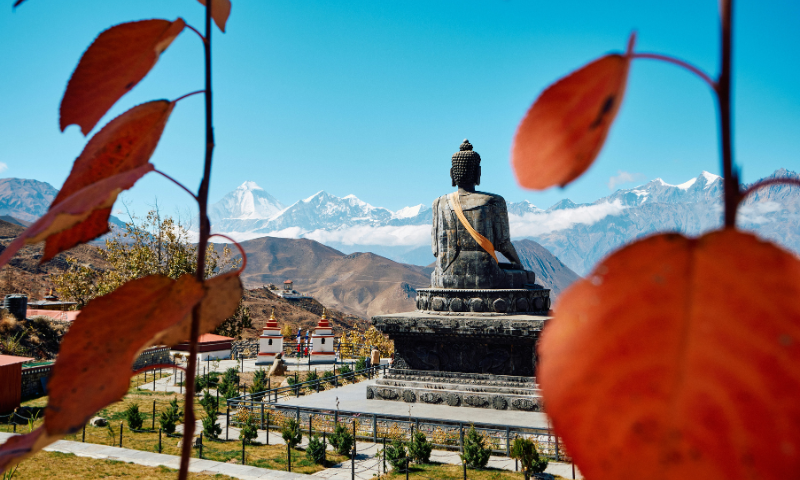
Nestled High in the Mustang region of Nepal, where thin air of the mountains meets ancient faith, lies Muktinath Temple. This sacred shrine is a place that attracts pilgrims and travellers from all over the world, not only because it is a place of religious significance, but also for the raw beauty of its location and the incredible peace that it provides for those who visit.
At a height of 3,800 meters, Muktinath is much more than a temple. It is a place where Hinduism and Buddhism merge, and where devotion is spelled out in prayer flags and temple bells, and where the journey itself is as significant as the destination.
The temple complex has deep meaning in Hindu scriptures as one of the 108 Divya Desams (sacred Vishnu temples) and is also considered sacred to Buddhists as they refer to it as Chumig Gyatsa. Pilgrims believe bathing in the 108 water spouts surrounding the temple helps to cleanse the soul and give moksha (liberation).
But what makes Muktinath really special is the location. Surrounded by the barren, windswept landscapes of the Annapurna and Dhaulagiri ranges, the temple stands as a testament to man’s devotion in one of the most remote corners of the Himalayas. The path towards Muktinath is through the Tibetan Buddhist villages, river gorges and high altitude where the air is thin but the spirit feels expansive.
This blog takes you through all that you need to know about planning a tour to Muktinath Temple. From its spiritual legacy understanding to navigate the journey, accommodation options, and the best time to visit, we cover it all.
Understanding Muktinath Temple’s Sacred Legacy
Muktinath Temple is not just a sacred site. It is a symbol of spiritual unity. Hindus consider it to be the residence of Lord Vishnu, and Buddhists revere it as a place of enlightenment associated with Guru Rinpoche (Padmasambhava), who meditated here several centuries ago.
The main temple contains an idol of Lord Vishnu in the form of the elements, earth, water, fire, air, and space. Behind the temple burns a natural gas flame called Jwala Mai, which is a natural phenomenon in which fire is released from water and rock. This eternal flame is considered miraculous, a symbol of God that defies natural logic.
Around the temple are 108 water spouts shaped like cow’s heads. Pilgrims take a holy bath under these freezing spouts of water as an act of devotion and purification. The water is said to pour out of the Gandaki River and is considered sacred. The ritual, although physically difficult due to the cold and altitude, holds a very important spiritual value.
The temple complex also includes smaller shrines dedicated to various deities. Nearby is a Buddhist gompa (monastery) where mantras are chanted by monks, adding to the meditative atmosphere. The coexistence of Hindu and Buddhist traditions here is in harmony and beauty. Pilgrims of both faiths tread the same paths, share the same blessings, and respect their rituals.
What is unique about Muktinath spiritually is its location and accessibility. Unlike many high altitude shrines inaccessible to pilgrims for much of the year, Muktinath is open to pilgrims even under harsh conditions. Its remoteness makes it even more mysterious, and the pilgrimage seems like a journey into the divine unknown.
The Journey to Muktinath – A Path Less Travelled
Reaching Muktinath is a real adventure in itself. The journey starts from Kathmandu, the teeming capital of Nepal. From there, pilgrims go to Pokhara, a lakeside city known for its natural beauty and a gateway to the Annapurna region.
The most common way to Muktinath is flying from Pokhara to Jomsom, a small town in the Mustang district. The flight is short, about 25 minutes, but it is spectacular. The aircraft flies low through mountain valleys with views of the Annapurna, Dhaulagiri and Nilgiri peaks. On clear days the snow-covered ranges glint in the sunlight, and the flight is an unforgettable experience.
From Jomsom, the distance to Muktinath is about 22-25 kilometers. The drive is about 3-4 hours because of rough terrain and narrow mountain roads. The route goes through Kagbeni, an ancient village that is frozen in time. Kagbeni’s mud-brick houses, fluttering prayer flags and barren landscapes give travellers a glimpse into traditional Tibetan Buddhist life.
The landscape between Jomsom and Muktinath is stark but stunning. The Mustang region is a rain-shadow area, meaning that the area receives little rainfall and is desert-like in topography. The mountains are barren, the rivers flow in rocky gorges, and the air is clear and dry. The drive itself is like a meditation because the silence of the mountains and the vastness of the landscape encourage introspection.
Upon reaching Ranipauwa (the settlement located near Muktinath), pilgrims begin the last 30-60 minutes uphill walk to the temple. The trail is uphill, and it can be tiring because of the altitude, but the anticipation of reaching the sacred shrine keeps spirits high. Many pilgrims chant mantras or walk in silence, absorbing the spiritual energy of the place.
For those who would not like to fly, there is also an alternative trekking way from Jomsom or even from Pokhara. The trek takes several days but gives one a greater connection to the land and the culture. Trekking through villages, monasteries and apple orchards is a rewarding experience for those who have time and stamina.
What Makes Muktinath Temple Spiritually Unique
Most pilgrimage sites require sacrifice in the form of physical hardship or material offering. What Muktinath asks for is something different: an acceptance of discomfort as devotion.
The ritual bath beneath the 108 water spouts is not symbolic. At an altitude of 3,800 metres, the water of the mountain is frozen and the cold is intense at depth. The body defies and the mind speculates, but the pilgrims pass from spout to spout. The purification here is visceral rather than ceremonial, which distinguishes Muktinath from more comfortable outings to temples.
What further makes Muktinath different is the coexistence of the opposite elements. Behind the main shrine the Jwala Mai flame is continuously burning in spite of water surrounding it and the winds of the mountain. Fire coming from water is against all logic, but it is something that occurs naturally here in the world, and is something that is a part of a deeper truth-that contradictions can peacefully coexist.
This harmony is extended even to religion itself. Hindu priests and Buddhist monks occupy the same hallowed space without dispute. Hindu rituals are played out alongside Buddhist prayer wheels, with no ownership of the divine.
Reaching Muktinath calls also for commitment. Weather-dependent flights, rough mountain roads and a final uphill walk weed out the casual visitors. Its remoteness helps to maintain its authenticity – no commercialised queues, no loudspeakers, just flowing water, fluttering prayer flags and a deep mountain silence. Together, these elements make Muktinath spiritually unique from any other Himalayan shrine.
Beyond Muktinath – Extending Your Spiritual Journey
Most of the pilgrims do not confine their journey to Muktinath only. The route itself is lined with sacred sites, which naturally extend the spiritual experience.
After darshan, many pilgrims come to Jwalamai Temple, which is just below the main shrine, where an eternal flame is burning. The quiet walk down is a contrast to the above activity and provides space for reflection.
In Jomsom, the pilgrims have often visited the local monasteries before or after visiting Muktinath. These active gompa maintain centuries-old rituals of Buddhism, thangka paintings, prayer drums and, sometimes, interactions with the monks that supplement the Hindu pilgrimage.
The medieval village of Kagbeni, the gateway to Upper Mustang, is well worth more than a cursory stop. Its narrow lanes, red-walled monastery, prayer wheels, mani stones and chortens are the expression of a highly spiritual way of life.
Before heading back, many make a detour to Pokhara to catch a sunrise view of Sarangkot, where the Annapurna range gives perspective for the journey.
Back in Kathmandu, pilgrimages to Pashupatinath Temple and Swayambhunath round out the journey, connecting the spirituality of the mountain with the living religious center of Nepal.
Planning Your Muktinath Pilgrimage
Planning a trip to Muktinath involves some preparation, more so because it is a remote place with high altitude. Here are some of the key considerations:
Permits and Documentation: Indian citizens do not need a visa to enter Nepal but need to carry a valid passport or an officially recognized identity document such as a voter ID card. Travel to the Mustang region, where Muktinath is located, usually requires a permit to the conservation area. These permits are issued by the local authorities and can be obtained in Kathmandu or Pokhara. Requirements and fees can vary depending on nationality but it is best to ensure laws are current before heading out to places or in advance through an authorised tour operator.
Accommodation: The accommodation near Muktinath is very basic but comfortable. Ranipauwa (the village nearest to the temple) has a number of guesthouses and lodges. These lodges provide a clean room, hot water (when it is available), and simple meals. Do not expect luxury but the hospitality is friendly and food hearty. Most of the lodges serve dal bhat (lentil soup and rice), momos, noodles and tea.
Altitude Acclimatization: Muktinath is 3,800 meters and you will be affected by altitude sickness. Symptoms include headache, nausea, dizziness and fatigue. To avoid altitude sickness, you should spend a day in Jomsom or Pokhara before going up to Muktinath. Drink lots of water, stay away from alcohol and walk slowly. If symptoms get worse go down right away.
Packing Essentials: Even in summer, Muktinath is cold. Carry warm clothes including thermal wear, jackets, gloves, woollen cap, etc. Sunglasses and sunscreen are required as the sun is strong at high altitudes. Comfortable walking shoes are a must on the trek from Ranipauwa to the temple. Carry energy bars, dry fruits and water bottles.
Health Precautions: Consult a doctor prior to travelling to high altitude areas. Carry basic medicines for headaches, stomach problems and altitude sickness (diazepam, known as Diamox). If you have some pre-existing health conditions, have a medical check-up and clearance.
Best Time to Visit Muktinath Temple
Muktinath can be accessed at any time of the year but the best time to visit the place depends on climatic and personal preferences.
Spring (March to May): Spring is one of the best time of the year to visit Muktinath. The weather is nice, the skies are clear and the rhododendrons are blossoming on the mountains. Temperatures are not too hot in the day, although nights can be cold. This is also the peak trekking season, thus trails and flights will be busier.
Autumn (September to November): Autumn is another perfect time for the Muktinath pilgrimage. The monsoon is over, the air is crystal clear and the visibility is excellent. The clear skies produce some fantastic views of Annapurna and Dhaulagiri ranges. Festivals such as Dashain and Tihar also make the experience culturally vibrant.
Winter (December to February): Winter is severe in Muktinath. Temperatures fall below freezing and it snows frequently. The temple is still accessible but the cold can be intense. However, the winter brings loneliness and a special, serene mood. If you are ready for the cold, winter can be a very spiritual time to visit.
Monsoon (June to August): Monsoon is the worst time to visit Muktinath. The Mustang region receives less rainfall because of the rain-shadow location, but the flights to Jomsom are frequently delayed or canceled due to weather. Roads can be slippery and the possibility of landslides is greater. However, the landscapes are lush and the crowds are minimal.
Why Choose Traveloi for Your Muktinath Journey
Planning a pilgrimage to Muktinath requires expertise, particularly when it comes to the process of high altitude travel, flight booking, permits and accommodation. Traveloi specialises in Nepal tour packages that are designed keeping care, comfort and spirituality in mind.
With years of experience in organising pilgrimages all around Nepal, Traveloi knows the unique needs of travellers. From making arrangements of flights between Pokhara and Jomsom through comfortable lodges and experienced guides, everything is taken care of like a professional. The team also provides round-the-clock support so that any challenges along the way are quickly resolved.
Traveloi’s Muktinath packages also involve a trip to Kathmandu, Pokhara, and Pashupatinath, etc. Complete the Muktinath religious experience. The itineraries are loose and can be customized depending on your preferences, fitness levels and time availability.
What differentiates Traveloi is the personal touch. Every guest is treated with respect and care and the focus is always on creating meaningful experiences rather than just checking off destinations. The guides are knowledgeable, the drivers experienced, and their choice of accommodations is made for comfort and cleanliness.
Frequently Asked Questions
1. How difficult is the journey to Muktinath Temple?
The journey to Muktinath is moderately difficult. The flight is easy but the road from Jomsom to Ranipauwa is rough mountain roads. The last 40-min walk to the temple is uphill and tiring because of the altitude. However, people of all ages including the elderly pilgrims, complete the journey with proper pacing and rest.
2. Can I visit Muktinath Temple in winter?
Yes, Muktinath Temple is accessible in winter, but the cold is intense. Temperatures can go well below freezing and snow is a frequent occurrence. You will need heavy winter clothing and the flights to Jomsom can be delayed due to weather. Winter brings solitude and a peaceful environment, and is great for those who can stand the cold.
3. Are there medical facilities near Muktinath Temple?
There are few medical facilities near Muktinath. Ranipauwa has basic health posts, but for serious medical issues, you would have to come back to Jomsom or Pokhara. It is advisable to carry a basic first aid kit, altitude sickness medication, as well as any personal medicines. Always tell your guide if you are feeling unwell.
4. What should I wear when visiting Muktinath Temple?
Dress modestly and warmly. Even the temperatures in the summer are cool. Wear comfortable walking shoes, layered clothing and carry a jacket. For going to the temple, you have to take off your shoes and cover your head as a sign of respect. Carry extra warm clothes for the ritual bath under 108 water spouts.
5. How many days do I need for a Muktinath tour from India?
A normal Muktinath tour requires 5 to 7 days including travel time from India. This will include a flight to Kathmandu, a day in Pokhara, the Jomsom Muktinath leg and return. If you want to explore in a deeper way to Kathmandu and Pokhara, then plan for 8 to 10 days. Traveloi provides flexible itineraries to match your schedule.
6. Is food easily available near Muktinath Temple?
Yes, there are guesthouses and lodges in Ranipauwa which are simple, nutritious meals. You can expect dal bhat, noodles, soups, momos and tea. The food is fresh and hygienic. Carry energy bars and dry fruits for the journey, especially if you have Ayurvedic needs.
7. Can I combine Muktinath with other pilgrimage sites in Nepal?
Absolutely. Many pilgrims include Muktinath along with Pashupatinath in Kathmandu, Lumbini (the birthplace of Buddha), and other holy places. Traveloi has complete packages for Nepal pilgrimages covering multiple destinations, which ensures a spiritual fulfilling journey.
Ready to experience the divine aura of Muktinath Temple? Let Traveloi craft a pilgrimage that connects you with Nepal’s spiritual heart. Reach out to us today to book your Muktinath tour and begin a journey that nourishes the soul.
