
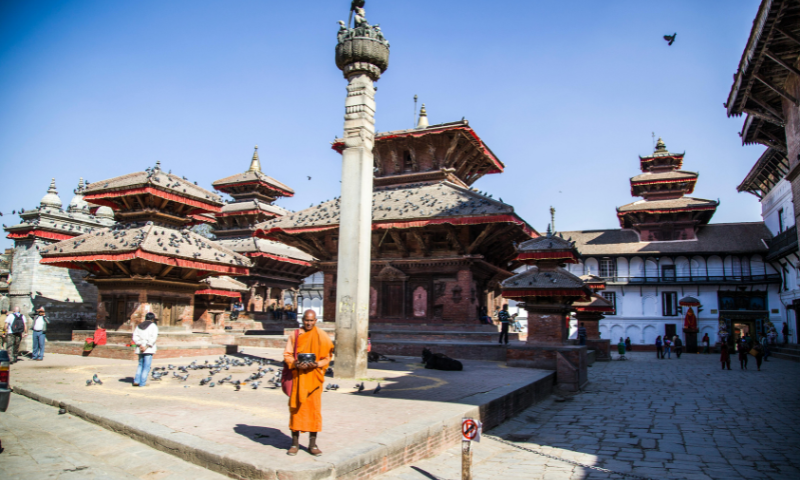
Kathmandu is one of those cities that hits you with everything at once. Incense smoke, temple bells, motorbikes squeezing through lanes barely wide enough for two people, and centuries of history carved into every window frame and courtyard wall. The capital of Nepal sits in a broad valley surrounded by green hills, and it has been a crossroads for traders, pilgrims, and travelers for well over a thousand years.
For first-time visitors, Kathmandu can feel overwhelming. There is so much packed into such a compact space that knowing where to start becomes the real challenge. This Kathmandu travel guide breaks down the top tourist attractions in Kathmandu valley, along with practical tips that actually help you plan your days better.
And if you are considering a broader trip, many travelers combine Kathmandu sightseeing with destinations like Pokhara, Lumbini, or even the Kailash Mansarovar yatra package route that passes through Nepal. Kathmandu works well both as a standalone destination and as the launchpad for a deeper Nepal experience.
Pashupatinath Temple: The Spiritual Anchor of the City
No list of Kathmandu tourist places is complete without Pashupatinath. This is the most sacred Hindu temple in Nepal, dedicated to Lord Shiva, and one of the 12 Jyotirlingas. The temple complex sits on the banks of the Bagmati River, and the atmosphere here is unlike anything else in the city.
The main pagoda-style temple with its gold roof and silver doors is reserved for Hindus only. But the rest of the complex is open to all visitors, and there is plenty to absorb. Cremation ghats line the river, sadhus sit in meditative silence near the steps, and smaller shrines and sculptures are scattered across the grounds.
What makes Pashupatinath memorable is not just the architecture. It is the directness with which life and death coexist here. The Aarti ceremony held in the evenings on the ghats draws a crowd and is one of the most moving rituals you will witness in South Asia.
Why visit: This is the spiritual center of Kathmandu and one of the most significant Hindu pilgrimage sites in the world.
Boudhanath Stupa: A Calm Center in a Busy City
Boudhanath is one of the largest spherical stupas in Nepal and a UNESCO World Heritage Site. The stupa sits in the middle of a wide circular courtyard surrounded by monasteries, shops, and rooftop restaurants. Tibetan prayer flags stretch from the stupa in every direction, and the sound of monks chanting from nearby monasteries fills the air.
Walking the kora (circumambulation) around the stupa is a daily ritual for hundreds of Tibetan Buddhist residents in the area. Joining them, even as a visitor, creates a rhythm that slows your pace. This is one of the top places to visit in Kathmandu if you are looking for a quiet, reflective experience.
The area around Boudhanath is also home to some of the best Tibetan food in the valley. After your walk, sit at one of the rooftop cafes and watch the stupa glow in the late afternoon light.
Why visit: Boudhanath is a living center of Tibetan Buddhism and one of the most visually striking landmarks in the Kathmandu valley.
Swayambhunath (Monkey Temple): Kathmandu From Above
Perched on a hill west of the city, Swayambhunath is another major Buddhist spiritual center. Locals call it the Monkey Temple because of the playful rhesus monkeys that roam freely across the complex. To reach the top, you climb a steep staircase of around 365 steps, and the view of the Kathmandu valley from the summit makes the effort worthwhile.
The stupa at the top features the iconic painted eyes of the Buddha, looking out in four directions. Surrounding it are smaller shrines, temples, and a Tibetan monastery. This is one of the oldest religious sites in Nepal, with origins that go back more than 1,500 years.
Swayambhunath works best as an early morning or late evening visit. The crowds thin out, the light improves, and you get the bonus of watching the city below come alive (or settle down) in real time.
Why visit: It offers the best panoramic view of the Kathmandu valley, combined with deep spiritual and historical significance.
Kathmandu Durbar Square: Where History Lives in the Open
Kathmandu Durbar Square was once the seat of the Malla kings, and the concentration of palaces, temples, and carved wooden architecture in this area is extraordinary. The Hanuman Dhoka Palace, Kumari Ghar (the residence of the Living Goddess), and numerous stone and wood temples fill the square and its surrounding lanes.
The square did suffer damage in the 2015 earthquake, and restoration work continues. But the essential character of the place remains intact. Street vendors, local families, and tourists mix freely in the courtyards. You can spend a full morning here and still miss details tucked into obscure corners.
If you are interested in Newari architecture and the medieval history of the Kathmandu valley, this is where you start.
Why visit: Durbar Square is the historical heart of the city and a UNESCO World Heritage Site. It is essential for understanding how Kathmandu evolved over centuries.
Patan (Lalitpur): The City of Fine Arts
Patan is technically a separate city, but it blends into Kathmandu so seamlessly that most visitors do not realize they have crossed a boundary. Also known as Lalitpur, Patan is famous for its metalwork, its ancient Buddhist and Hindu temples, and its own Durbar Square, which many travelers prefer over the one in Kathmandu.
Patan Durbar Square is smaller but arguably more elegant. The Krishna Mandir temple, made entirely of stone, is a standout. The Patan Museum, housed inside a former Malla palace, is considered one of the best museums in South Asia for understanding the art and culture of the region.
Beyond the square, Patan’s lanes are filled with workshops where artisans still craft bronze statues, Thanka paintings, and handmade paper products. This is the place to buy authentic Nepali art, directly from the people who make it.
Why visit: Patan offers a deeper and quieter cultural experience compared to the busier Kathmandu Durbar Square.
Bhaktapur: A Full Day Trip from Kathmandu
About 13 kilometers east of central Kathmandu, Bhaktapur feels like a different era entirely. The third of the Kathmandu valley’s ancient royal cities, Bhaktapur has preserved its traditional character more thoroughly than either Kathmandu or Patan. There are no high-rise buildings here, and the pace is noticeably slower.
The highlights include Bhaktapur Durbar Square, the 55-Window Palace, and the Nyatapola Temple, which is the tallest pagoda in the valley. But the real charm of Bhaktapur lies in its streets. Potters shape clay vessels in open squares. Locals dry grain and spices on traditional mats outside their homes. And the famous Juju Dhau (king curd) sold in clay pots is something every visitor should try.
If you have time for only one day trip from Kathmandu, Bhaktapur should be your choice.
Why visit: It is the best-preserved medieval city in Nepal and one of the most rewarding things to do in the Kathmandu valley for history and culture enthusiasts.
Thamel: The Traveler Hub
Thamel is the default base for most visitors to Kathmandu. It is a compact neighborhood filled with guesthouses, restaurants, trekking gear shops, and bookstores. It is loud, colorful, and sometimes chaotic, but it is also where you will find the widest range of food, from traditional Nepali thali to wood-fired pizza.
Beyond the commercial surface, Thamel has some older buildings and hidden courtyards worth finding. It is also the best area in Kathmandu for arranging treks, day tours, and onward travel logistics.
If you are booking a Nepal tour package through Traveloi, many of the recommended hotels for the Kathmandu leg fall in or near Thamel, making it a practical and convenient base.
Why visit: Thamel is the most accessible neighborhood for international travelers, with everything you need within walking distance.
Garden of Dreams: A Pocket of Calm
Tucked just off Thamel’s main road, the Garden of Dreams is a restored neo-classical garden that dates back to the early 1920s. It was originally built by a Rana-era field marshal and recently restored with Austrian support.
The garden is small but immaculately maintained. Pergolas, fountains, ornamental ponds, and manicured hedges create a setting that feels completely removed from the noise outside. It is a perfect spot for an afternoon break between sightseeing sessions.
Why visit: It is the best spot in central Kathmandu to decompress, and it costs a modest entry fee.
Budhanilkantha Temple: The Sleeping Vishnu
Located at the base of the Shivapuri Hills on the northern edge of Kathmandu, Budhanilkantha is home to a large reclining statue of Lord Vishnu carved from a single block of black basalt. The statue rests in a sunken water tank and dates back to the Licchavi period.
This is a deeply revered site for Hindus. The temple sees a steady stream of devotees daily, but it is not overrun with tourists, making it a quieter addition to your Kathmandu sightseeing itinerary.
Why visit: It offers a significant religious site away from the main tourist circuits and gives you a glimpse of local devotion.
Nagarkot: Sunrise With a Himalayan Backdrop
Nagarkot is a small hilltop settlement about 28 kilometers from central Kathmandu. It is famous for one thing: the sunrise view of the Himalayan range, including Langtang, Ganesh Himal, and on a clear day, even a distant glimpse of Everest.
Most visitors go to Nagarkot for an overnight stay or an early morning drive. The experience is straightforward but deeply rewarding. Watching the first light hit the snow-capped peaks while sipping tea from a hilltop lodge is one of those simple moments that stay with you.
Nagarkot also connects to some short trekking trails, including one that leads down to Changu Narayan, one of the oldest temples in the valley.
Why visit: It is the closest point to Kathmandu where you can see the Himalayan range in full.
Kopan Monastery: A Place for Inner Work
Kopan Monastery sits on a hilltop north of Boudhanath. It is a functioning Tibetan Buddhist monastery that also welcomes visitors for short meditation courses and day visits. The setting is serene, the monks are approachable, and the views of the valley from the grounds are excellent.
If meditation is something you want to try during your trip, Kopan runs residential courses that range from a few days to a couple of weeks. For a shorter visit, the morning prayers are open to the public and worth attending.
Why visit: Kopan offers a genuine monastic experience and is one of the best places to visit in Kathmandu for wellness and mindful travel.
Best Time To Visit Kathmandu
Kathmandu is pleasant for most of the year, but the ideal window for sightseeing is during the autumn months (September to November) when skies are clear and temperatures are comfortable. Spring (March to May) is another excellent season, with blooming flowers and mild weather. The monsoon months (June to August) bring heavy rain, which can disrupt plans but also bring lush green landscapes and fewer crowds. Winter (December to February) is cold, especially in the mornings and evenings, but it remains a viable time for city exploration.
Practical Tips for Your Kathmandu Trip
- Carry comfortable walking shoes. Many of the heritage sites involve cobblestone paths and steep steps.
- Dress modestly when visiting temples. Shoulders and knees should be covered at most religious sites.
- Keep small change handy for entry fees and local purchases.
- Negotiate autorickshaw and taxi fares before you get in.
- Carry a reusable water bottle. Tap water is not safe to drink, but filtered water refill stations are increasingly available.
- Book your Nepal tour packages in advance during autumn, as this is peak season and accommodations fill up quickly.
How Traveloi Makes Your Kathmandu Trip Effortless
Planning a trip to Kathmandu does not have to be complicated. Traveloi designs customized Nepal tour packages that handle everything from airport transfers and hotel bookings to guided sightseeing and intercity travel. With certified local guides and on-the-ground expertise, Traveloi ensures that every day of your trip runs smoothly and every site visit is meaningful.
For travelers combining Kathmandu with spiritual journeys, Traveloi also offers dedicated Kailash Mansarovar yatra package options that route through Nepal, making it possible to combine heritage sightseeing with a profound pilgrimage experience.
FAQs: Places To Visit In Kathmandu
Q1. What are the must-visit places in Kathmandu for first-time travelers?
For first-time visitors, the essential Kathmandu tourist places include Pashupatinath Temple, Boudhanath Stupa, Swayambhunath (Monkey Temple), Kathmandu Durbar Square, and Thamel. Adding a day trip to Bhaktapur or Patan rounds out the experience well. These sites cover the city’s spiritual, cultural, and historical layers in a compact and manageable way.
Q2. How many days are enough to explore Kathmandu?
Three to four full days are sufficient to cover the major Kathmandu sightseeing spots, including day trips to Patan, Bhaktapur, and Nagarkot. If you want to include meditation sessions, cooking classes, or nearby treks, plan for five to six days. Many travelers also extend their stay by booking a Kathmandu Pokhara tour package that adds lakeside relaxation and Himalayan views.
Q3. Is Kathmandu safe for solo travelers and families?
Kathmandu is generally safe for solo travelers, families, and couples. The city is welcoming and accustomed to international visitors. Standard precautions apply, such as watching your belongings in crowded areas and avoiding poorly lit streets at night. Traveling with a trusted tour operator like Traveloi adds an extra layer of safety and convenience, especially for families with children or elderly members.
Q4. Can I combine a Kathmandu trip with the Kailash Mansarovar yatra?
Yes. Many pilgrims begin or end their Kailash Mansarovar yatra in Kathmandu, as Nepal offers one of the most popular routes to Mount Kailash via Simikot and Hilsa. Traveloi offers comprehensive Kailash Mansarovar yatra package options that include Kathmandu as a stopover, allowing you to experience both the city’s heritage and the spiritual depth of the yatra in a single journey.
Q5. What is the best time to visit Kathmandu for sightseeing?
The best time to visit Kathmandu is during autumn (September to November) when the weather is clear and pleasant. Spring (March to May) is another strong window. These seasons offer comfortable temperatures, minimal rainfall, and excellent visibility for mountain views from places like Nagarkot. Monsoon and winter travel is possible but comes with its own trade-offs.
Q6. What local food should I try in Kathmandu?
Kathmandu’s food scene is rich and affordable. Must-try items include momos (steamed dumplings with various fillings), dal bhat (lentil soup with rice and sides), Newari khaja set (a platter of beaten rice, marinated meat, and pickles), chatamari (often called Nepali pizza), and sel roti (a crispy ring-shaped rice bread). Thamel and Patan have some of the best options for both local and international cuisine.
Q7. How do I reach Kathmandu from India?
Kathmandu is accessible from India by air (direct flights from Delhi, Mumbai, Varanasi, and other cities to Tribhuvan International Airport) and by road (via border crossings at Sunauli/Bhairahawa or Raxaul/Birgunj). Most Nepal tour packages from Indian cities include flight bookings and airport transfers as part of the itinerary.