
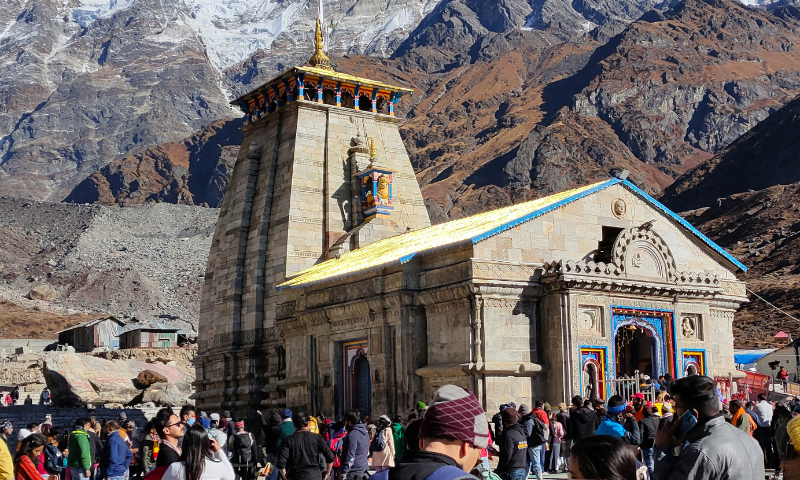
The Char Dham circuit of Yamunotri, Gangotri, Kedarnath, and Badrinath is one of the most sacred pilgrimages of Hinduism. But with the number of visitors increasing year over year, the delicate Himalayan ecosystem comes under increasing pressure. The very mountains that we seek for spiritual renewal now need our active protection.
This guide solves a problem that has become pressing in the minds of conscious travellers: how do we make the Char Dham Yatra without damaging our environment? The answer lies in intentional choices that can be made before, during and after your journey.
Understanding the Environmental Impact of High Altitude Pilgrimages
The Garhwal Himalayas receive millions of pilgrims between April to November. This influx brings economic benefits to mountain communities but also creates environmental challenges to the long-term sustainability of the region.
Primary Environmental Concerns
Waste accumulation is still the most visible problem. Single-use plastics, food packaging and general litter are accumulated along the trekking routes and near the temple complexes. The absence of adequate waste management infrastructure at high altitudes results in the fact that much of this waste continues to be a part of the ecosystem indefinitely.
Water pollution affects sacred rivers such as the Yamuna, Ganges, Bhagirathi, and Alaknanda. Detergents, human waste and ritual offerings containing non-biodegradable materials pollute these water sources on which millions of people rely on downstream.
Carbon emissions from transportation form an important portion of the pilgrimage’s environmental cost. Whether travelling by road or by helicopter, each trip to these remote shrines releases greenhouse gases into the atmosphere.
Habitat disruption is created when infrastructure development increases, as does foot traffic, which disturbs wildlife corridors and vegetation patterns. The Himalayan ecosystem is already sensitive to climate change, which is further weakened with every disturbance in the ecosystem.
Planning a Low-Carbon Char Dham Yatra
Your environmental choices start from the planning phase, well before you reach Uttarakhand.
Selecting Your Travel Mode Wisely
Transportation produces the largest carbon footprint of your pilgrimage. Understanding the environmental implications of various ways to travel helps you make informed decisions.
Road transportation using shared vehicles has the lowest emissions per person. Group tours using full-capacity buses or cars spread the cost of carbon emissions across multiple passengers. If you are thinking of taking a Char Dham Yatra package from Delhi, opting for group departures as opposed to private vehicles has a much lesser impact on the individual.
Helicopter services offer access for elderly pilgrims or those who have mobility problems, but have a much higher cost of carbon emissions per passenger. When travel by helicopter is made necessary by health reasons, consider purchasing verified carbon offsets to balance the emissions.
Train travel to Haridwar or Dehradun before road travel also minimizes total emissions as compared to flying. Indian Railways is one of the more sustainable ways to travel long distance that is increasingly becoming an electrified network.
Choosing Responsible Tour Operators
Not all pilgrimage packages prioritize environmental responsibility equally. When choosing your Char Dham tour operator, inquire about specific practices regarding their sustainability measures.
Do they follow up on waste management protocols? Are accommodations chosen with environmental practices in mind? Do they educate pilgrims on responsible behavior? These questions distinguish the truly responsible operators from those who are using sustainability merely as marketing language.
Traveloi has been working to incorporate principles of responsible travel into the planning of pilgrimages, since it is clear that sacred journeys and environmental stewardship do not have to be in conflict.
Sustainable Practices During Your Pilgrimage
The choices you make during your actual yatra have immediate consequences for the environment.
Waste Management on Sacred Trails
Bring reusable items instead of single-use items. A steel water bottle, cloth bags, and reusable food containers remove a lot of waste that the typical pilgrim creates.
Carry what you bring. This simple principle – taking all your waste back down the mountain – prevents pollution at source. Many trekking routes to Kedarnath can be visibly improved if the pilgrims make a commitment to this practice.
Waste should only be thrown away in specific locations and by using proper waste collection systems. In areas where proper facilities are not available, transport waste back to towns at lower altitudes where disposal facilities are available.
Avoid buying single-use plastics at high altitude shops, even though it is convenient to do so. Your temporary comfort should not cause permanent pollution to these pristine environments.
Water Conservation Strategies
Water constraint is a common issue in many Himalayan regions, especially during peak pilgrimage season. Your water consumption directly affects local communities who are sharing the same finite resources.
Carry a water purification method (tablets, filters, or UV devices) to refill from natural sources, instead of buying packaged water repeatedly. This eliminates plastic waste as well as conserving water used in bottling operations.
At accommodations, practice of conscious water use, such as short showers, switching off taps while brushing teeth, and reusing towels, are all ways to limit demand on already-strained water systems.
While bathing in holy rivers or hot springs, leave soaps and detergents behind completely. The spiritual cleansing does not need any chemical additives and the natural water serves the ritual purposes and protects aquatic ecosystems.
Eco-Friendly Offerings and Rituals
Traditional offerings often include materials that remain within the environment for long after their religious use is over.
Choosing biodegradable materials for offerings: Flowers, leaves, food items that biodegrade naturally. Avoid using plastic bags, synthetic garlands, or non-biodegradable packaging around puja items.
Participate in nature-friendly rituals that honor tradition without damaging nature. Many temples have now promoted pilgrims making symbolic offerings or monetary donations to conservation instead of physical items, which create waste.
If you are going to immerse offerings in rivers, then make sure everything that you use is completely natural and will break down harmlessly. The Ganges and her tributaries may be sacred, but sacredness is no protection from the physical results of pollution.
Supporting Local Communities Responsibly
Sustainable pilgrimage encompasses economic sustainability for mountain communities.
Buy from local vendors as opposed to bringing all supplies from lowland cities. This circulates money within mountain economies that are home to pilgrims but often have little financial benefit.
Choose locally owned accommodations if possible. Homestays and small guesthouses help keep tourism revenue in local hands, and usually have smaller environmental footprints than larger establishments.
Respect local resources and do not insist on amenities that tax mountain infrastructure. The firewood or diesel-powered water heater and electricity generator are not without environmental costs in these environments.
Hire local guides, porters and service providers. Besides helping people earn a living, the local knowledge helps to enhance your pilgrimage experience while minimizing the likelihood of making environmentally destructive errors.
Post-Pilgrimage: Extending Your Environmental Commitment
Your relationship with responsible travel should not end as soon as the yatra gets over.
Measuring and Offsetting Your Impact
Calculate the approximate carbon footprint of your pilgrimage using available tools on the Internet. Include transportation and accommodation patterns, as well as consumption patterns, from your journey.
Buy carbon offsets from verified programs that invest in renewable energy, reforestation, or other climate mitigation projects. While offsets are not the answer to emissions, they are one tool to mitigate the unavoidable impacts of travel.
Even better than offsetting: Let your Char Dham experience inspire lasting changes in your lifestyle that will cut your overall footprint on the planet. Perhaps the mountains had taught you about living with less, wasting nothing and respecting nature’s limitations – things that could be applied to everyday life back home.
Sharing Knowledge and Inspiring Others
Talk about the sustainable practices that you put in place during your pilgrimage. When fellow travelers and community members hear firsthand accounts of responsible pilgrimage, they are more likely to follow similar paths.
Share tips on how to, and not just philosophical statements. Tell people what exact reusable items you brought, how you handled waste or why you used shared transportation. Specificity is what makes sustainable travel not abstract, but feels achievable.
Participate or donate to organizations working in the conservation of the Himalaya. The mountains gave you spiritual experiences, supporting their protection is an honor to their gift.
The Spiritual Case for Environmental Responsibility
Sustainable pilgrimage is not your environmental ethics – it is your spiritual integrity.
Hindu philosophy preaches ahimsa (non-violence), and this extends to the way we treat nature. Polluting the very mountains which we believe to be sacred is contrary to this fundamental principle. Treating the Char Dham as spiritual destinations as well as fragile ecosystems is certainly a way to align the action with the beliefs.
The concept of dharma (righteous duty) means our responsibility towards future generations. Will your children’s children get a clean Himalayan river and pristine mountain environment? The answer has something to do with the choices made by today’s pilgrims.
Ancient texts speak of Earth as Bhumi Devi, the Earth Goddess that deserves reverence. Sustainable travel practices are a modern manifestation of this traditional understanding – an appreciation of the sacred geography and its need for sacred treatment.
| Category | Sustainable Choice | Environmental Benefit |
| Transportation | Use shared vehicles instead of private transport | Reduces per-person carbon emissions |
| Water | Carry a refillable bottle with a purification option | Eliminates single-use plastic waste |
| Food | Use reusable food containers | Minimises packaging and disposable waste |
| Offerings | Choose biodegradable materials only | Prevents long-term environmental pollution |
| Shopping | Buy from local vendors and artisans | Supports mountain economies and livelihoods |
| Accommodation | Stay in locally owned guesthouses and homestays | Lower environmental footprint, community benefit |
| Toiletries | Use biodegradable or minimal-usage personal care products | Protects local water sources and soil quality |
| Energy Use | Be conscious with heating and lighting | Reduces fuel and electricity consumption |
How Traveloi Supports Responsible Pilgrimage
Creating sustainable pilgrimage experiences involves working together between travellers and tour operators. Traveloi has been developing approaches that respect both the spiritual importance of the Char Dham Yatra as well as the environmental requirements of the Himalayan region.
This includes collaboration with accommodations that implement waste management systems, education about responsible practices for pilgrims before they depart, and support for local communities through conscious vendor partnerships. The goal isn’t perfect sustainability – that is still challenging in remote mountain environments – but continuous improvement towards lower-impact models of pilgrimage.
Making Your 2026 Char Dham Yatra Count
The sacred sites of Yamunotri, Gangotri, Kedarnath and Badrinath have been surviving for thousands of years. Their continued existence hinges on the decision of this generation of pilgrims as to what extent they will engage with them.
Your pilgrimage in 2026 can add to the problem of environmental degradation or help to prove that mass spiritual tourism and ecosystem protection can go hand in hand. The difference lies in thousands of individual choices: the water bottle you bring, the waste you carry down, the transport you share, the local economy you support.
These mountains provide spiritual transformation. They ask only that we not destroy them in the process of gaining enlightenment.
Start planning your sustainable pilgrimage now. Research responsible practices, find operators dedicated to environmental stewardship, and prepare to travel in ways that honor the divine and the natural world. The Char Dham circuit awaits – approach it with veneration for both its spiritual and fragile ecological value.
Frequently Asked Questions
Q1: Is it possible to complete the Char Dham Yatra with zero environmental impact?
True zero impact is almost entirely impossible for any travel to remote places. However, you can significantly lower your footprint in your conscious choices in transportation, zero waste, biodegradable offerings, and support conservation efforts. The objective is to do the minimum harm possible rather than impossible perfection.
Q2: Are helicopter services to Kedarnath always environmentally irresponsible?
Not necessarily. For the elderly pilgrims or those who have health issues that make it impossible to trek, helicopters offer the necessary accessibility. The key thing is making sure they are used when there is a real need instead of just for the sake and thinking about carbon offset programs to cover emissions made.
Q3: What should I do if my accommodation or tour operator doesn’t follow sustainable practices?
First of all, you need to politely bring up your concerns and offer some specific improvements. Many operators simply haven’t thought about certain practices rather than making a sort of conscious decision to use harmful practices. If they’re unresponsive, give feedback in the form of reviews to help future travellers to make informed choices and for us to select different operators for future trips.
Q4: How can I verify that carbon offset programs are legitimate and effective?
Look for programs that are certified by recognized standards such as Gold Standard or Verified Carbon Standard. Reputable offset providers provide transparency on specific projects funded, verification methods, and carbon reduction actually achieved. Avoid vague claims without specific information on the project.
Q5: Can I bring my own food to reduce waste from packaging?
Yes, there is a lot of waste to be saved by bringing things such as dry fruits, energy bars in reusable containers and refillable water bottles. However, also buy some things at the local vendors along the way to support the mountain economies. Balance environmental objectives with economic responsibility towards the communities that have the pilgrims.
Q6: What’s the most sustainable time to undertake the Char Dham Yatra?
The best weather and accessibility is available from May-June and September-October. From an environmental perspective, it may be good to travel in the shoulder seasons (late May or early October) when there may be slightly fewer crowds to concentrate impact on any one day. However, it’s less important how the season is overall, and more how you are sustainable in your individual practices on your way.
Q7: Are there organizations working specifically on Char Dham environmental conservation that I can support?
Several NGOs and government efforts are targeted at conservation in the Uttarakhand Himalayas. Research organizations working in the field of waste management, reforestation, water conservation and wildlife protection in the Garhwal region. Direct support to these groups makes your individual sustainable travel efforts even more.
Start your research now. Read about what to pack for sustainable Char Dham travel, understand the route options, and familiarize yourself with responsible practices before booking anything.